Neck-Down Character Cropping, Color-Coded Overhead Blocking, and Agentic Software Bridges
Multi-character AI filmmaking is advancing through neck-down turnaround cropping that prevents facial ambiguity, overhead color-coded blocking maps that fix multi-subject seating, and match-cut camera transitions masked behind foreground geometry, while external reasoning agents leverage Model Context Protocol bridges to decompile and translate software logic.
Top learnings
Crop character turnaround sheets below the chin so video diffusion models reference only a single facial plate while preserving wardrobe and body proportions.
Supply overhead color-coded layout maps to explicitly tie each actor and prop to a specific position before running complex multi-character video generations.
Bridge distinct software engines using Model Context Protocol agent tools to translate actions and physics, while budgeting for mechanical collision flaws.
How do neck-down reference crops and color-coded blocking maps solve multi-character chaos?
Generating scenes with multiple actors in close proximity frequently causes generative video models to swap facial features, misplace seating, or hallucinate duplicate props. When reference turnarounds include several facial views, diffusion engines struggle to identify which face to track during dynamic camera moves.
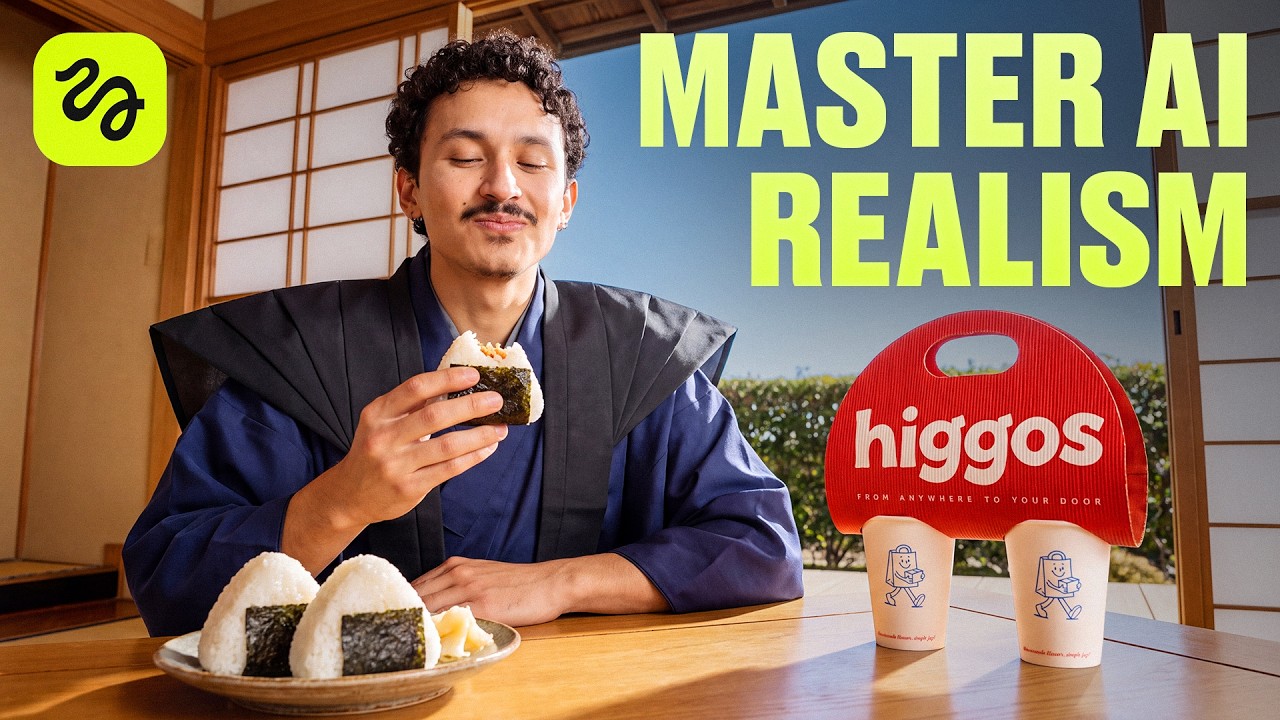
Creator Adil demonstrates that multi-character stability requires strict reference isolation. When assembling character turnaround sheets, cropping side and rear panels from the neck down ensures Seedance 2.5 reads exactly one master face reference while still extracting accurate wardrobe cuts and body proportions. Furthermore, when seating multiple characters around a table, diffusion prompts frequently invent phantom place settings. Adil resolves this by creating an overhead top-down reference map where each character is assigned an explicit color tag, mapping those color labels directly to character names in the video prompt to enforce exact physical placement.
ReelStack suggests drafting a basic 2D color-coded floorplan for any scene featuring more than two interacting subjects before committing credits to motion rendering, providing the diffusion engine with explicit coordinates for every actor and prop.
 Higgsfield AI
 Read source excerpts 2
texture. She has more of a commercial look now. Okay. And one more thing with those neck down crops, Cedense only has one face to use. The other panels are just for clothes
Higgsfield AI
picked this one because the layout breakdown is so clear. Every figure gets its own color code, which I then map straight to each character in the video prompt. So, in this
Higgsfield AI
Why do master wide keyframes and foreground occlusions stabilize commercial transitions?
Cutting between tight close-ups across alternating angles often causes generative scenes to lose background continuity, shifting room architecture and rearranging set decor.
To lock environmental geometry across a sequence, Adil inserts an initial wide shot into the prompt sequence before rendering close-up coverage. While this wide shot is discarded from the final commercial edit, generating it first establishes spatial anchors—such as specific lamps, shelves, or skylights—behind each actor that keep seating and props steady when the camera pushes into tighter angles. For rapid narrative location jumps, Adil matches camera velocity across takes and masks the cut by sliding the lens directly behind an actor's back, pre-lapping ambient location audio before the visual reveal to smooth the cut.
Directors can utilize this staging technique by treating generative wide angles as invisible coordinate anchors, using foreground actor movement as a practical wipe to conceal jumps between distinct synthetic sets.
Higgsfield AI Read source excerpts 2
me. I'll keep the action, make the position explicit, and add a short wide shot before the close out. [music] Here's why. That extra shot of the whole apartment is the main
Higgsfield AI
tapping the phone, but the camera slides right behind Micah. And I'm making a DP move here, using her back to hide the cut. I'm giving the position of each character and the
Higgsfield AI
How do reasoning agents and protocol connectors bridge disparate software systems?
As AI production expands beyond isolated image and video models, filmmakers and technical directors require automated connections between diverse software environments and logic engines.
A creator demonstrates that frontier reasoning models like GPT-6 Astra and Claude Opus 5.5 can analyze compiled binaries and reverse-engineer underlying systems using Model Context Protocol (MCP) integrations with tools such as Ghidra and IDA. In software modding and simulation workflows, agents construct pass-through bridge layers that translate real-time actions and physics calculations between two separate host applications without requiring either platform to be rebuilt from scratch. For deeper customization, agents decompile core animations and mechanics to rewrite systems into modern languages like Rust.
This bridge architecture offers a blueprint for creative workflows: connecting disparate post-production utilities through agentic protocols allows filmmakers to pass tracking coordinates, physical simulation data, and animation logic across traditionally incompatible engines.

 AI Search
 Read source excerpts 2
explodes, this mod will tell GTA to apply an explosion at that place. So, think of this as like a bridge that translates actions and physics between two games. This still
AI Search
models, the mechanics, and it attempts to basically rewrite the game, for example, in another language like Rust. Now, you don't have to use Rust, but it turns out that most
AI Search
Where do pass-through bridges and generative group scenes encounter hard limits?
Despite rapid workflow gains in spatial mapping and automated software bridges, working artists must navigate distinct mechanical failure points across both diffusion and code pipelines.
In generative video generation, textual constraints remain brittle during multi-subject interactions. In Adil's commercial tests, prompting for three diners still generated a four-plate setting until an explicit top-down visual map overrode the engine's default tendencies. Without strict visual spatial guides, diffusion engines default to generic stock layouts regardless of prompt specificity.
Concurrently, pass-through software bridges operate under significant physical constraints. Connecting two disparate runtime engines via an intermediary AI translation layer functions like duct tape, frequently introducing collision glitches, desynchronized physics, and processing overhead. While agentic decompilation provides structural flexibility, creators must actively supervise physical collisions in real-time software and maintain strict reference maps in video diffusion to avoid broken logic.
Read source excerpts 2
the camera keeps the scene moving. And let's hit generate. >> I've been craving sushi. >> Three friends, but a fourplay setting, even though the prompt explicitly asks for
Higgsfield AI
bridge, it's kind of like duct tape. So, it gets the job done, but you sometimes get issues with things like collision and physics. Now, if this is of interest to you, here's
AI Search
Key moments to explore
Optional deep divesWant to see a technique in action? Jump into the source videos. These AI-extracted timestamps may be approximate.
- 01:30 ↗Using a plain gray background for character sheets isolates clothing and facial details without visual noise, yielding cleaner video generation references.Higgsfield AI · How to Create Ultra Realistic AI Commercials Like a Pro (Full Tutorial)
- 00:57 ↗Frontier models like GPT-6 Astra can analyze compiled software binaries and reverse-engineer source logic with high benchmark success rates.AI Search · The AI unlock has begun
- 02:10 ↗Cropping character sheet turnaround panels from the neck down prevents multi-face ambiguity in Seedance 2.5 while retaining accurate wardrobe details.Higgsfield AI · How to Create Ultra Realistic AI Commercials Like a Pro (Full Tutorial)
- 03:37 ↗Pass-through modding uses an AI-generated intermediary layer to translate actions and physics between two distinct game engines running simultaneously.AI Search · The AI unlock has begun
Put it into practice
Get the practical weekly briefing →The useful ideas in one email. Subscribe to keep learning. Need a filmmaker for your project? →Tell us what you want to make and submit a project brief.Go to the source
2 videos