Three-Tier Motion Production, Script-Driven Model Routing, and Slide-Based Scene Architectures
AI filmmakers are optimizing post-production speed and budget by categorizing motion design into diffusion video, programmatic browser code, and parametric editing timelines. Combined with automated model routing for commercial ad formats, slide-based scene editing, and camera-path generative navigation, creators can systematically choose the right balance of visual fidelity, editability, and compute cost.
Top learnings
Match motion graphics tasks across three distinct production tiers: instant non-editable video diffusion, low-cost browser-based code animation, or fully parametric After Effects project files.
Route commercial asset generation through model-specific skills to pair static proof cards, character generation, and video synthesis automatically based on the targeted ad format.
Structure modular scene templates using global text replacement and locked avatar prompts to bypass manual timeline alignment while preserving project consistency.
How do creators choose between video diffusion, live browser code, and parametric NLE timelines?
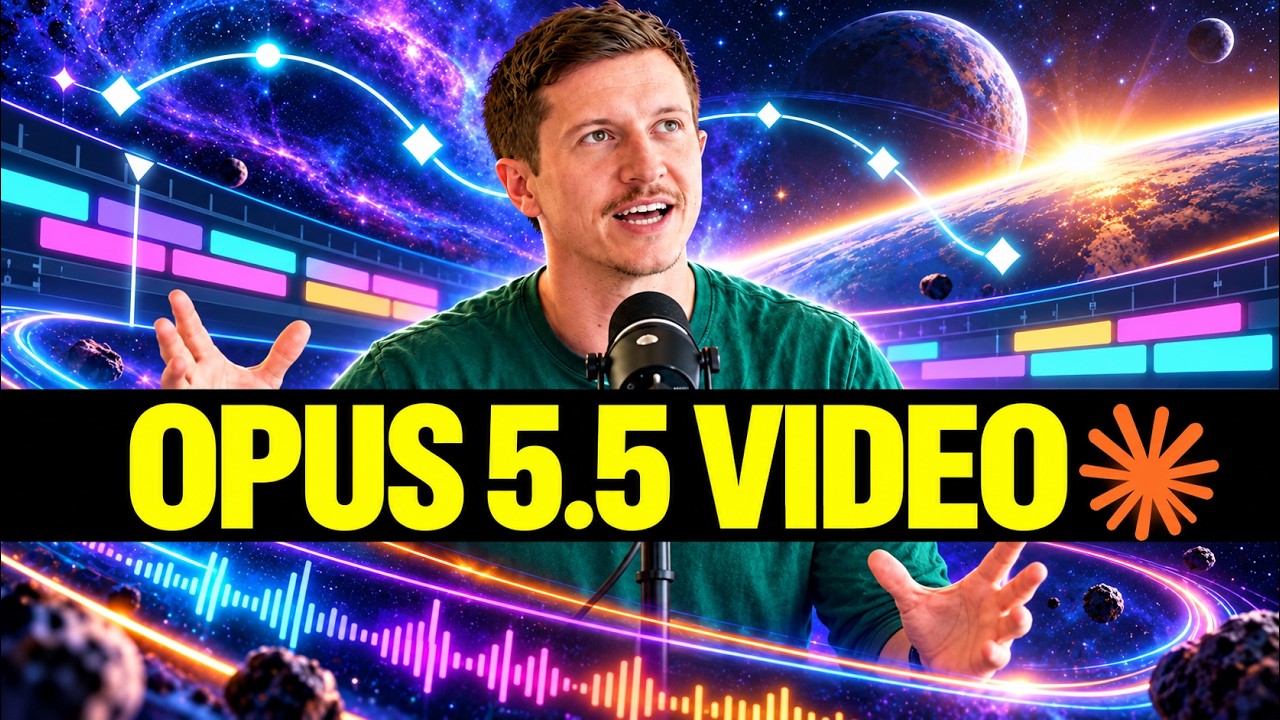
AI video animators face a fundamental trade-off between visual complexity and post-generation editability. AI Samson categorizes modern AI motion creation into three operational methods: external video diffusion models, programmatic code execution in the browser, and parametric desktop composition.
Diffusion video generators such as Seedance 2.5 offer rapid rendering for complex organic textures like volumetric dust or fluid light, but they lock pixels into flattened files where any revision demands a complete, credit-intensive re-render. Conversely, programmatic animation generated by Claude Opus 5.5 using HTML, JavaScript, Three.js, and Playwright allows directors to alter typography, timing, and color values instantly inside the browser without burning video generation credits.
For complex commercial delivery, delegating ExtendScript and Python execution to reasoning models inside Adobe After Effects provides full access to native shape layers and keyframes. Filmmakers should route disposable concept drafts to diffusion, recurring data-driven graphics to code scripts, and master commercial graphics to parametric timeline projects.
 AI Samson
 Read source excerpts 2
for very short clips, but if you're looking for something much longer, I suggest a different method. And that is method two, which is coded. Now, you can use HTML and
AI Samson
model is the best option. If you have more time, you need a very high-quality output, and you want it to be editable, then After Effects is the way to go. If you're looking
AI Samson
How does specialized model routing streamline commercial ad production?
Producing high-converting video and static ad creative requires aligning creative formats with specialized AI engines rather than relying on a single generalist tool.
Creator Adil demonstrates that marketing workflows benefit from structured frameworks such as PROOF for physical products and QUEST for service businesses. By connecting GPT-6 Astra to Higgsfield through Model Context Protocol connectors, the reasoning agent routes tasks to dedicated engines automatically: GPT Image 2.5 for static diagrams and review cards, Seedance for moving demonstration videos, and Cadream for character consistency.
Transforming static review callouts into user-generated content (UGC) video demonstrations allows brands to communicate practical utility quickly. Adil notes that creators can validate these variations organically on social reels before allocating paid ad spend, protecting client budgets while identifying high-converting hooks.

 Higgsfield AI
 Read source excerpts 2
generates the visuals. Both of these tools do all the heavy lifting. On the Hixle side, my skill [music] picks a model for each task. GPT image 2.5 for static ads, C dance for
Higgsfield AI
the exact same three frameworks work, just one level deeper. >> [music] >> Instead of a static diagram, you show the product actually working. Instead of a review card, you
Higgsfield AI
How do slide-based scene structures and pre-set avatars simplify presentation assembly?
When assembling structured corporate presentations, design reviews, or explainer videos, traditional NLE timelines can introduce unnecessary operational friction.
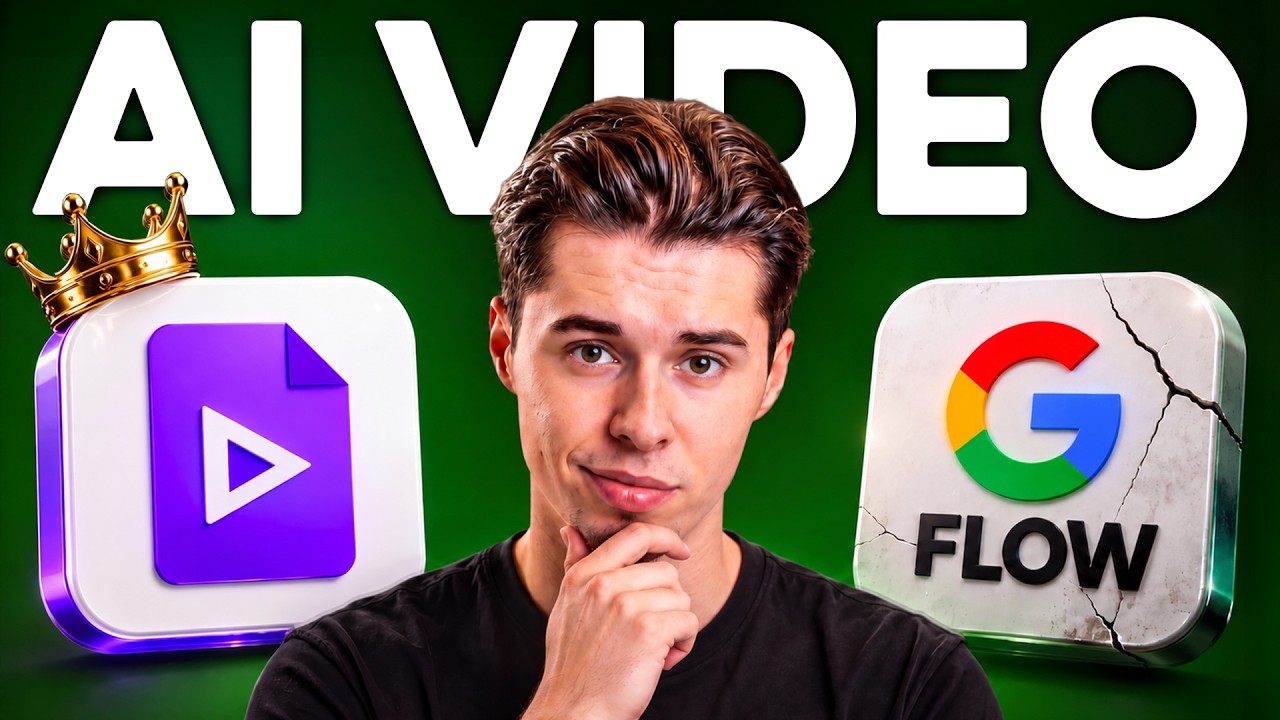
Testing Google Vids shows that treating video scenes as modular presentation slides accelerates multi-shot production. Built-in global search and replace tools allow editors to update recurring text placeholders across dozens of scenes simultaneously, eliminating manual title adjustments on every cut.
When inserting AI talking-head presenters like Farah via the Omni model, prompting shifts away from physical appearance descriptions toward camera staging, spatial placement, and dialogue delivery. Because the avatar's visual identity is already locked by the platform, prompts remain concise. To maintain visual coherence across feedback cards, generating custom image assets with explicit negative text instructions prevents flawed letter rendering in slide illustrations.
 Youri van Hofwegen
 Read source excerpts 2
two isn't only on scene one, it's also on the style dividers and the thank you card, which means more scenes I need to go back through. Luckily, Vids has find and replace,
Youri van Hofwegen
the format to landscape. Choosing her up front means you write the prompt differently, since her look is already set and none of that needs to go in. All the prompt needs is
Youri van Hofwegen
How do camera path navigation and single-step refiners expand local post-production?
Emerging local tools are addressing spatial control and resolution upscaling without requiring heavy cloud rendering infrastructure.
AI Search highlights Inspatio World 1.5, an open model based on One 2.1 that generates camera-controlled navigation videos from single reference images, multi-image sets, panoramas, or source video footage. By specifying a 3D camera trajectory, creators can generate continuous walk-throughs across a scene or freeze frames to create dynamic bullet-time camera moves on consumer GPUs.
For resolution enhancement, Nvidia's open-source Sol Refiner introduces single-step 4K video upscaling derived from LTX Refiner architecture. Operating in a single pass across outputs from models like MiniMax H3 or Cosmos, it sharpens low-resolution generative clips locally without multi-stage diffusion overhead.

 AI Search
 Read source excerpts 2
and a lot more. So, let's jump right in. First up, we have a new AI called in spatial world 1.5. This can basically take any image plus a camera path and it'll generate a
AI Search
instructions on how to run this locally on your computer. Note that this is borrowed from the LTX Refiner, but they fine-tuned it to just do the upscaling in one step. If
AI Search
Where do code-driven animations and single-step video upscalers encounter limitations?
Despite rapid workflow gains across programmatic animation and local upscaling, working filmmakers must manage clear fidelity and aesthetic trade-offs.
In browser-based programmatic animation, AI Samson notes that raw JavaScript and HTML motion graphics often appear flatter and more rudimentary than diffusion renders, lacking complex atmospheric effects or photorealistic shading. Furthermore, code execution can introduce visual bugs such as text clipping or awkward bounding box overflows that require manual debugging.
Similarly, single-step upscalers exhibit fidelity drift. Testing with Sol Refiner reveals that while it produces crisp 4K frames, the model frequently alters fine architectural details, textures, and prop geometry from the source video. Directors requiring exact pixel fidelity across visual effects plates must verify that upscalers do not alter locked assets during high-resolution finishing passes.
Read source excerpts 2
examples. Note that with Soul Refiner it is a lot more sharper but it does tend to change some of the details quite a bit. Or here's another example for your reference. Note
AI Search
three of the methods for animating with Opus. The disadvantage of this version is that some of the animations are slightly more rudimentary and simple than you can get from
AI Samson
Key moments to explore
Optional deep divesWant to see a technique in action? Jump into the source videos. These AI-extracted timestamps may be approximate.
- 00:33 ↗Claude can generate complete brand animations using HTML and JavaScript inside the interface without requiring external video rendering software.AI Samson · Opus 5.5 Edited This Entire Intro (20+ Useful Video Examples)
- 01:08 ↗Static e-commerce ad formats like callout diagrams communicate everyday utility quickly without requiring users to read long product descriptions.Higgsfield AI · GPT-6 Astra Changed Meta Ads Forever!
- 01:05 ↗Google Vids structures projects as slide-like scenes on a timeline, allowing users to populate full multi-scene templates instantly.Youri van Hofwegen · Google Vids Tutorial for Beginners: Better Than Flow?
- 0:49 ↗Inspatio World 1.5 generates camera-controlled navigation videos from single images, multi-image sets, panoramas, or existing video footage.AI Search · Gemini 4, GPT 6.1, Dots, Claude Sonnet 5.5, Ideogram 4.5, Flux 3: AI NEWS
- 01:13 ↗Running identical prompt sets through Opus 5.5 and GPT-6 Astra enables direct comparison of UI motion design and timing accuracy.AI Samson · Opus 5.5 Edited This Entire Intro (20+ Useful Video Examples)
- 01:36 ↗Pairing Astra with Higgsfield MCP automates tool routing, assigning static image generation, video synthesis (Seedance), and character creation to dedicated models.Higgsfield AI · GPT-6 Astra Changed Meta Ads Forever!
Put it into practice
Get the practical weekly briefing →The useful ideas in one email. Subscribe to keep learning. Need a filmmaker for your project? →Tell us what you want to make and submit a project brief.Go to the source
4 videos