Hybrid Grayboxing and Open-Source Multi-Reference Editors: Precision Video Replacement without Aesthetic Drift
To eliminate unpredictable background generation and subscription credit waste, AI filmmakers are pairing flat-lit live-action footage with restyled keyframe anchors, depth maps, and local quantized image models. By combining structured video references with local open-source tools, creators maintain exact performance and aesthetic continuity across complex visual effects sequences.
Top learnings
Anchor video-to-video generations by stylizing the initial frame and providing depth map motion references to prevent background drift.
Replace monthly subscription models with pay-as-you-go APIs and local open-source generators like Qwen Image 2.1 running quantized weights.
Execute 20-second multi-shot video passes with explicit cut prompts to maintain consistent lighting and synchronized audio across scenes.
How does hybrid grayboxing prevent background drift in video-to-video renders?
When filmmakers upload live-action footage directly into video generators like Seedance 2.5 with pure text prompts, the model frequently invents or alters environmental geometry between renders. This creates background flicker and inconsistent lighting, forcing directors into repeated, costly regeneration cycles.
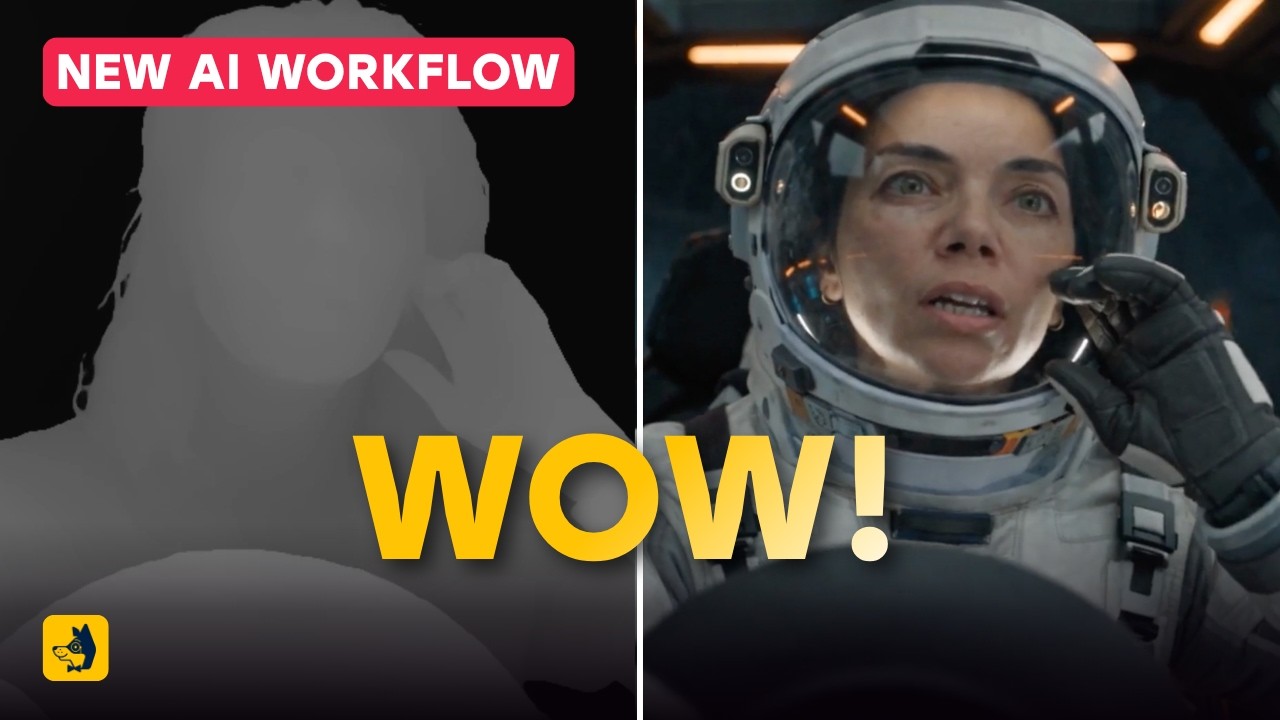
Caleb from Curious Refuge demonstrates that the solution is a hybrid grayboxing workflow. Directors shoot actors in a simple studio set with flat diffusion lighting, then export the initial frame into an image aggregator like Magnific using GPT 2.5 Sunburst or Cream 5. Next, they combine a style reference image with the exported frame to generate an updated keyframe anchor. Submitting this restyled starting image alongside the source footage—and optionally a depth map—forces Seedance 2.5 to map the actor's motion accurately into the new environment while preserving lighting and spatial proportions.
 Curious Refuge
 Read source excerpts 2
all you have to do is shoot a version of your film in a very plain environment with very flat lighting. And then by utilizing AI tools, you can take that very simple scene and
Curious Refuge
grading and overall cinematic style that we're going for. And for our prompt, we'll say, change the location and setting in image number one to the edge of a cliff in Ireland.
Curious Refuge
How can open-source models extract clean assets and enforce local character consistency?
In multi-asset commercial production, extracting subject elements or combining multiple reference assets traditionally requires manual rotoscoping or cloud-based image tools. When generating localized graphics or editing multi-part character sheets, creators face subscription paywalls and asset drift.
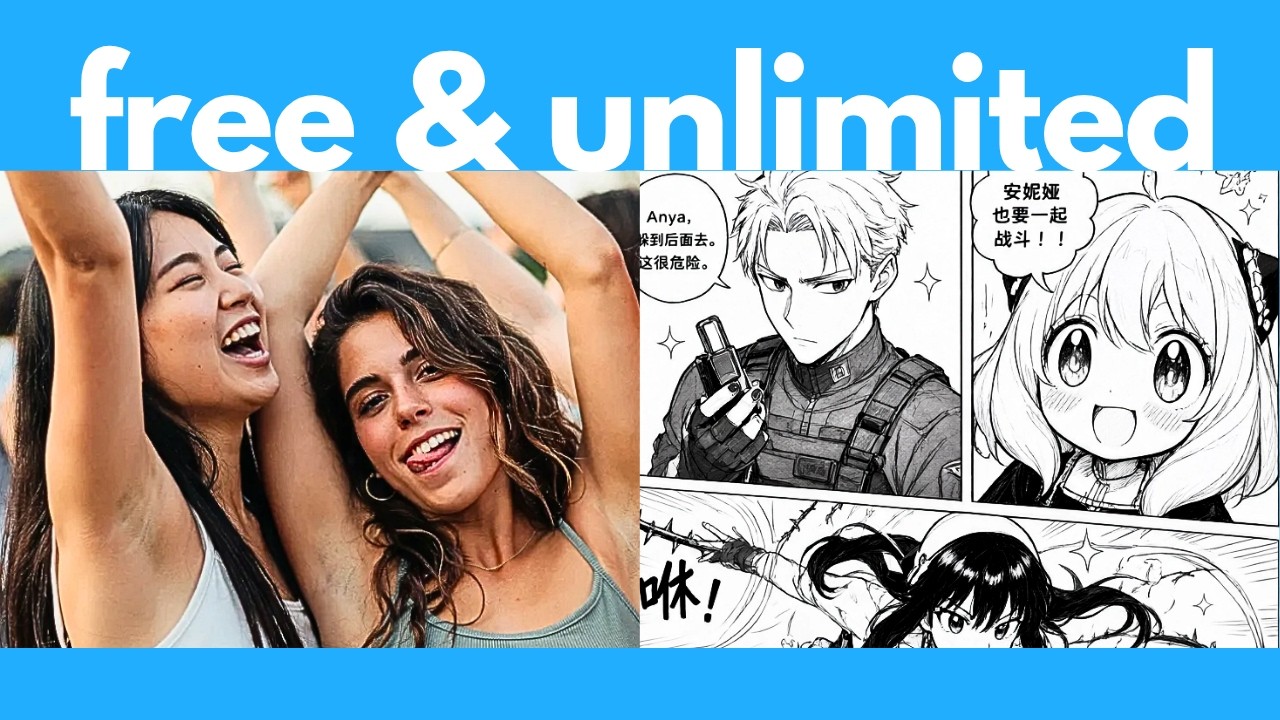
In technical demonstrations of Alibaba's open-source Qwen Image 2.1 model, AI Search reveals that creators can generate native transparent images with built-in alpha channels directly in ComfyUI. Furthermore, the model accepts up to 10 reference images simultaneously, allowing filmmakers to combine wardrobe, faces, and prop elements into unified character reference sheets or isolate foreground elements using natural language. Running quantized INT8 Conrot diffusion weights (7.2 GB) or W4A8 text encoders (6.3 GB) enables local execution on GPUs with 8 GB of VRAM or less, removing reliance on subscription credit pools.
 AI Search
 Read source excerpts 2
transparent images. In other words, this can also output an alpha channel. So, here are some examples of different generations with transparency built in. Now, not only can
AI Search
option of either the full BF-16 one which is 14.2 GB in size or this smaller INT8 Conrot version which is 7.2 GB in size. This will fit on 8 GB of VRAM or even potentially
AI Search
How can directors structure a cost-efficient multi-shot API and local editing workflow?
To establish a production pipeline that minimizes financial overhead, ReelStack suggests integrating pay-as-you-go model APIs with local open-source editing nodes. This structure replaces recurring monthly platform subscriptions with consumption-based rendering and local pre-processing.
Begin by shooting live-action plate footage under flat, diffused studio lighting. Export the primary keyframe to a local ComfyUI instance running Qwen Image 2.1 to generate transparent prop layers or stylized background assets. Next, pass the restyled initial frame and live-action reference video to Seedance 2.5 via Higgsfield's pay-as-you-go API. Creator Youri van Hofwegen shows that setting up the OpenHiggsfield local studio via Claude Code allows editors to generate 20-second multi-shot sequences containing embedded cuts and synced environmental audio in a single pass, ensuring that lighting remains matched across shot boundaries.
 Youri van Hofwegen
 Read source excerpts 2
from the website with its own billing. So, there's no plan and no monthly fee. You just add credit in dollars and pay for what you generate. And for a lot of people, this is a
Youri van Hofwegen
and paste it into the playground. And here's what comes back. One 20 second video with all three [music] shots and the cuts right where I put them. The best part is how
Youri van Hofwegen
What are the physical limits and trade-offs of hybrid video translation?
While hybrid grayboxing and local open-source generation provide superior environmental control, filmmakers must manage specific spatial and performance trade-offs. Relying on flat studio lighting can result in flat final renders if downstream video models fail to inject strong key lights from the target environment.
Caleb notes that if actor footage is shot under completely uniform diffusion light, Seedance 2.5 may preserve that flat illumination in the final composite unless high-contrast practical lighting is physically set up on location. Additionally, generating subtle actor movements or foot placements on terrain can sometimes produce slight float or virtual production alignment glitches. On the local hardware side, running open-source models like Qwen Image 2.1 on lower-tier GPUs requires heavily quantized GGUF weights, which can slightly increase generation times compared to high-end cloud GPUs.
Curious Refuge Read source excerpts 2
with just the original source video and the image that is not the black and white version of the video, we get this. And yeah, I got to say that's pretty darn amazing. I do
Curious Refuge
this And yeah, it did a really good job. The biggest problem that I have is because we shot the lighting very flat. You can see that the output also feels a little flat. So,
Curious Refuge
Key moments to explore
Optional deep divesWant to see a technique in action? Jump into the source videos. These AI-extracted timestamps may be approximate.
- 0:10 ↗Grayboxing involves shooting actors in a plain studio environment with flat diffusion lighting to serve as a base for AI background replacement.Curious Refuge · This Is What Hybrid AI Filmmaking Looks Like
- 00:56 ↗Qwen Image 2.1 can output built-in alpha channels for generating transparent PNGs directly without background removal.AI Search · Finally! New best local AI image editor is here
- 00:24 ↗The Higgsfield API is a separate product from the main website, offering pay-as-you-go billing instead of a monthly subscription.Youri van Hofwegen · How to Set Up & Use Higgsfield API in 2026 (Save Money)
- 1:03 ↗Relying purely on text prompts when feeding video into AI generators causes environmental inconsistency across renders.Curious Refuge · This Is What Hybrid AI Filmmaking Looks Like
- 01:55 ↗Up to 10 reference images can be provided to specify character elements, clothing, or furniture for precise composition.AI Search · Finally! New best local AI image editor is here
- 01:20 ↗API keys consist of a Key ID and a Secret, which must be saved securely as they are only displayed once.Youri van Hofwegen · How to Set Up & Use Higgsfield API in 2026 (Save Money)
Put it into practice
Get the practical weekly briefing →The useful ideas in one email. Subscribe to keep learning. Need a filmmaker for your project? →Tell us what you want to make and submit a project brief.Go to the source
3 videos