Decoupling Control: Shadowless Reference Sheets, Pre-Rendered Environments, and Efficient Agent Orchestration
AI video workflows are shifting from raw text prompts to structured pre-generation assets and constrained agent orchestration. Filmmakers can eliminate prompt drift by isolating character identity with shadowless reference sheets, locking course layouts before generating continuous video takes, and leveraging agentic models to define precise second-by-second camera paths rather than relying on generic visual descriptors.
 AI Video School
Top learnings
Build character reference sheets using shadowless lighting on flat gray backgrounds with hollow collars to prevent baked-in shadows from contaminating target scene lighting.
Pre-generate empty environment or course reference images before writing video prompts to anchor spatial geometry during unbroken 30-second takes.
Replace generic quality descriptors like '4K' with explicit second-by-second camera paths, precise light placement, and sound direction when prompting agentic models.
Why isolate environmental lighting from character reference sheets?
When creating multi-panel character sheets for video models like Seedance 2.5, standard renders often bake in directional shadows and complex background lighting. When fed into a video renderer, these pre-existing shadows force the model to replicate the source environment's lighting, causing facial distortion and unnatural highlights when the character enters new scene environments.
Creator Youri van Hofwegen demonstrates a structural template to eliminate this lighting contamination. By setting the reference background to a single flat gray, applying completely shadowless lighting across all panels, and replacing the neck with a hollow collar, the sheet isolates only the subject's physical identity and wardrobe silhouette. This structure allows the downstream video model to dynamically light the character according to the target scene's specific environment without identity drift.
 Youri van Hofwegen
 Read source excerpts 2
sheets made first so the two of them stay consistent. I'll also tell it exactly how I want those sheets built, which is three panels each, a front view with no head, a full
Youri van Hofwegen
lighting goes completely shadowless across all three panels. That last part is the one doing the most work because a sheet with no shadows in it gives the video model nothing
Youri van Hofwegen
How does pre-rendering environment maps lock geometry in unbroken takes?
Generating continuous, multi-environment video takes without cuts frequently fails because video models invent spatial layouts dynamically, resulting in flickering obstacles and trajectory glitches. When attempting continuous camera motion through complex spaces, relying solely on text descriptions forces the model to guess room dimensions and structural boundaries frame by frame.
To lock spatial geometry, Youri van Hofwegen demonstrates pre-generating empty course reference images before writing video generation prompts. For a 30-second continuous point-of-view parkour run through three sci-fi environments, van Hofwegen first renders stationary, unoccupied environment stills for each world. Attaching these pre-rendered spatial references to the final generation prompt forces Seedance 2.5 to execute smooth portal transitions and continuous motion without subject distortion or course hallucination.
Youri van Hofwegen Read source excerpts 2
full 30-se secondond video with no cuts anywhere in it. The worlds are entirely up to it and it builds them as empty course images first. So every obstacle in all three is
Youri van Hofwegen
The stride and the head movement flow continuously, and the new world simply appears as they pass through. So all three references get attached the same way and the video gets
Youri van Hofwegen
How can filmmakers structure agentic prompts for precise shot direction?
Conversational agents like GPT-6 Astra connected via Model Context Protocol (MCP) bridges can optimize raw concepts into structured execution prompts. However, creators S1 and Youri van Hofwegen show that fully automated agent generation often produces generic visuals unless guided by strict human oversight and explicit constraints.
To execute an effective agentic workflow, ReelStack suggests establishing explicit prompt guidelines before triggering generation plugins like OpenArt or Higgsfield. Instruct the agent to strip meaningless aesthetic keywords such as '4K', 'hyperrealistic', or 'high quality', which provide no actionable spatial data to models like Seedance 2.5 or MiniMax H3. Instead, require the agent to specify second-by-second camera trajectories, camera body characteristics (such as Sony FX3 parameters), asymmetrical facial features, and explicit light placement. Additionally, configure the agent to pause for human approval before submitting prompts to prevent credit burn.
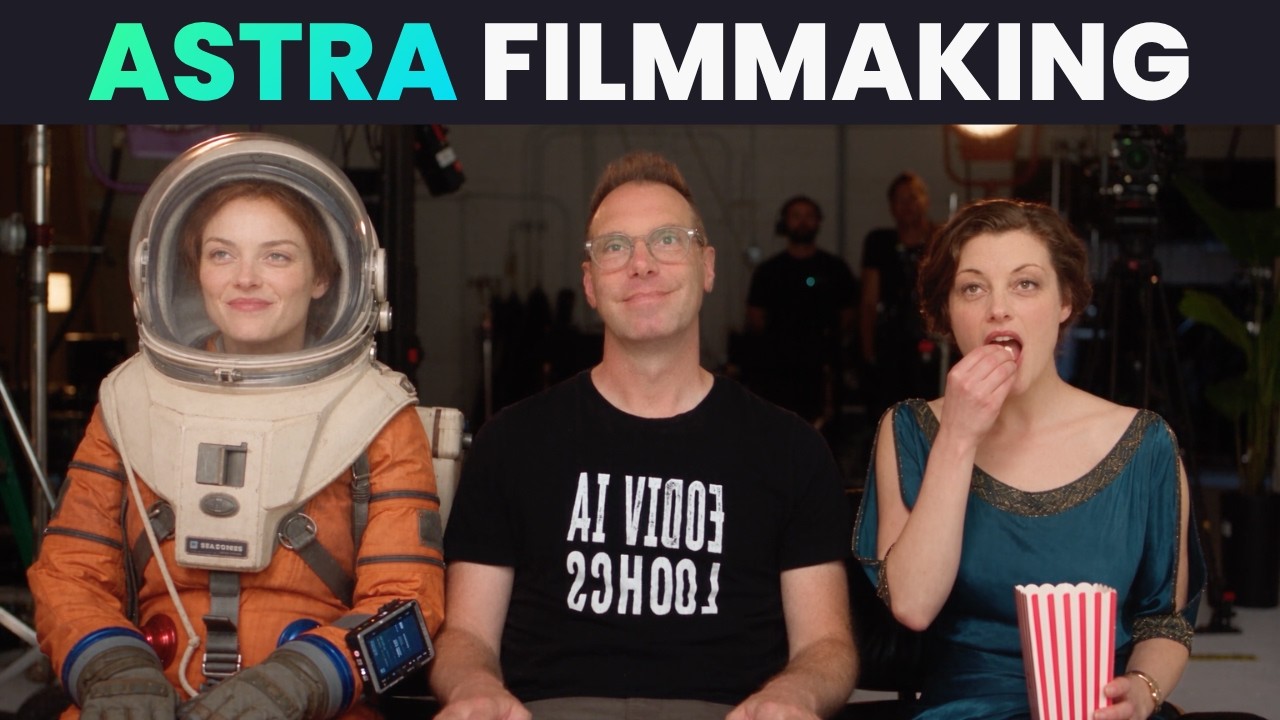
Read source excerpts 2
I'm going to use the same instructions I used last time, but this time I'm going to say, "Don't generate anything on Higsfield until I approve your prompts." So, let's see
AI Video School
in from, where the light is, and what the camera is doing second by second. It also tells me that really detailed, highquality, and 4K describe nothing of value to the model.
Youri van Hofwegen
What technical memory trade-offs enable long-context agent workflows?
While agentic workflows streamline multi-step asset creation, running extended conversational threads generates massive Key-Value (KV) cache memory footprints. As context windows expand, storing KV cache data in GPU High-Bandwidth Memory (HBM) becomes impossible, forcing systems to offload memory to external solid-state drives (SSDs) and introducing severe latency bottlenecks as the processor waits for data transfer.
Technical analysis of DeepSeek V4.1 Flash reveals how novel model architectures bypass these memory boundaries. By splitting model layers into a causal encoder that reads context and a decoder that generates output, the system eliminates duplicate KV cache calculations. Furthermore, Compressed Sparse Attention 2 (CSA2) introduces layer-sharing modes—full, reindex, and reuse—that allow upper layers to recycle index maps and KV notes from lower layers. This reduces context memory overhead by over 400 times compared to earlier architectures, enabling sustained agentic pre-visualization without crashing hardware.

 AI Search
 Read source excerpts 2
the latency there is devastating. If the KV cache needs to be stored there, well, every time the AI needs to predict the next word, it has to fetch data from the SSD, pull it
AI Search
DeepSeek V1 is almost 390,000 bytes. Now, if you fast forward just a few generations to this latest V4.1 Flash, it's only 890 bytes per token. They basically shrunk the size
AI Search
Key moments to explore
Optional deep divesWant to see a technique in action? Jump into the source videos. These AI-extracted timestamps may be approximate.
- 00:27 ↗GPT-6 Astra acts as an orchestrator that refines rough concepts, writes technical prompts, and executes generations via connected platforms.Youri van Hofwegen · GPT 6 Astra Just Made AI Videos Come to Life
- 01:52 ↗Installing the Higgsfield plugin in ChatGPT connects GPT-6 Astra directly to video generation models like Seedance 2.5 and MiniMax H3.AI Video School · Is This the Best Way to Make AI Films?
- 01:39 ↗Large language model execution splits into a prefill phase where prompts are converted into a key-value (KV) cache and a decode phase where output tokens are generated sequentially.AI Search · Deepseek just did the impossible
- 00:50 ↗OpenArt connects to ChatGPT over MCP, enabling GPT-6 Astra to run external image and video generation models directly within the chat interface.Youri van Hofwegen · GPT 6 Astra Just Made AI Videos Come to Life
- 02:38 ↗Project parameters such as aspect ratio (16:9), narration voice, and visual style can be configured within the initial chat prompt.AI Video School · Is This the Best Way to Make AI Films?
- 03:20 ↗Extended autonomous AI agent workflows generate massive KV caches that quickly exceed the high-bandwidth memory (HBM) capacity on GPUs.AI Search · Deepseek just did the impossible
Put it into practice
Get the practical weekly briefing →The useful ideas in one email. Subscribe to keep learning. Need a filmmaker for your project? →Tell us what you want to make and submit a project brief.Go to the source
3 videos