Surgical Post-Production Control: How GPT Images 2.5 and Local Audio Models Eliminate the Prompt-and-Reroll Cycle
AI filmmaking is shifting from unpredictable full-frame generation to targeted post-production. Creators are leveraging precise pin-comment regional editing, modular pre-built asset libraries, and word-level speech manipulation to fix shots without re-rendering entire scenes.
 CyberJungle
 AI Search
 AI Samson
Top learnings
Localized visual editing via pin comments in GPT Images 2.5 modifies individual scene elements while locking surrounding lighting, composition, and facial identity.
Targeted speech manipulation tools like Tencent Out enable word-level dialogue insertions, noise removal, and emotional tone shifts without re-recording complete voice takes.
Pre-built modular asset libraries streamline explainer content, but generating recognizable real-world human faces in 3D remains unreliable compared to image-to-video pipelines.
How is targeted regional editing replacing full-frame rerolls?
The primary bottleneck in AI filmmaking has long been the lack of precise control. When a generated frame is ninety percent complete but contains a minor defect, creators have historically been forced to regenerate the entire image, risking the loss of character consistency and scene composition. Recent demonstrations highlight a transition toward surgical post-production using GPT Images 2.5 and dedicated speech editing models.
In visual workflows, creator Jahan demonstrates that the Sunburst variant of GPT Images 2.5 enables targeted multi-turn edits. By placing localized pin comments directly onto a frame, editors can modify specific details—such as enlarging a prop, altering a hair color, or editing letter-level text—while the model holds the surrounding lighting, camera framing, and facial features locked.
This localized control extends to audio post-production. Rather than re-recording complete voice tracks when script adjustments occur, filmmakers can employ specialized speech models like Tencent Out. As shown in technical demonstrations, these tools execute word-level audio additions or deletions, remove background noise, and alter emotional delivery to match updated visual contexts.

Read source excerpts 2
individual comments to the individual parts of image, you want more regional local edits. This distinction is very important. And boom, now she has red hair. Fantastic. I can
CyberJungle
the original clip where he just says mamba out. Well, we can add the word never here. And here's what it sounds like. >> What can I say? Mamba never out. >> As you can hear,
AI Search
Where do modular asset libraries excel and 3D pipelines break down?
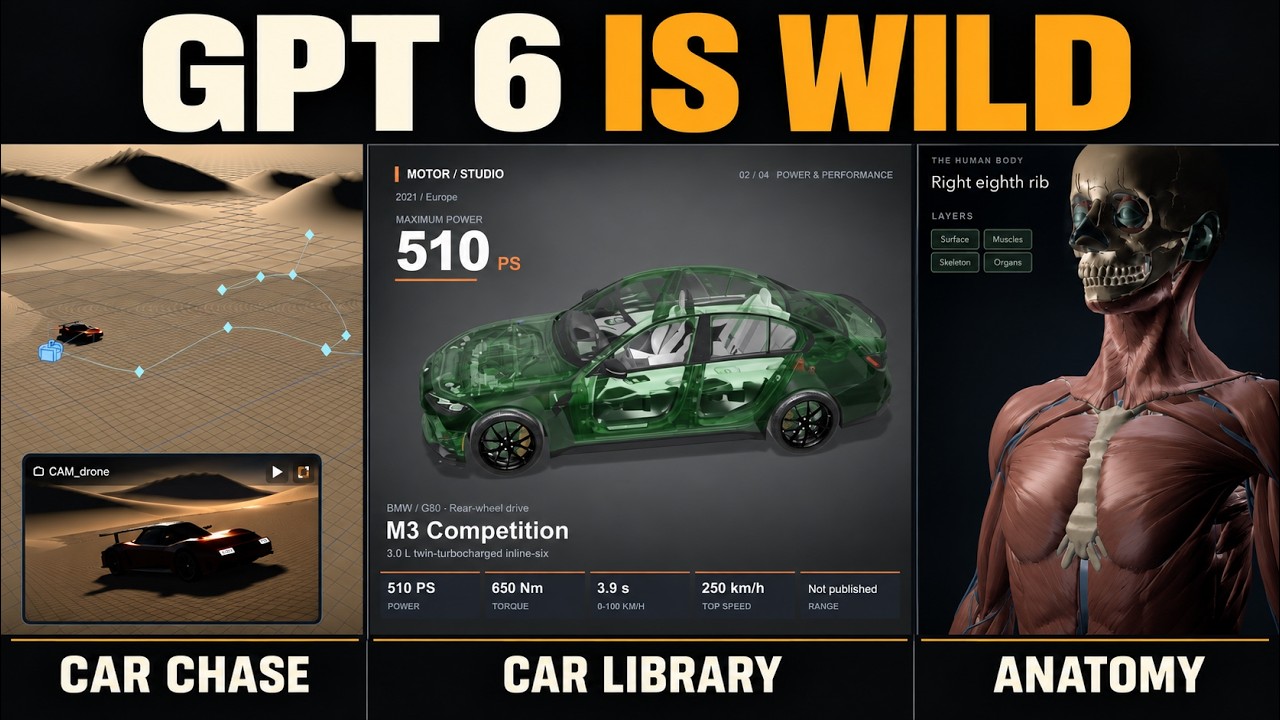
To avoid repetitive generation costs, creators are shifting toward modular asset libraries. Creator tests demonstrate that pre-building structured 3D object systems—such as car models, anatomical organs, or code-based React graphics via Remotion—allows directors to isolate components, adjust opacity, and update text across multiple videos without starting from scratch.
However, creators disagree on the necessity of full 3D software like Blender. While technical artists prefer Blender for granular control, non-3D creators highlight that simplified built-in studios, such as Higgsfield's 3D environment, offer faster camera framing without steep technical overhead.
A critical limitation arises when attempting to generate recognizable, real-world human faces inside 3D pipelines. When prompting 3D models to render figures like public leaders, the models fail to capture accurate facial structure. Creators agree that for historical or documentary content featuring real people, skipping 3D modeling in favor of direct image-to-video reference sheets remains necessary.
 FRMWRKD-EXPLAINED
 Read source excerpts 2
how simple it is and why I actually prefer their built-in 3D studio over Blender in a lot of cases is because it's just simpler. But, here again, some context. I'm not a 3D
FRMWRKD-EXPLAINED
failing again, I thought, all right, I have to go the old way. Honestly, I gave them also clear images, but this is what they gave me back. This is Peter Thiel. This is Elon
FRMWRKD-EXPLAINED
What is a practical workflow for localized shot corrections?
To apply these tools effectively, ReelStack suggests a structured post-production pipeline combining agentic prompt refinement, targeted image editing, and word-level audio alignment.
Begin by generating a base keyframe. To elevate framing and texture, pass the initial prompt to GPT-6 Astra, instructing the agent to enhance lighting direction, surface realism, and shot composition before rendering the updated prompt in GPT Images 2.5.
Once the master image is rendered, execute targeted visual fixes. Instead of submitting global text prompts that rewrite the entire scene, drop a pin comment directly on the target region—such as changing a wardrobe color or updating signage. Finally, upload the dialogue track to a speech model like Tencent Out to insert missing words or adjust emotional delivery, such as shifting a neutral voice line into an angry or whispered read.
Read source excerpts 2
After that, I say this, "Improve this prompt based on this: clearer composition. We want more purposeful lighting and we want more convincing realistic surfaces, skin
CyberJungle
the output. Another crazy thing you can do is change the emotion of an existing clip. So, for example, let's turn this clip into a sad tone. I'm going to play you the original
AI Search
What are the hardware requirements and physical limits?
While surgical editing reduces workflow iteration, filmmakers must account for strict computational requirements and model boundaries. Local deployment of specialized depth and normal map extractors like Marigold V2 demands substantial hardware, requiring between 17 GB and 29 GB of VRAM depending on target export resolution. Similarly, running local speech editing models like Tencent Out requires approximately 6.12 GB of VRAM.
Cloud workflows also incur heavy resource costs. Running iterative 3D scene builds and multi-turn prompt optimizations through GPT-6 Astra quickly exhausts standard token limits, forcing heavy users onto higher-tier plans.
Anatomical limitations persist across current image generation models. In practical tests involving complex hand interactions—such as multiple players fanning and shuffling cards at a poker table—every major image model failed to render physically accurate hands, frequently duplicating fingers or deforming limbs. Complex physical dexterity still requires traditional compositing or manual graphic overlays.

Read source excerpts 2
and run this locally on your computer. Note that inference at this resolution requires around 17 GB of VRAM, whereas this resolution requires around 29 GB. If you're
AI Search
hands bridging a deck. Player three on the right pushes a stack of red chips forward with his right hand while his left hand rests. Now, interestingly, out of all the models I
AI Samson
Key moments to explore
Optional deep divesWant to see a technique in action? Jump into the source videos. These AI-extracted timestamps may be approximate.
- 0:48 ↗Access image generation in ChatGPT directly through prompt templates, inline image commands, or the dedicated image tab.CyberJungle · GPT 6 Astra + Image 2.5 Is FINALLY HERE and It’s WILD! (Full Workflow)
- 01:04 ↗Marigold V2 extracts high-resolution depth maps, surface normals, and albedo maps directly from single 2D images, requiring 17 GB to 29 GB VRAM for local inference.AI Search · New Deepseek, human genome map, Navier Stokes, GPT finance, Suno v6, YuE2: AI NEWS
- 0:14 ↗Pre-building structured 3D asset libraries allows instant reuse across multiple video projects without recreating lighting or scene geometry.FRMWRKD-EXPLAINED · GPT-6 Astra: Usecases for Content Creators
- 02:33 ↗Use a mobile phone as a virtual camera inside Blender to record real-world camera motion that drives high-quality AI video generation.AI Samson · 50+ Insane NEW Ways to Use GPT-6 (ASTRA + Images 2.5)
- 1:40 ↗Execute regional image modifications using localized pin comments to change specific details without altering the full composition.CyberJungle · GPT 6 Astra + Image 2.5 Is FINALLY HERE and It’s WILD! (Full Workflow)
- 02:31 ↗Unimate generates automated motion for non-human and arbitrary rigged 3D skeletons (such as animals, creatures, and inanimate objects) directly from text prompts without additional retraining.AI Search · New Deepseek, human genome map, Navier Stokes, GPT finance, Suno v6, YuE2: AI NEWS
Put it into practice
Plan camera movement with Blender →Practical steps and checks before committing to production. Get the practical weekly briefing →The useful ideas in one email. Subscribe to keep learning. Need a filmmaker for your project? →Tell us what you want to make and submit a project brief.Go to the source
4 videos