Low-Res Draft Protocols, 3D Scene Camera Locking, and Segmented Model Pipelines
AI commercial workflows are adopting structured draft protocols and specialized model pipelines to eliminate credit burn and spatial drift. Filmmakers can optimize production by testing complex prompts at 480p before running full-quality renders, explicitly locking 3D scene camera paths during export, reconstructing camera motion via depth point clouds, and assigning distinct image models to character, product, and environmental assets.
 Diego Galvao
 AI Search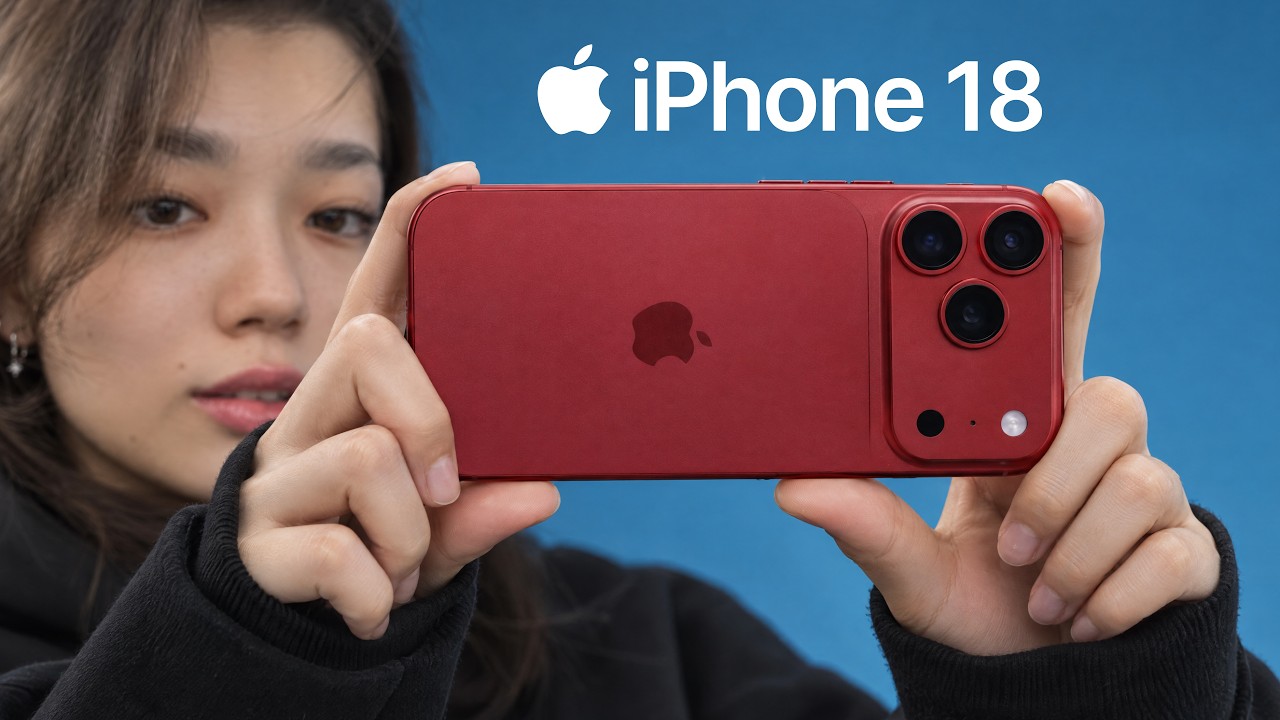
Top learnings
Test complex prompts using 480p single-batch draft passes before committing to high-resolution renders to prevent rapid credit burn on failed takes.
Explicitly instruct video models to render the 3D scene camera view rather than the interactive viewport preview when exporting 3D-to-video generations.
Segment pre-production asset generation across specialized models—using Soul 2.0 for human skin, Cream 5.0 Pro for product sheets, and Soul Cinema for architectural plates.
How do 480p draft passes and explicit asset tagging prevent high credit burn?
When directing multi-character commercial sequences or complex physical interactions, submitting unvalidated text prompts directly into high-resolution video models risks burning substantial credit budgets on failed takes, such as unwanted character dialogue or visual framing errors.
Creator Kar (Kaye) demonstrates an iterative testing protocol inside Higgsfield Cinema Studio. Before committing to full 1080p or 4K multi-take renders, Kar executes draft passes at 480p resolution with a single batch size. This draft phase isolates physics glitches and story continuity breaks—such as background element mismatches—allowing prompt refinement via Claude before executing maximum-quality multi-batch passes. To ensure seamless asset tracking across these iterations, Kar tags exact local computer file names inside Claude prompts, allowing the generator to automatically link uploaded reference elements to designated characters and products.
S1 creator also notes that lower resolution renders, such as 720p versus 1080p in Seedance 2.5, cut credit consumption in half, establishing low-resolution drafts as an essential budget-control boundary for commercial AI direction.

Read source excerpts 2
about your prompt. AI generation is a trial and error process. Your [music] first generation is always a draft. If you render a brand new prompt at maximum 4K quality right
kaye.creatives
best and latest. And luckily for me, it only used a 720p quality because if it used a 1080, it would have cost me double the credits. It's a credit-based system. So every time
Diego Galvao
Why must creators lock 3D scene camera views when exporting viewport layouts to video renderers?
Generating dynamic multi-environment video transitions in software like Higgsfield 3D Jutsu allows directors to position props, character paths, and lighting within an interactive 3D viewport without traditional software like Blender. However, translating interactive viewport animation to video models like Seedance 2.5 frequently causes framing errors if camera parameters are not explicitly declared.
Creator Youri van Hofwegen reveals that when exporting a 3D scene generated by GPT-6 Astra, video models like Seedance 2.5 often default to rendering the arbitrary interactive viewport preview rather than the targeted camera motion. To prevent camera misalignment, van Hofwegen explicitly instructs the model within the export prompt to lock directly to the scene camera view and its embedded camera path.
Additionally, van Hofwegen demonstrates that naming distinct sub-components of an object (such as eight separate parts of a smartwatch) gives GPT-6 Astra independent animation tracks and timing controls, allowing elements to assemble sequentially before applying stylized commercial relighting in Seedance 2.5.

 Youri van Hofwegen
 Read source excerpts 2
specific about how it gets rendered. And there's one thing you have to say here or it comes back wrong, which is to use the scene camera view and its actual camera path and
Youri van Hofwegen
together, you get one object that can only move one way. But naming them gives Astra eight things it can animate separately. Then I give the assembly a deadline. So the parts
Youri van Hofwegen
How does post-generation depth point cloud reconstruction compare to pre-generation 3D spatial setup?
Filmmakers seeking alternative camera angles for pre-existing video clips face a choice between building explicit 3D viewport scenes before rendering or reconstructing spatial geometry from existing footage post-generation.
In post-production workflows, creator Viggle's Meridian tool leverages VGGT Omega depth estimation to analyze finished video clips and extract a 3D point cloud representation. As cited in technical breakdowns, this 3D reconstruction allows directors to re-render the scene along entirely new camera paths—such as orbiting around subjects or creating freeze-frame bullet-time moves—using MiniMax H3 without re-prompting initial character assets.
While pre-generation 3D viewport blocking (demonstrated by van Hofwegen) offers complete control over prop positioning and multi-part animation before rendering, post-generation depth point clouds enable directors to salvage live-action or AI footage after filming, reshooting camera angles with explicit spatial backing.

Read source excerpts 2
you can get this bullet time effect. So here are some additional examples for your reference. Now underneath this meridian uses a geometry system called VGGT Omega to
AI Search
Jutsu. And this one works differently to everything else on the platform because it is specifically designed to build you a 3D scene. You get all the control, too. So, the
Youri van Hofwegen
How can directors match specialized image models to distinct asset categories?
Using a single image model across an entire commercial production pipeline often results in trade-offs between hyperrealistic human skin textures and precise product geometry.
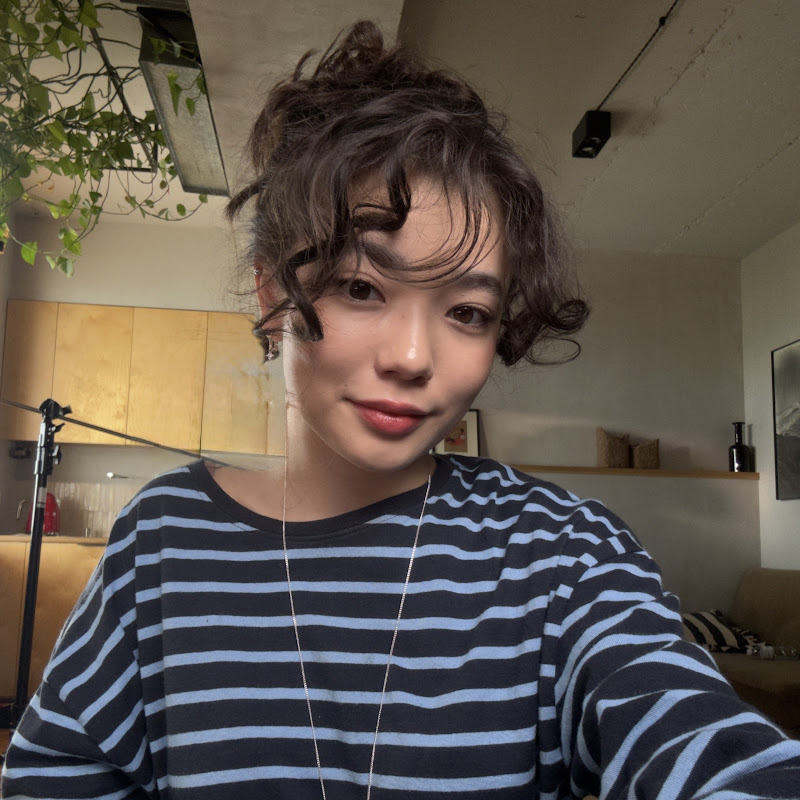
Creator Kar establishes a segmented asset generation workflow by pairing specific models inside Higgsfield to dedicated asset categories. For human character sheets, Kar utilizes Soul 2.0, which renders natural skin textures without synthetic artifacts at minimal credit cost. For product model sheets requiring sharp vector outlines and exact dimensional angles—such as unreleased smartphone hardware—Kar switches to Cream 5.0 Pro. For environmental location plates, Kar deploys Soul Cinema to enforce architectural lighting and depth while explicitly excluding pedestrians using negative prompts.
ReelStack suggests organizing commercial pre-production into three strict asset buckets: organic subjects in Soul 2.0, hard-surface props in Cream 5.0 Pro, and clean architectural plates in Soul Cinema. By standardizing asset prompt drafting through Claude, directors can systematically feed these modular assets into video generation engines like Seedance 2.5.
 kaye.creatives
 Read source excerpts 2
in one place and keep all my assets packed together. For image [music] generation, we select Soul 2.0. Soul 2.0 know is hands down my go-to model for human assets because it
kaye.creatives
Hixield, but this time switch our model to Cream 5.0 Pro. Why Cream for the phone? Because Cream is built for graphic precision. Set your ratio to 16x9, the badge size to
kaye.creatives
What are the physical limitations and credit risks when directing complex AI scenes?
Despite improvements in 3D viewport control and draft-rendering workflows, AI video generation remains susceptible to physical hallucinations, credit waste, and hardware demands.
In practical commercial tests, Kar illustrates that initial 480p draft prompts frequently yield severe narrative glitches, including characters making unexpected cuts or background animals generating spoken audio. Furthermore, local open-source deployments of post-generation camera tools like Viggle Meridian require massive GPU resources, with base fine-tuned MiniMax models demanding roughly 62 GB to 67 GB of VRAM, limiting local execution to high-end enterprise hardware until quantized weights are released.
Finally, while low-resolution drafting reduces initial iteration costs, high-resolution 4K or 1080p final passes consume substantial credit reserves rapidly, making upfront negative prompting and asset naming mandatory to avoid costly regenerations.
Read source excerpts 2
it's funny, but it completely breaks out the story continuity. There's zero pain from scene one anywhere on the street. And worst of all, the cat literally speaks in deep, low
kaye.creatives
everything already, but note that they fine-tuned it on the full miniax model, which is like 62 GB in size. Because this is open source, I'm sure there's going to be more
AI Search
Key moments to explore
Optional deep divesWant to see a technique in action? Jump into the source videos. These AI-extracted timestamps may be approximate.
- 01:20 ↗A character sheet acts as a 360-degree reference blueprint locking height, facial features, and styling across angles to maintain visual consistency across generations.kaye.creatives · I Made an iPhone 18 Ad That Got 1M Views in 2 Days (Tutorial)
- 01:43 ↗Higgsfield functions as an aggregator offering image and video generation models under a unified platform.Diego Galvao · How to Make AI Videos with Higgsfield: Complete Beginner
- 01:13 ↗3D Jutsu generates editable 3D scenes where props, layout, lighting, and cameras can be repositioned directly in the 3D viewport before rendering.Youri van Hofwegen · How to Make 3D Animations With GPT 6 Astra (No Blender Needed)
- 01:13 ↗Viggle's Meridian uses VGGT Omega geometry depth estimation to build a 3D point cloud of an existing video, allowing creators to reshoot the scene along new camera paths with MiniMax H3.AI Search · OpenAI hacked, Jev, Google’s RSI, Qwen 3.8 Omni, Bonsai 2, new Gemini Live: AI NEWS
- 02:14 ↗Feeding a personal selfie and an outfit reference into Claude allows you to automatically generate three-panel (front, profile, full-body) character sheet prompts without manual writing.kaye.creatives · I Made an iPhone 18 Ad That Got 1M Views in 2 Days (Tutorial)
- 02:35 ↗Installing the Higgsfield plugin enables ChatGPT to communicate directly with a user's Higgsfield account for video generation.Diego Galvao · How to Make AI Videos with Higgsfield: Complete Beginner
Put it into practice
Plan camera movement with Blender →Practical steps and checks before committing to production.Turn an AI film brief into a shot plan →Practical steps and checks before committing to production. Get the practical weekly briefing →The useful ideas in one email. Subscribe to keep learning. Need a filmmaker for your project? →Tell us what you want to make and submit a project brief.Go to the source
4 videos