Programmatic Code Animation, Automated Python 3D Previs, and Tiered Model Routing
AI filmmakers are bypassing text-only video diffusion limitations by deploying reasoning models to programmatically render motion graphics and generate zero-skill 3D trajectory animatics in Blender. Combined with tiered model routing and automated asset layer extraction, creators can lock complex camera paths and slash compute overhead across commercial pipelines.

Top learnings
Generate automated Python scripts inside Blender via reasoning models to produce precise 3D motion animatics that guide video diffusion trajectories without manual keyframing.
Bypass generative video diffusion credit costs for data-driven explainer content by programmatically rendering and recording animated scenes directly through code.
Route pre-production tasks across tiered models, utilizing ultra-low-cost passes for initial drafts and reserving specialized visual engines for final asset renders.
How does automated Python previs in Blender solve physical trajectory failures in video diffusion?
When directing high-velocity action sequences, such as racing vehicles or rapid camera sweeps, prompting diffusion models with purely descriptive text frequently causes erratic warping and broken momentum. Video models recognize subject categories but struggle to compute complex multi-axis spatial trajectories from text alone.
Creator kaye.creatives demonstrates that filmmakers can bridge this gap by connecting Claude Opus 5.5 to Blender via the Higgsfield Blender plugin. Without requiring prior 3D animation skills, directors describe the desired action and camera trajectory in plain English. The reasoning model generates Python code that automatically creates the 3D physics block and renders an animatic plate. Passing this rough 3D motion render as a video reference into Seedance 2.5 anchors the generative model to real physical camera coordinates, preventing costly failed generations.
ReelStack suggests creating low-poly graybox motion blocks in Blender for any sequence requiring precise camera parallax, ensuring the downstream video generator focuses strictly on surface rendering and aesthetic styling.
 kaye.creatives
 Read source excerpts 2
understand. [music] When you ask AI to generate high-speed motion, it understands what a formula car one is. [music] But to output a true physical momentum, it needs a special
kaye.creatives
describe the camera movements that will take place. [music] For example, this is what I wrote. It writes out the Python code for you and creates the animation totally on its
kaye.creatives
When should creators replace generative diffusion models with programmatic code animation?
Rendering dynamic typography, interface mockups, or data-driven social reels through generative diffusion engines often consumes excessive credit budgets while producing unstable text and uneditable layouts.
Creator S2 illustrates that reasoning models like Opus 5.5 inside Claude Code can bypass video models entirely by building animations programmatically. By providing an animation framework from GitHub alongside source data and reference stills, Claude constructs the stage, animates assets in code, and screen-records the output. Because the sequence is driven by code rather than diffusion weights, updating the video with new daily data requires only submitting fresh inputs to trigger an instant re-render without prompt drift.
S2 notes that rendering an entire animated workflow utilized under 10 percent of a standard monthly subscription window, delivering immense compute savings over cloud diffusion platforms. ReelStack recommends reserving diffusion video models for photorealistic cinematic plates while routing recurring motion graphics and UI presentations through programmatic code rendering.

 Adrian Viral AI Marketing
 Read source excerpts 2
What if I told you there was a breakthrough in AI video and it didn't come from the next AI video model? Instead, it came from the coding model Opus 5.5 that can
Adrian Viral AI Marketing
I wanted to show the usage. As you can see, I only used 9% of my 5 hour limit um creating pretty much everything I showed you in this video, both the Pokemon thing and the
Adrian Viral AI Marketing
How do tiered reasoning passes and specialized image models optimize production budgets?
Relying on a single flagship model across an entire commercial pipeline leads to severe budget waste during initial concepting or aesthetic compromises during final asset generation.
In benchmark testing, AI Samson reveals the cost disparity across model tiers. Running a single-prompt exploratory generation costs roughly $0.04 in GPT-6 Luna compared to $1.80 in Opus 5.5 and $10.50 per million output tokens in GPT-6 Astra. Deploying budget tiers like Luna allows creators to test broad structural ideas freely before spending credits on higher-tier frontier reasoning.
For image generation, creator kaye.creatives emphasizes assigning dedicated engines to specific asset types rather than using a single generalist tool. In commercial pre-production, kaye.creatives uses Cream 5.0 Pro exclusively for human skin textures, Cadream for crisp vehicle structures and high-contrast lighting, and Soul Cinema paired with an optical block structure to render anamorphic lens distortion and organic grain. ReelStack suggests standardizing pre-production asset generation by isolating organic characters, hard-surface props, and atmospheric plates into separate model queues.

Read source excerpts 2
from Opus 5.5. Now, the Luna result here is absolutely fascinating because for just 4 cents, you get a usable first pass and this changes how freely you can experiment. Now,
AI Samson
you're going for. For a character sheet, I'm selecting Cream 5.0 Pro. It is simply unmatched when it comes to creating ultra realistic humans. The [music] skin textures, the
kaye.creatives
How can filmmakers extract transparent layers and reconstruct 3D scenes from 2D references?
Compositing AI-generated assets into complex scenes traditionally requires labor-intensive manual rotoscoping or multi-prompt inpainting to isolate foreground elements from their backgrounds.
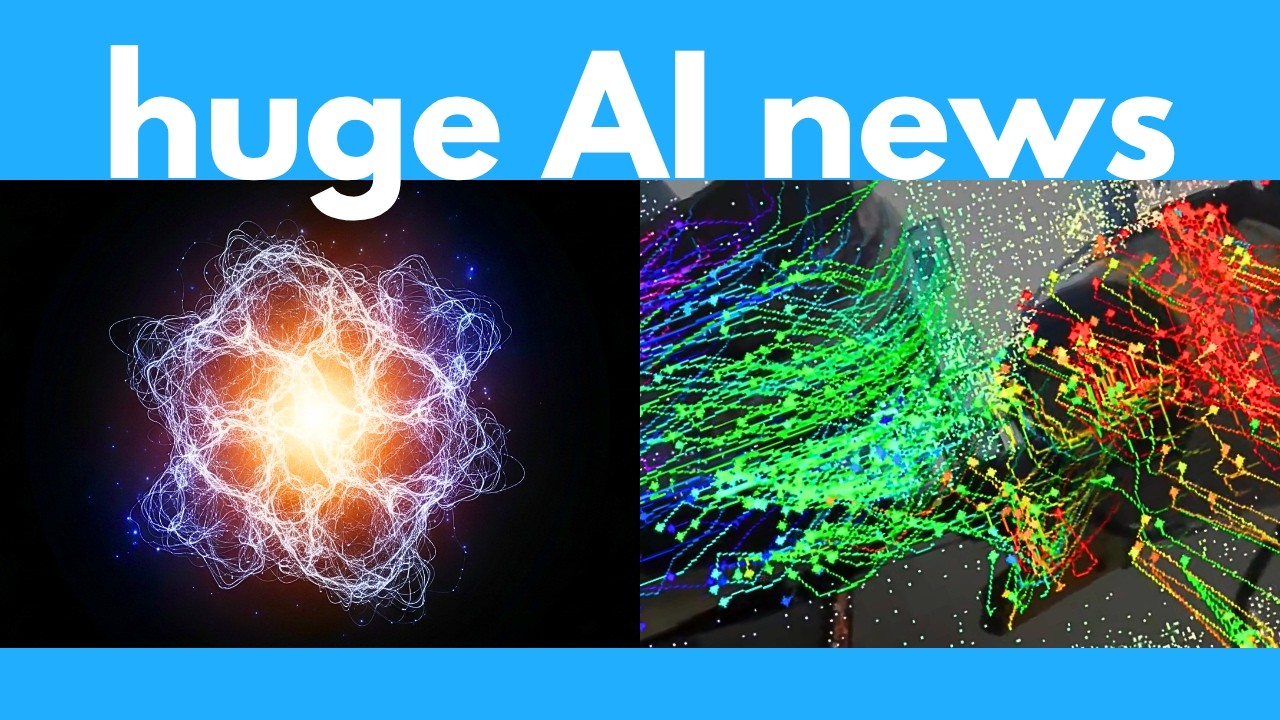
In technical breakdowns of emerging open tools, AI Search highlights Ming Image 0.1 Design Layer, an open-weights model capable of analyzing flat 2D designs and prompting them into separated, transparent layers with native alpha channels. For spatial asset creation, tools like Mira Scene estimate depth and object geometry directly from single reference images, reconstructing editable 3D scenes that can be exported into Blender for downstream animation.
ReelStack suggests incorporating automated layer separation and single-image 3D reconstruction into pre-visualization pipelines, enabling directors to extract modular scene props and re-angle 2D concept art into spatial camera animatics without manual 3D modeling.
 AI Search
 Read source excerpts 2
opposite. So it's meant to take a full flat design image and you would prompt the model on what you want to separate and it would output multiple transparent layers of
AI Search
identifies the objects in the image and then estimates the scene's depth and then generates the 3D geometry of each object. It then reconstructs their positions and sizes so
AI Search
Where do automated agent orchestration and spatial code pipelines encounter bottlenecks?
Despite the efficiency of code-driven animation and agentic connectors, automated production workflows present notable operational limitations and diminishing cost returns.
AI Samson cautions that while low-cost models provide inexpensive first passes, recursive bug-fixing loops and prompt iterations can quickly erase initial savings if the agent struggles with complex code architecture. Furthermore, attempting to inject excessive detail into 3D previs models creates diminishing returns, as building overly complex graybox geometry consumes more time than the resulting diffusion reference justifies.
Additionally, agentic tool-calling workflows introduce human approval bottlenecks. AI Samson notes that requiring manual director validation at every asset handoff slows down agent pipelines, yet granting full autonomy creates risks of unmonitored compute expenditure. Creators must establish explicit intervention checkpoints during early previs before initiating automated generation runs.
 AI Samson
 Read source excerpts 2
the tokens cost. They don't tell us how many attempts, fixes, or hours a finished project will take. A cheap first pass can become much more expensive if you spend all
AI Samson
aesthetic on top of the 3D model. Now of course the other challenge is that there is a certain limit of the detail that we can add to the 3D model. So if there are very
AI Samson
Key moments to explore
Optional deep divesWant to see a technique in action? Jump into the source videos. These AI-extracted timestamps may be approximate.
- 03:02 ↗Establishing foundational asset and model sheets prior to video generation prevents character face drifting and object morphing across cuts.kaye.creatives · How I Made a $1M Red Bull F1 Commercial With AI + Blender
- 0:08 ↗Opus 5.5 can programmatically generate animated videos using code without requiring traditional AI video generation models.Adrian Viral AI Marketing · Opus 5.5 Creates Killer Animated Videos & Programatic Video Edits! 🔥
- 01:03 ↗Opus 5.5 offers frontier-level performance at roughly 60% lower cost than Opus 5 and significantly cheaper rates than GPT-6 Astra.AI Samson · Opus 5.5 Crushes GPT-6 Astra? (Full Demo, Comparison and Use Cases)
- 00:53 ↗Tencent's WorldCrafter builds 3D point clouds alongside video output to maintain spatial consistency across camera turns in interactive world generation.AI Search · Waifus incoming, GPT 6 Sol, Grok 4.7, Opus 5.5, Mimo 2.6, Step 5, OpenMuse: AI NEWS
- 04:16 ↗Visual references gathered from moodboards can be analyzed by Claude Opus 5.5 to engineer optimized character sheet prompts without manual prompt writing.kaye.creatives · How I Made a $1M Red Bull F1 Commercial With AI + Blender
- 3:48 ↗Claude Code operates locally in project folders to build, render, and screen-record animated scenes based on text prompts and GitHub animation frameworks.Adrian Viral AI Marketing · Opus 5.5 Creates Killer Animated Videos & Programatic Video Edits! 🔥
Put it into practice
Plan camera movement with Blender →Practical steps and checks before committing to production.Turn an AI film brief into a shot plan →Practical steps and checks before committing to production. Get the practical weekly briefing →The useful ideas in one email. Subscribe to keep learning. Need a filmmaker for your project? →Tell us what you want to make and submit a project brief.Go to the source
4 videos