Benchmarking Budget Video Engines, Isolated Reference Compositing, and Audio-Visual Prompt Padding
Evaluating lower-cost diffusion models like Topview T1 and Kling 4.0 against Seedance 2.5 reveals steep compromises in 3D motion tracking and physical occlusions. AI filmmakers can maintain production quality by assembling turnaround sheets from individually rendered angles, padding dialogue prompts to prevent clipped lines, and avoiding unmonitored agentic edit pipelines that exhaust credit balances on intermediate background assets.
 AI Samson
 Thomas Lundström
Top learnings
Budget diffusion models reduce generation costs by over 60 percent, but struggle with physical occlusions and 3D camera tracking where Seedance 2.5 remains dominant.
Rendering separate product angles individually before compositing them onto a canvas yields sharper fidelity and tighter perspective control than generating single-pass turnaround sheets.
Explicitly prompting sealed lips during voiceover takes and padding speech to conclude one second before cut points eliminates mouth flutter and truncated dialogue.
How do budget diffusion engines compare against Seedance 2.5 in physical fidelity and motion guidance?
When directing high-stakes sequences, filmmakers frequently look for lower-cost alternatives to top-tier models like Seedance 2.5. However, recent benchmarks reveal that lower per-generation costs often introduce severe physical logic breakdowns and weak reference tracking.
Creator AI Samson tested the newly introduced Topview T1 model, which claims an approximate 62 percent price reduction over Seedance 2.5 ($6.60 versus $17.55 for a 30-second 1080p generation). While T1 delivered crisp visual contrast and competent lip synchronization, it failed repeatedly on physical occlusions. In dynamic fight choreography tests, an actor's kicking leg passed straight through an opponent's torso without collision impact, and an actor thrown backward phased through an opening washing machine door. Samson also noted that small background typography disintegrated into nonsensical glyphs.
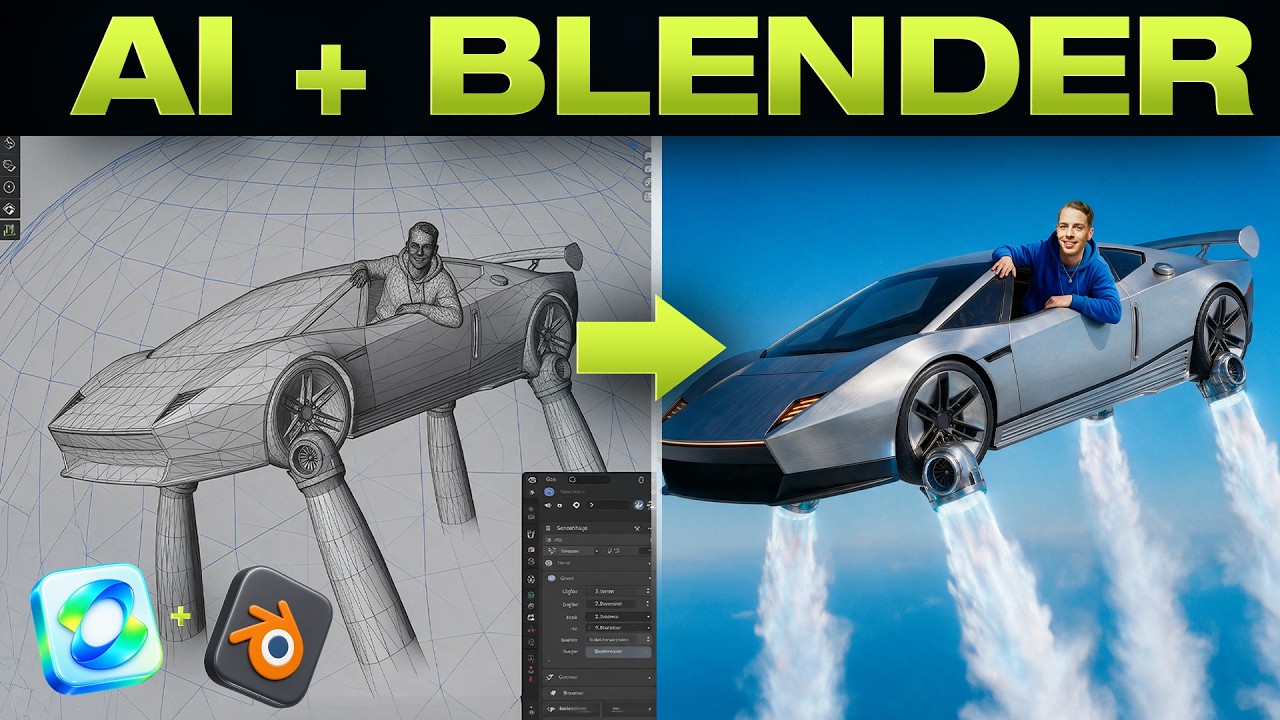
Similarly, creator Thomas Lundström evaluated Kling 4.0 against Seedance 2.5 using identical 3D camera animatics exported from Blender. While Kling 4.0 produced decent results for stylized animation, it failed to interpret the Blender viewport motion data for realistic sequences, yielding mushy artifacts and ignoring camera trajectories that Seedance 2.5 tracked cleanly. Lower generation pricing provides viable savings for dialogue-heavy two-shots, but complex physical stunts and 3D camera-matched blocking still require the structural adherence of premium engines.
Read source excerpts 2
leg passes straight through him with absolutely no recognition that he has struck him at all. So, we have some pretty poor physical relationship there. So for that it still
AI Samson
Cling 4.0 O just doesn't seem to really understand the Blender sequence the same way as Cance 2.5. Looking at this result, Cance 2.5 blows Cling 4.0 out of the water with the
Thomas Lundström
Why does compositing individually rendered angles outperform single-pass reference sheets?
Maintaining prop and character continuity across sequential takes requires high-fidelity reference sheets. However, attempting to prompt an all-in-one turnaround sheet containing multiple views on a single canvas often forces diffusion engines to compromise on fine geometric details.
Thomas Lundström illustrates a modular solution: instead of generating a master product turnaround in a single prompt, the director generates individual angles as separate image renders using Nanobanana 2.1 before arranging them onto an external editing canvas. Rendering each perspective independently concentrates the model's full latent resolution on a single viewpoint. The resulting renders are then imported into an image editor, arranged into a structured multi-view plate, and captured as a unified reference sheet.
This technique aligns with pre-production rules demonstrated by Youri van Hofwegen in micro-drama development. Van Hofwegen establishes a strict threshold: any wardrobe, prop, or setting that appears in two or more shots must receive a dedicated multi-angle reference sheet before initiating video diffusion. ReelStack suggests adopting this hybrid asset workflow: render isolated hero angles individually to preserve crisp edges and text markings, then assemble them onto a unified neutral gray canvas before binding the sheet to scene prompts.

Read source excerpts 2
one image with all the angles and close-ups of a product, I created separate images for the different angles using Nanobanana 2.1. Doing it this way gives me more control of
Thomas Lundström
up in two or more videos gets one, even inside the same episode, which is why the radio, the backpack, and the letter all have their own. If more than one person wears the
Youri van Hofwegen
How do sealed-lip prompts and dialogue timing buffers eliminate audio-visual generation glitches?
Directing multi-shot scenes with integrated audio frequently results in frustrating performance errors. Video models often animate an actor's mouth during internal voiceover narration or truncate dialogue abruptly at the end of a generation window.
In an AI micro-drama pipeline using Seedance 2.5, Youri van Hofwegen demonstrates that preventing unwanted mouth movements requires explicit negative prompt engineering. When a scene features internal monologue or radio dialogue, the generation prompt must explicitly declare that the character's lips remain completely sealed from the first frame to the last. Without this negative constraint, diffusion models interpret narrative audio as spoken dialogue and force the onscreen actor to move their mouth unnaturally.
Furthermore, van Hofwegen introduces a vital timing constraint: all generated dialogue must be instructed to finish at least one full second before the end of the generation bracket. This duration buffer ensures that sentences do not get sliced off mid-syllable when the editor cuts to the next sequential take. Van Hofwegen also highlights that because Seedance 2.5 originates from ByteDance, prompts must explicitly demand English delivery to prevent the model from defaulting to Mandarin dialogue. ReelStack suggests standardizing these script constraints into reusable production templates: mandate sealed lips for voiceovers, enforce a one-second terminal dialogue buffer, and specify delivery language on every vocal pass.
 Youri van Hofwegen
Read source excerpts 2
most here says, "Mary stays completely silent, and every word she says is an inner voice over the picture with her lips sealed from the first frame to the last." If you leave
Youri van Hofwegen
Sea dance is a bite dance model and if you don't say it, it can give you the whole scene in Mandarin. It also says every line has to finish 1 second before the end of the
Youri van Hofwegen
What hidden credit drains and spatial hallucinations constrain automated edit orchestration?
Orchestrating video edits through agentic connectors promises rapid turnaround, but handing scene construction over to autonomous pipelines introduces unpredictable creative shifts and severe credit burn.
Testing Higgsfield Katana inside Claude, creator Kiko demonstrates that attempting to recreate a third-party reference video shot-for-shot results in reinterpretation rather than duplication. When instructed to match an existing edit's cuts and timing while swapping the hero vehicle, Katana altered camera angles and hallucinated fictional features, rendering thrusters on a car and generating a flight sequence that did not exist in the source plate. While native platform templates preserved editing rhythm more reliably than arbitrary external references, the autonomous pipeline generated numerous unmonitored background variations and intermediary passes, consuming extensive platform credits without user approval.
Mechanical inconsistencies also persist in complex narrative interactions. In Samson's evaluations of T1, a pickpocketing action resulted in the stolen pocket watch appearing in the protagonist's hand while simultaneously remaining attached to the victim's jacket. Directors cannot treat agentic MCP tools or budget video engines as hands-off finishing solutions. Autonomous pipelines function best as rough layout generators, requiring human editors to trim intermediary bloat and audit physical continuity in an NLE.

 FRMWRKD-EXPLAINED
Read source excerpts 2
result. When you compare the two, you can see that Katana didn't actually reproduce the original frame for frame. Instead, it took the reference as a starting point and built
FRMWRKD-EXPLAINED
places where your subject or avatar is going to be. And this is one thing that you have to look out for since you don't have control of how many images you're going to
FRMWRKD-EXPLAINED
Key moments to explore
Optional deep divesWant to see a technique in action? Jump into the source videos. These AI-extracted timestamps may be approximate.
- 00:44 ↗Topview claims a 30-second 1080p generation on T1 costs $6.60 compared to $17.55 on Seedance 2.5, representing an approximate 62% cost reduction.AI Samson · The End of Seedance? This New AI Video Model Is 3x Cheaper
- 02:12 ↗Generating separate individual product angles rather than an all-in-one product sheet provides tighter angle control and higher fidelity before compositing into a sheet.Thomas Lundström · I Tested KLING 4.0 with my Blender Workflow
- 01:41 ↗Micro drama narrative pacing relies on immediate conflict in the opening second, a narrative pivot in the middle, and a cliffhanger at the end of each episode.Youri van Hofwegen · How to Make Micro Dramas with AI (Full Course)
- 01:16 ↗Feeding an existing edit into Claude with the Higgsfield integration allows the model to coordinate shot timing, cuts, and subject replacement.FRMWRKD-EXPLAINED · I Tested Higgsfield Katana in Claude. Can It Copy an Edit?
- 01:21 ↗Topview T1 demonstrates natural lip syncing, speech accent accuracy, and subtle physical facial acting, though sentence pacing can sometimes feel slightly rushed.AI Samson · The End of Seedance? This New AI Video Model Is 3x Cheaper
- 03:20 ↗Selecting a soundtrack before building the 3D Blender sequence allows camera movement pacing to sync directly to musical cues during scene blocking.Thomas Lundström · I Tested KLING 4.0 with my Blender Workflow
Put it into practice
Plan camera movement with Blender →Practical steps and checks before committing to production.Turn an AI film brief into a shot plan →Practical steps and checks before committing to production. Get the practical weekly briefing →The useful ideas in one email. Subscribe to keep learning. Need a filmmaker for your project? →Tell us what you want to make and submit a project brief.Go to the source
4 videos