AI Video Generators Ranked from Worst to Best (2026)
Offers AI filmmakers a clear, standardized framework for evaluating video model capabilities across dialogue synchronization, camera instruction adherence, and stylized visual output.
What this lesson covers
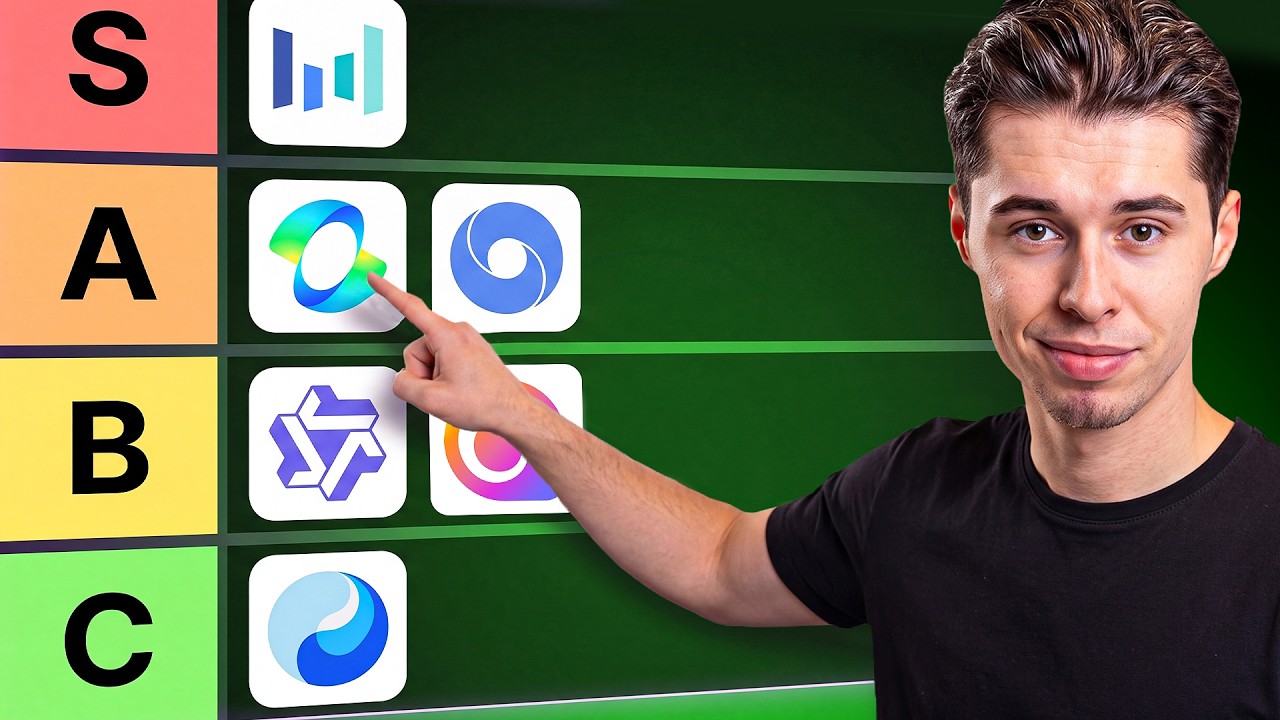
Youri van Hofwegen conducts a blind comparison test of four leading AI video models inside the Higgsfield platform using identical prompts and settings. The test rounds evaluate model performance on complex dialogue scenes, camera positioning, lip sync accuracy, and cell-shaded anime animation continuity.
Key takeaways from the creator
AI-extracted notes, not independently verified product claims. Timestamp links let you check each point in the original video.
- 0:23 ↗
Conducting blind model comparisons eliminates personal bias regarding specific AI video generators.
- 1:27 ↗
Normalizing parameter settings like 10-second duration, 16x9 aspect ratio, and 720p resolution ensures fair performance testing.
- 1:56 ↗
Testing purely with text prompts isolates prompt adherence from image-to-video reference mapping.
- 2:46 ↗
Writing exact word-for-word dialogue in prompts enables precise verification of generated lip sync and vocal audio.
- 5:42 ↗
Testing cell-shaded anime styles reveals whether a model strictly respects 2D artistic rules or defaults to stylized 3D renders.
Workflow outlined in the video
- Standardize generation settings across all models being tested, matching duration, resolution, and aspect ratio.
- Write text prompts detailing camera angle, lighting, and explicit word-for-word dialogue lines.
- Enable native audio generation settings to benchmark simultaneous audio synthesis and mouth movement.
- Assess outputs against camera positioning directives to identify prompt adherence failures.
- Test edge-case visual styles, such as 2D cell-shaded anime, to analyze motion fluidity and rendering limitations.
Before you use this workflow
These notes describe the source video at its publication date. Model access, pricing, connectors and interfaces may have changed. Check the original source and the provider’s current documentation before installing an add-on, connecting an account or spending credits.
ReelStack has not independently tested this workflow. Preview one representative shot and check motion, continuity and output quality before applying it to a full production. No result, cost saving or model capability is guaranteed.
Explore the tools
How to interpret the numbers
43,844 views captured 27 September 2026. ReelStack recommendation score: 45/100. Formula: radar-v5. This is ReelStack’s calculation, not a YouTube rating or a measure of factual accuracy.
Show the calculation
- 45% performance: 0.60× views vs 6 other channel videos observed at a similar age. View-evidence factor 98% (views / (views + 1,000))
- 25% freshness: 76/100 with a 14-day half-life
- 20% momentum: 4224 views/day vs 5224 channel baseline (6 comparable uploads), with the same view-evidence factor
- 10% engagement: 3/100; likes + 4× comments, smoothed with a 500-view neutral prior