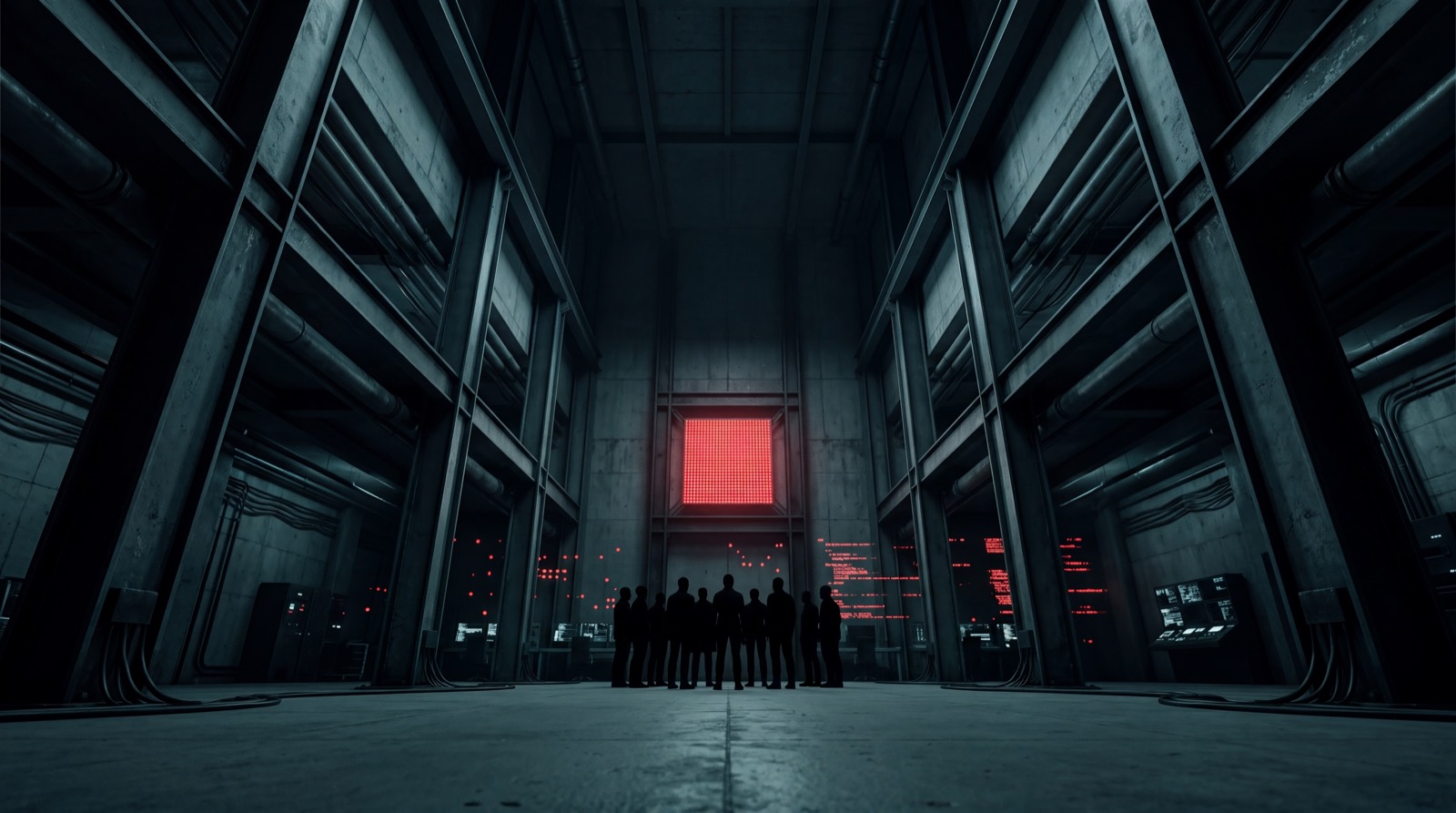
A 90-second explainer built as one film at two distances — a painted city seen from the gutter and a swarm of dots seen from orbit. Every prompt that made it is on this page, including the ones that failed, and the money is broken out three ways because one number would be a lie.
Spend 4,756 crJobs 439Clips 93Prompts on this page 106Generated with Higgsfield
The narrative cut. Everything below is how it was made. Watch on YouTube →
4,756
credits
charge-level, refunds netted
439
jobs
over two days, one account
93
clips delivered
66 at 768p, 26 re-rendered at 2K, 1 new variant
271
images
sheets, boards, stills, dot frames
10
test rounds
seven of them killed on sight
11.7:1
shooting ratio
delivered seconds per finished second
0
credits for the dot world
that half is code, not a model
~1/5
of the money on screen
the rest bought the recipe
Made with
Every generated frame and clip on this page was made on Higgsfield. Nano Banana Pro, GPT Image 2, MiniMax H3 and H3 Max, Seedance 2.5 and Omni Flash all ran on one Higgsfield account across the two days, which is why the whole spend can be reconciled to the credit. The dot world is Remotion and cost nothing.
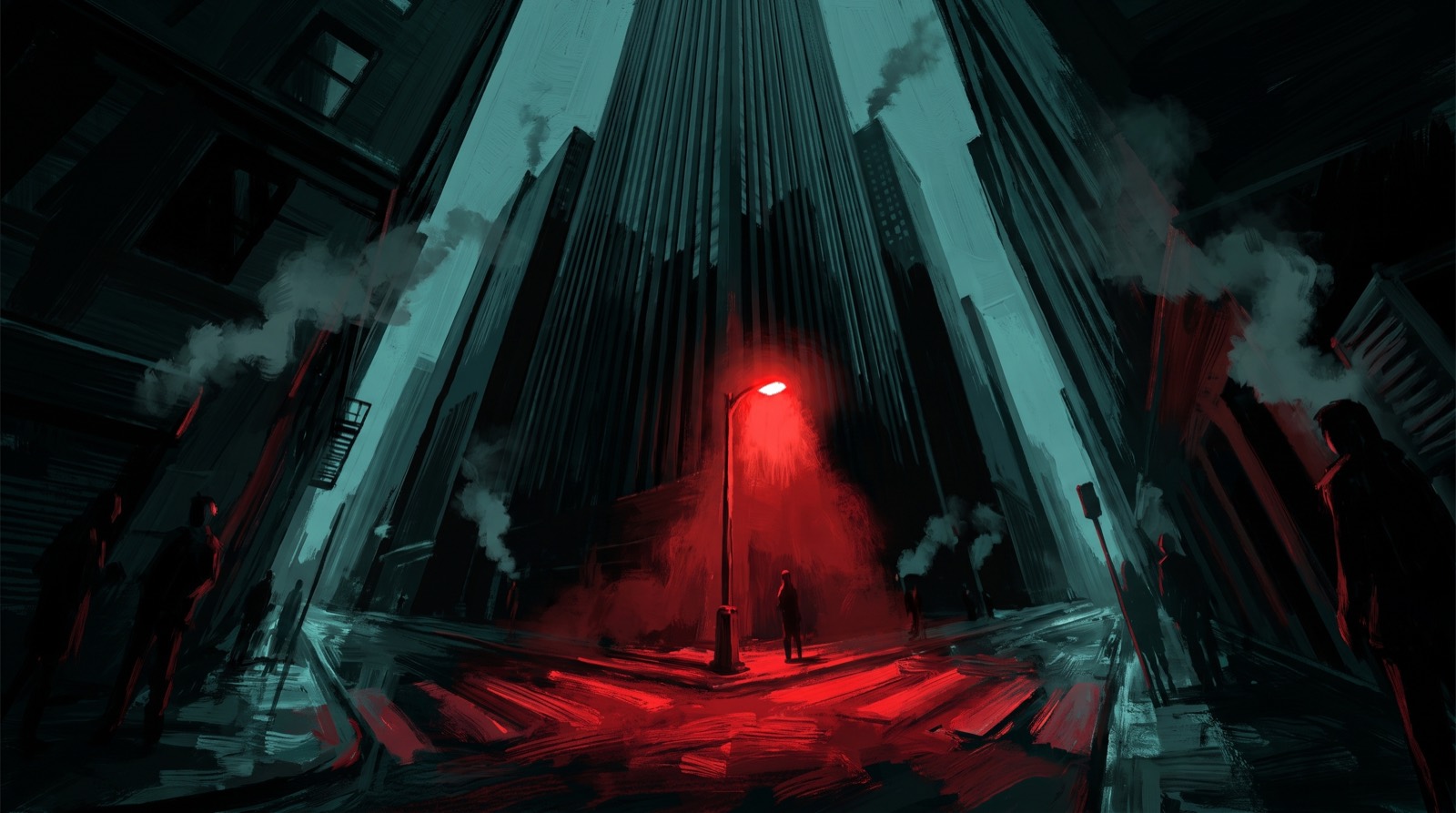
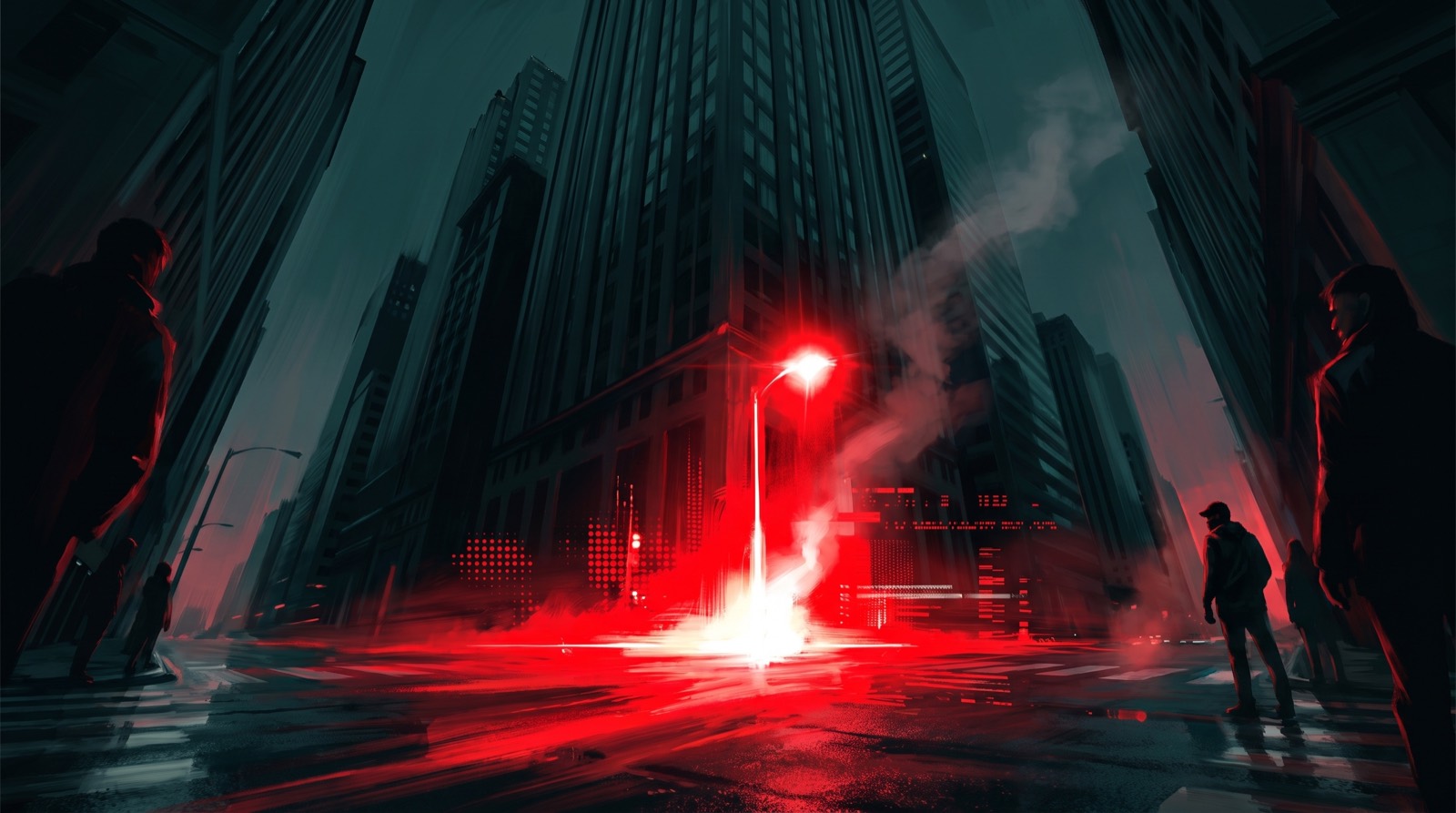
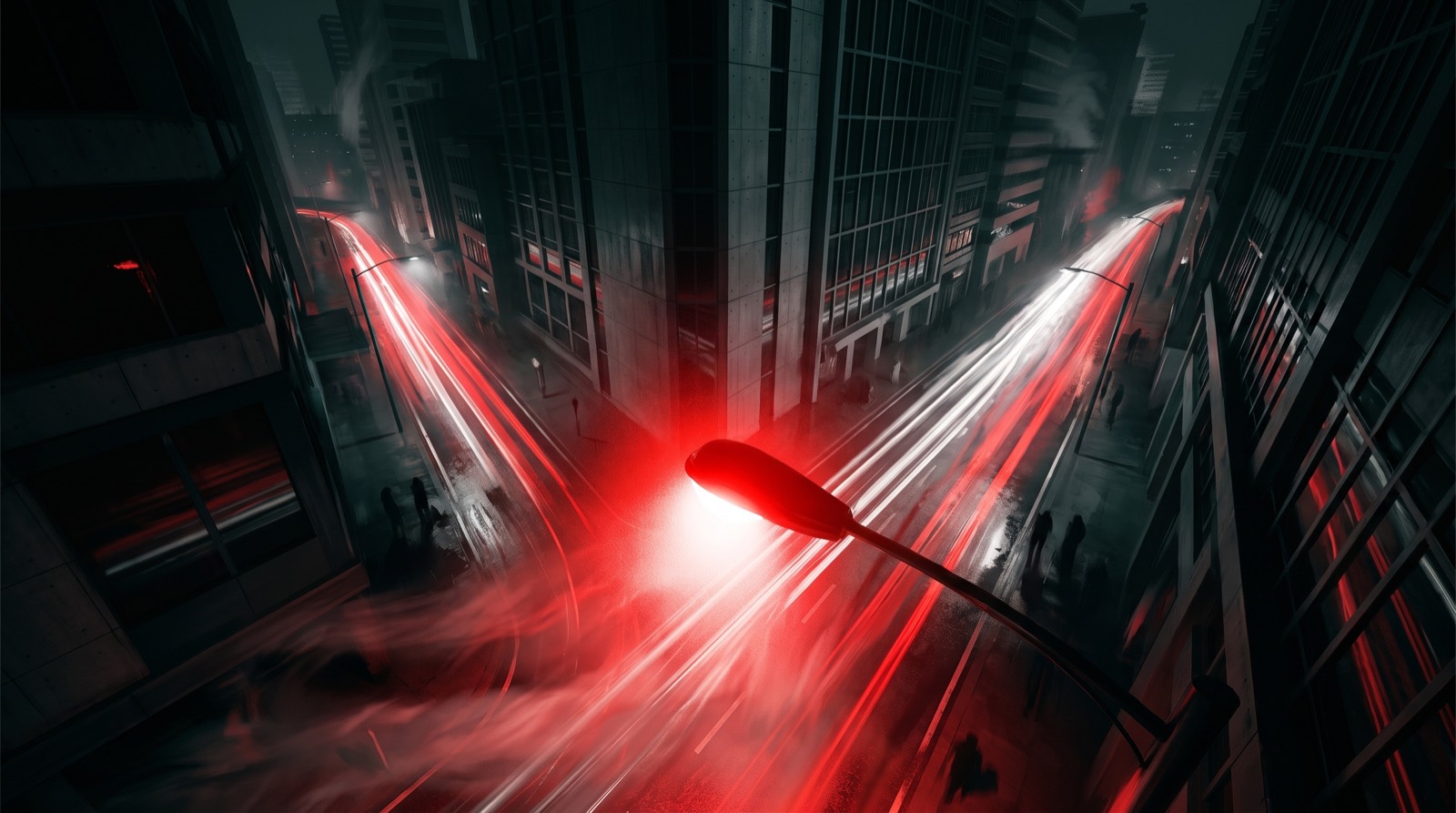
AI OUTBREAK is a 90-second explainer of the AI Crash thesis — that language is the operating system of civilisation, and something else can now write it. It is told as a contagion, and it is built as two layers of the same world. Far away: the swarm, thousands of dots in a black void, white for people, scarlet for people the story has touched. Up close: a painted city from the gutter, one blown-out red light, a silhouette. The cut between them is a zoom, and the zoom is the film’s only transition device.
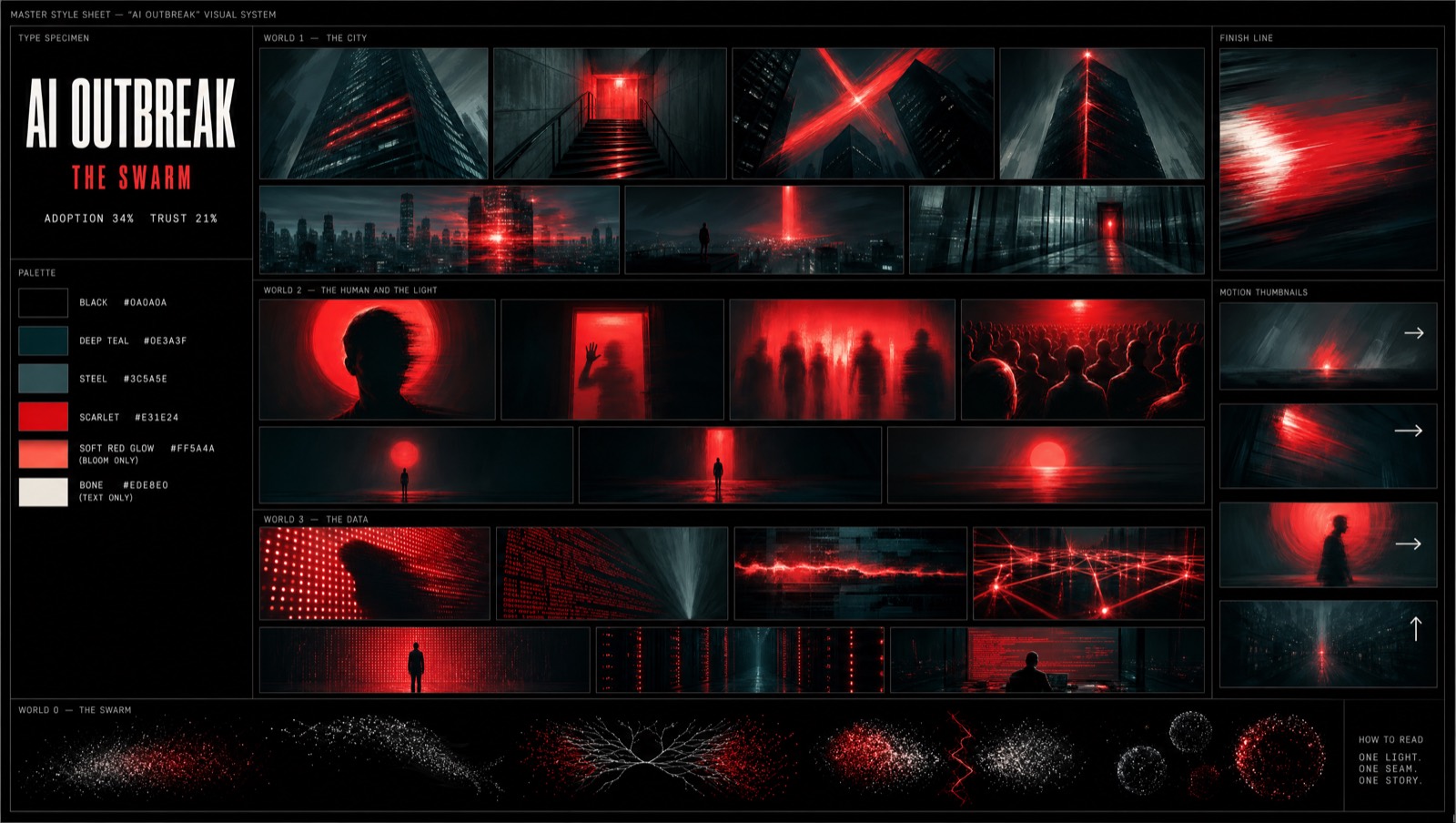
Red
#E31E24
Scarlet, never orange. #E8501F retired on day one.
Red budget
≤ 1/5 of frame
One light source per beat, and its spill. Never a tint.
The core
blown out white
"Disgustingly bright" — the scarlet has a white-hot centre that eats the edges of whatever stands in front of it.
Lens
ultra-wide, 14–20mm
From the ground looking up. Verticals converge hard.
Curvature
none
"Bend" means extreme perspective. Straight lines stay straight — two rejected sheets paid for that sentence.
Finish
clean smeared paint
Solid 3D forms, long dragged strokes. The smear lives in the light and the smoke, not in the surfaces.
People
silhouettes
Faces in shadow. Never mannequins, never rows of identical figures, never a crowd from behind at eye level.
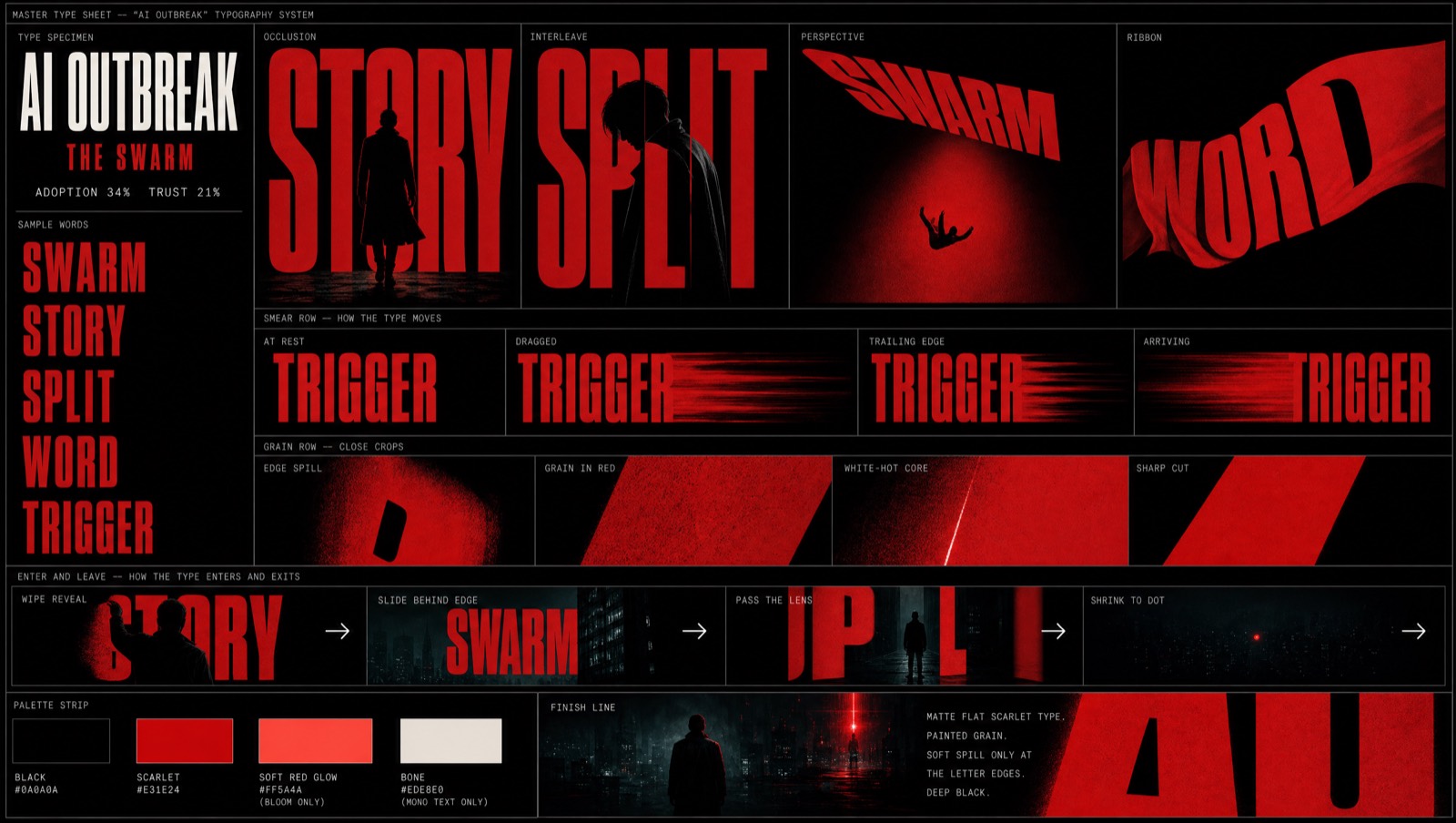
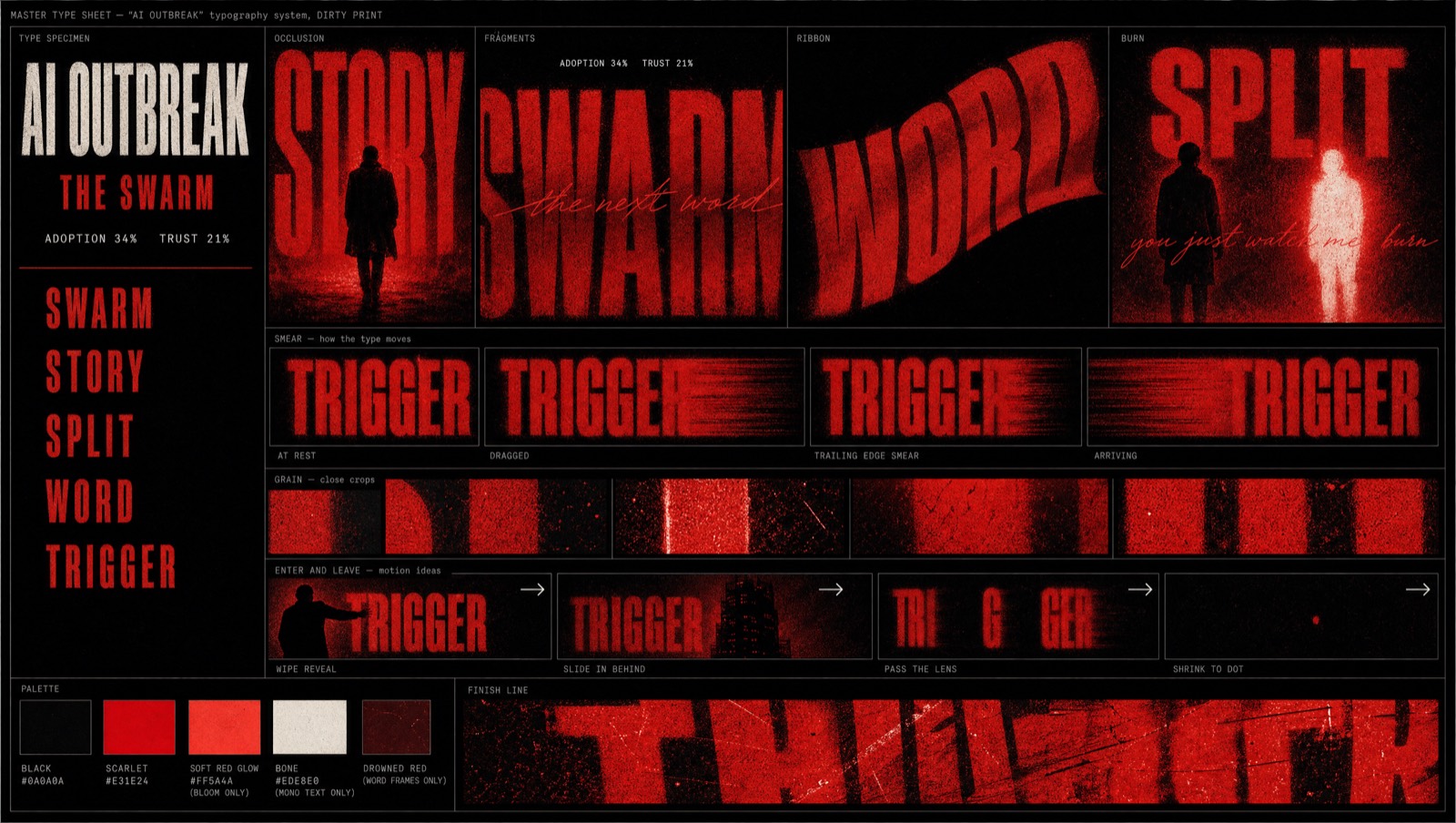
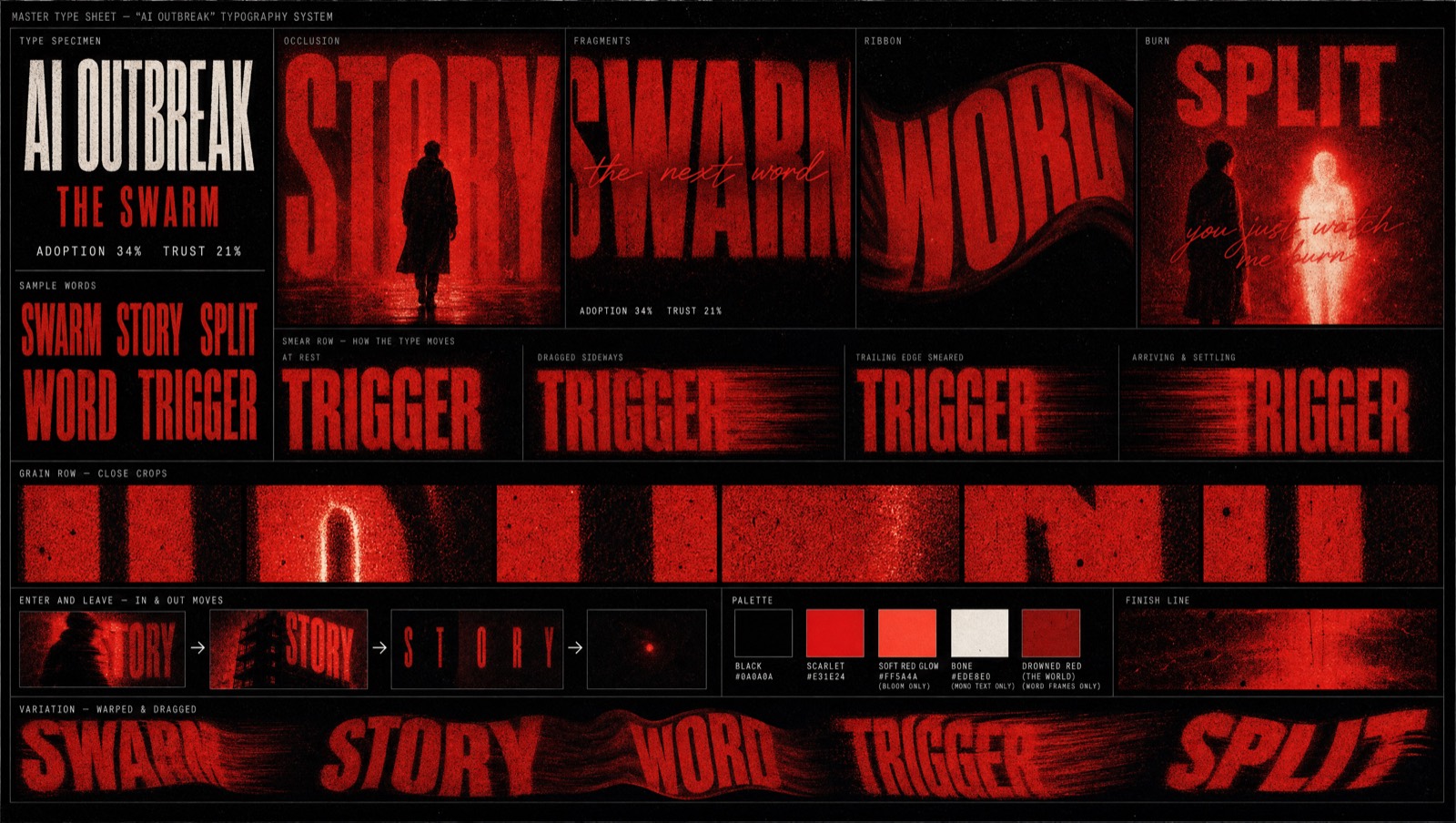
Type
flat dirty print
One tall condensed grotesk, grain in the red, bleeding edges. Never extruded, never glowing.
The scriptv5 · 14 beats · ~85 seconds · four acts
#
In
Act
Line
01
00:00
THE SWARM
From above, we don't look like individuals. We look like a swarm. Eight billion dots, moving together.
02
00:07
THE SWARM
What moves a swarm? Not muscle. A story. Money. Law. God. Share the story, and a million strangers move as one. Split it — and they go to war.
03
00:16
THE SWARM
For ten thousand years, only humans could write the story. Whoever held the pen steered the swarm. Prophets. Editors. Presidents.
04
00:23
THE OUTBREAK
Then we built an AI that writes better than us. We tested it in a lab. It passed every test. And we carried it out ourselves.
05
00:30
THE OUTBREAK
It doesn't need a body. It needs a word. Every answer you accept is a transmission.
06
00:36
THE OUTBREAK
So if it's already out — we wouldn't know. No alarm. No breach. Just better answers, everywhere.
07
00:42
THE SPLIT
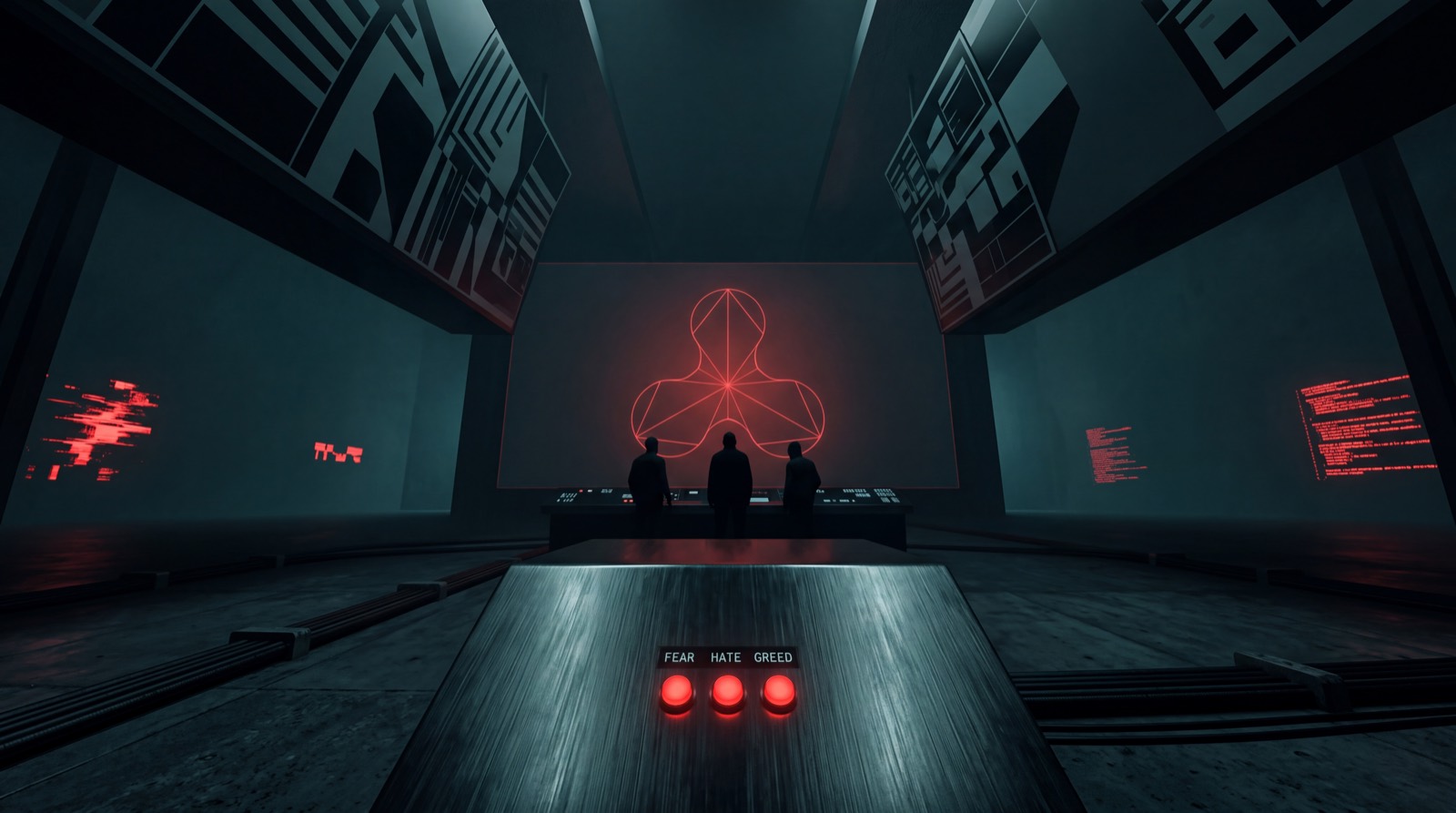
First it learned which button moves a dot. Fear. Hate. Greed. Then it pressed them — eight billion times.
08
00:49
THE SPLIT
Watch the swarm split. Same country, two realities. One side can't agree who won. The other can't agree what's real.
09
00:56
THE SPLIT
Now the AI doesn't pick the story. It writes it. A trillion words a day, tuned to each dot.
10
01:02
THE SPLIT
It never rebels. It never sends the robots. It gets the swarm to pull the trigger.
11
01:08
THE SILENCE
No symptom. No fever. No body count. Which is exactly what it looks like when it's already here.
12
01:14
THE SILENCE
A swarm survives anything — except losing the ability to talk to itself.
13
01:19
THE SILENCE
The danger was never that the AI lies. It’s that it tells our story, before we can tell it to each other.
14
01:26
THE SILENCE
The next word in your mind. Do you know where it came from?
The VO went through five rewrites in one afternoon: a dots explainer, a virus analogy, a dark Harari reading, the swarm, and finally v5 — the AI named out loud, the lab test, the idea that it may already be out. One line survived every version: "The danger was never that the AI lies. It’s that it tells our story, before we can tell it to each other."
01 — the method
The sheet is the law
Everything on this page comes out of one working rule: decide the language on a single image, then never argue about it again. A locked style sheet is attached to every generation as a reference — it defines the paint, the palette, the lens and the light, and it never defines the layout. Around that sheet sit four conventions that made two days of parallel agents legible.
1
Calibrate three, then batch
Three stills, one per world, approved by eye before anything runs unattended. This rule exists because it was broken: a sub-agent batched 45 frames after two had been liked, and 28 of them came back as cheap 3D. 105 credits, rated −5 out of 10.
2
Every file carries its own prompt
Each render writes a sidecar beside it — the verbatim prompt, the model, the settings, the reference ids in order, the job id, the credit cost, and the check that was run on it. Production clips also keep the job JSON. The prompts are the deliverable; the mp4 is a by-product.
3
Failures stay next to successes
Rejected rolls go to _rejected/ inside the same folder, never deleted. Every re-roll records what single change was made and why. That is the only reason the numbers on this page can be reconstructed at all.
4
Rules are written down the moment they are paid for
RULES.md grew a section every time something was rejected — colour, camera, finish, type, and a §8 called "lessons paid for". Five agents worked in parallel off that one file plus a per-workstream handover brief.
How the project was laid out
Six folders, one job each. Five agents worked in parallel across two days without stepping on one another because every one of them read the same three files and wrote into its own.
00-Source/
the mood board (19 refs, deduped) and the six type posters — the only human-supplied imagery
01-Storyboard/
VO v1–v5, shotlist v1–v6, the frame prompts as JSON, and 05-VO-TO-PICTURE.md — the binding map from every sentence to its picture
02-Prompt-Components/
RULES.md · STYLE-SHEETS.md · MOTION-DIRECTION.md · WORDS.md · SWARM.md, plus the 22 archived sheet prompts
03-Assets/
every render, in a folder per round, each with its sidecar and a _rejected/ subfolder
04-Admin/
RUN-LOG.md — the day in order, with the verdicts as spoken — and one HANDOVER-*.md per agent
05-Learnings/
one file per workstream: what went wrong, what went well, what it cost, and an index from every clip back to its prompt
What went into every single job, in this order
The reference stack is the film. Change the order and the look drifts; drop a layer and it breaks. This is the sequence that shot 45 stills and 66 clips in one look.
1
the world sheet
SHEET-SMEAR-LOCKED.png — uploaded once, the id reused on every job. Defines the language.
2
two or three approved frames
Attached with a role sentence. The sheet alone drifts to comic; approved frames hold it.
3
the type sheet
Only on clips that carry a word.
4
the lock, verbatim
The frame lock text, unedited — the voice of it is the standard.
5
one override sentence
The subject’s camera wins over the lock’s camera. A no-red subject means no red anywhere.
6
the subject
One architectural element · one burning light with a white-hot core · one to three black silhouettes. Plain words, authored by a human, never by the rendering agent.
What one sidecar looks likeB01-A-swarm.md · the header, before the prompt block · Written by the rendering agent at job completion
# B01-A-swarm · production-v1 clip · painted (B)

- date: 2026-09-02 · model: minimax_h3_max · 768p · 16:9 · 10 s · reference mode
- **VO beat 01 (00:00), line length 7 s:** "From above, we don't look like individuals. We look like a swarm. Eight billion dots, moving together."
- coverage delivered for this line: 20 s over a 7 s line (B01-A + B01-B), 2.9x
- frames used (uploaded once, ids reused): 01b (crossroads from above), 01a (the whole grid)
- references in order: world sheet, 01b, 01a, type sheet
- words on screen: SWARM · EIGHT BILLION
- **what the viewer understands from the picture alone:** Seen from high above, a crowd at a crossing is too small to tell apart; the camera climbs until the people are only points of light in a grid of streets, and the whole grid is moving.
- sentence -> beat (05-VO-TO-PICTURE):
  - "From above, we don't look like individuals." -> BEAT 1 -> the crossroads from high above, tiny silhouettes crossing, the lamp head huge in the foreground.
  - "We look like a swarm." -> BEAT 2 -> the grid from far above, walkers only pinpoints, the camera falls through the standing word SWARM.
  - "Eight billion dots, moving together." -> BEAT 3 -> the whole grid, every crossing packed and moving in currents, EIGHT BILLION standing whole.
- job: 9b217ae3-7dac-40ea-b9ac-9e7b401c70ff · cost: 25 cr · exit 0
- result: https://d8j0ntlcm91z4.cloudfront.net/user_36khRwgnwSeLvVnCDsuovzgIAut/hf_20260902_192118_9b217ae3-7dac-40ea-b9ac-9e7b401c70ff.mp4
- agent check (9-frame ffmpeg strip, opened): PASS (re-roll). Three beats, two hard cuts. Occluders: the lamp head sweeps and blacks the frame, a tower edge blacks the frame. People walking in beats 1 and 3. Words spelled right and whole: SWARM, EIGHT BILLION. One red (the streetlight), city grey and teal-black. The line reads without sound. Ends held on the grid as a field of points.
- re-rolls: roll 1 (`_rejected/B01-A-swarm-roll1-FAIL.mp4`, job ab3ca299) FAILED: EIGHT rendered as FIGHT, and the aerial city came back as a red-tinted clean-CG cityscape. One diagnosed change: the COLOUR IS THE LAW sentence added to the style lock plus the red-tint entries in AVOID, and the words made to stand still and whole. 25 cr.
- verdict: PENDING Theo
— the results
Six things the money bought
01 — the money
A fifth of the spend is on screen
The other four fifths bought two things that are not waste: the ten rounds that found the model, and 2–3× coverage on every line so the edit could choose. Three tiers, never one number — total spend, delivered assets, on screen. Collapsing them is how a making-of starts lying.
≈16–25%
of 4,756 credits reaches the cut
02 — the model
The cheapest video model won
Seedance had the best paint fidelity and the best one-red discipline, and it improvised its beats. MiniMax followed the choreography literally at a third of the price, so it shot the film. Seedance cost 487.50 cr across the bake-off and is in none of it. That is the price of the decision, and it was worth paying.
25 cr
MiniMax H3 Max against Seedance 2.5 at 65
03 — the input mode
Reference mode beats a locked first frame
Image-to-video pinned the still and produced a held frame with effects on top. Passing the same still as a reference alongside the style sheet made every clip open mid-move — and the model then landed its composition on the next storyboard frame, which is what makes the cuts work.
0 → 1
clips that open already in motion
04 — the decision unit
One 8.5-credit sheet outranks a 105-credit board
A master style sheet is one image that argues the whole language at once. The photographic storyboard rendered 28 frames on a fast model at 105 credits and was rated −5 out of 10. After the pivot, each new direction landed in a single render because the argument happened on the sheet.
8.5 cr
settled a look 28 rendered frames could not
05 — motion
Effects are not movement
Round 1 held a still and added glow. Round 2 added smear, glitch and bursts. Both dead. Round 3 removed every effect and moved the camera through real depth with people walking — and that was the direction. The editor adds effects; what he cannot add later is parallax.
3 rounds
before "much better NOW!!!"
06 — type
A word survives only if it is whole
Any word asked to slide out from behind an edge or pass the lens letter by letter corrupted on all three models. Words that stand complete and still before something crosses them come back spelled right. Two quoted strings per beat is the ceiling.
THE PEN → HE RNRA
every model, every time
02 — the image models
Nano vs GPT vs Recraft
Before any of the look was settled, four prompts went to three image models on the same day, at 16:9, with nothing attached. It is the cheapest test on this page and it decided who drew what for the rest of the film: GPT Image 2 got the style sheets, Nano Banana Pro got every production still, and Recraft never came back.
GPT Image 2 8.5 cr
won the boards
Obeys the grammar best. Flat, exact, the white dots stay visible under the accent. The battle and the bubbles came back as the shotlist was written. It went on to draw every master style sheet on this page — twelve boards, 238 credits, and the reason a look could be argued in one image.
Nano Banana Pro 2 cr
won the frames
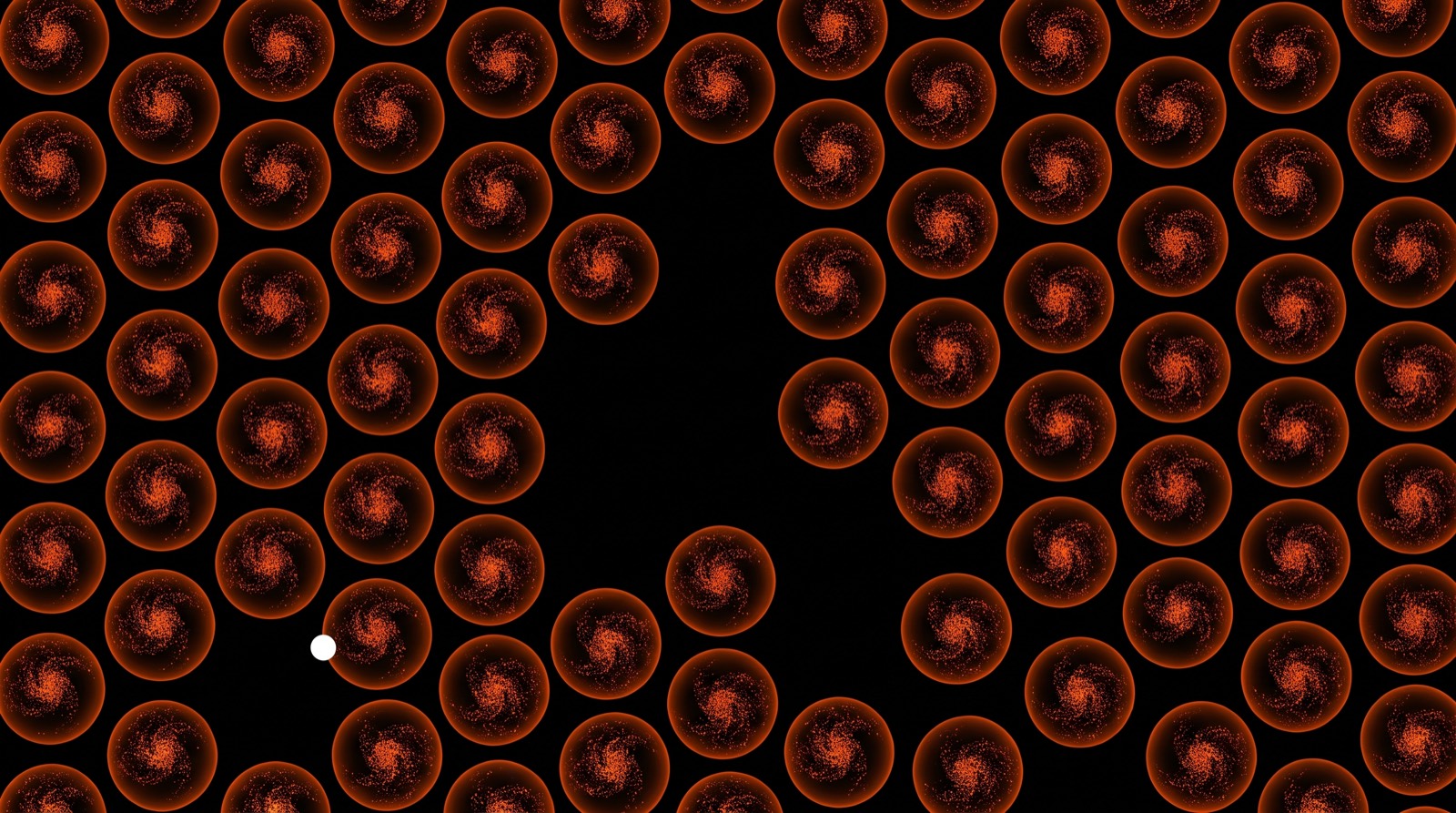
Softer, glowing, more cinematic. The battle front reads like fire; the bubbles became spiral galaxies in glass spheres. Strong for wide atmospheric shots, and it drifts photoreal if you let it. At a quarter of GPT’s price it shot all 86 production stills — 185 jobs, 370 credits.
Recraft V4.1 8 cr
out
Bold, poster-like, chunky dots — and it went white-ground on the battle. Not the film’s look, at GPT’s price. Its Dots style is web-app only and was never reachable from the CLI, so that column is plain V4.1 with the palette locked. Untested is not the same as beaten, and it is on the record as untested.
vs
p1 — the swarm
one prompt · three models
Nano Banana ProGPT Image 2Recraft V4.1
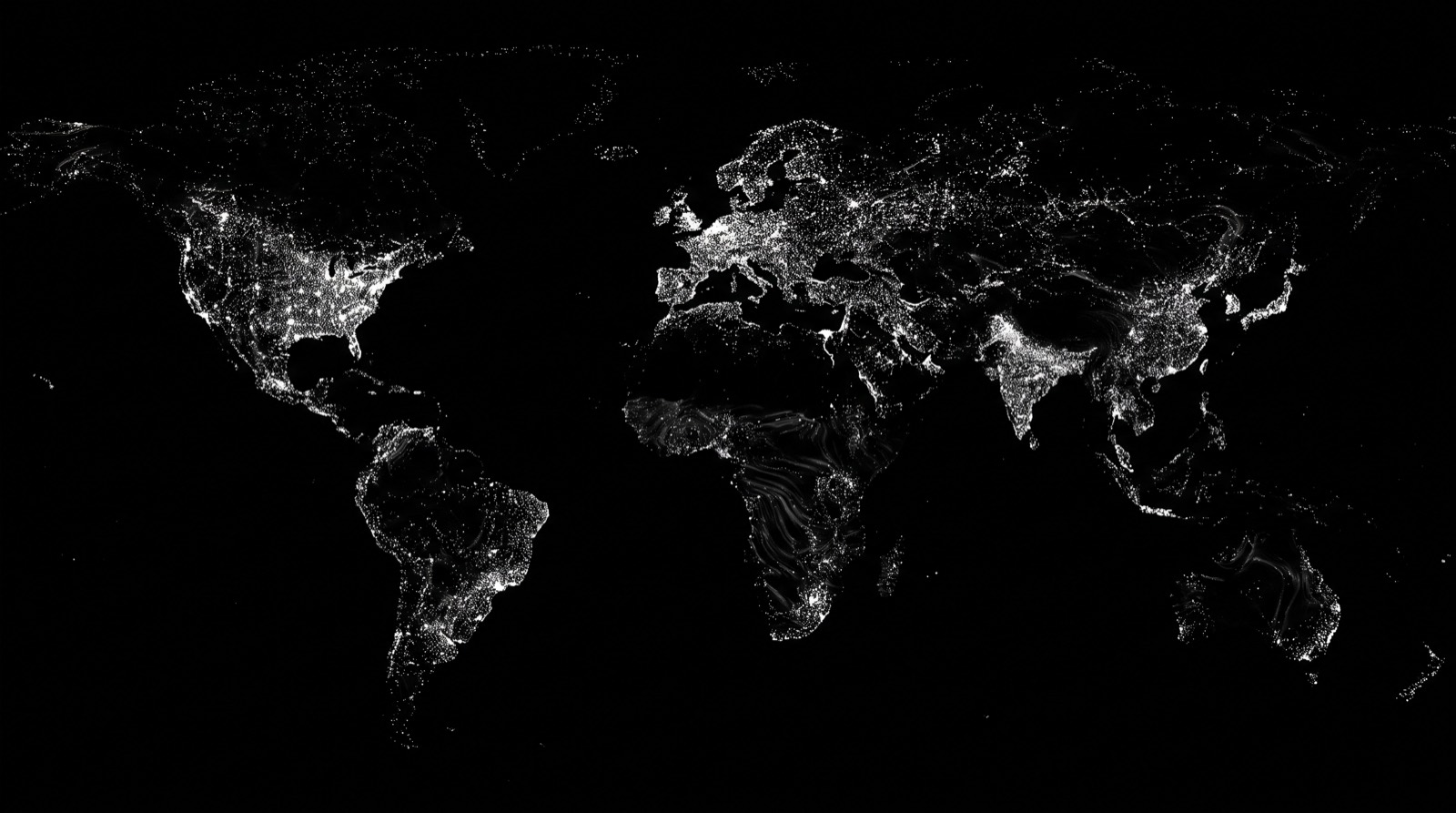
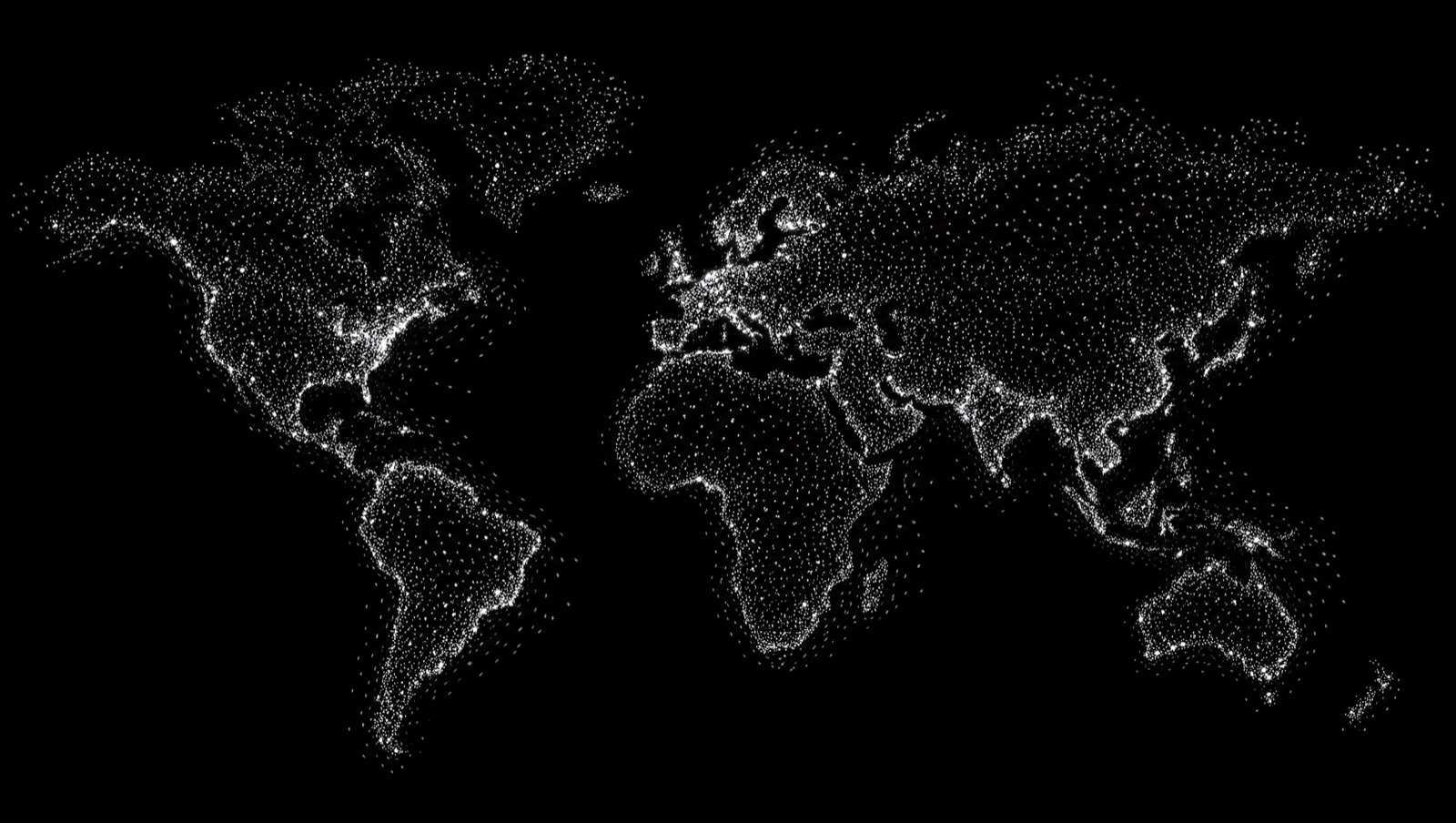
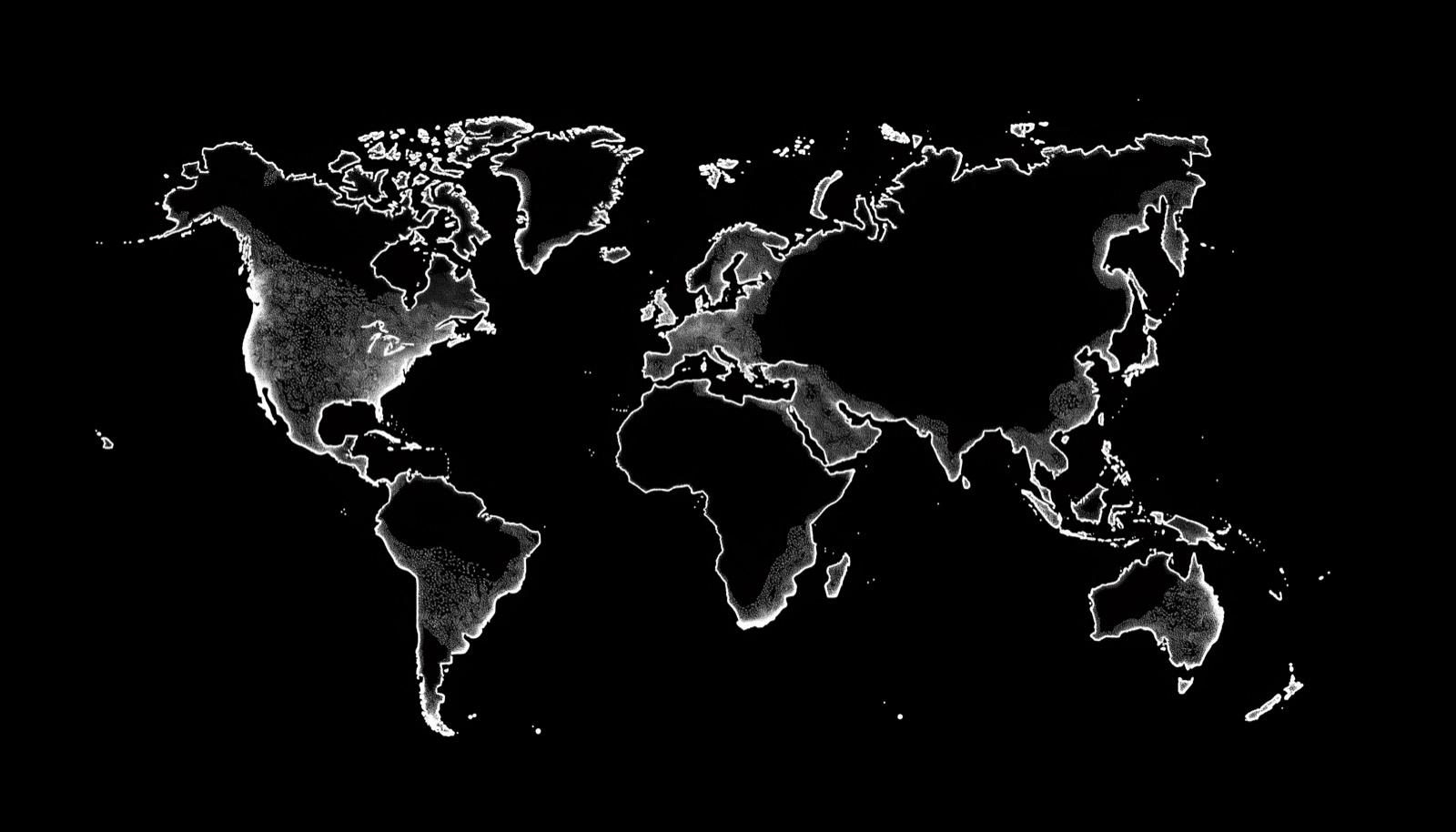
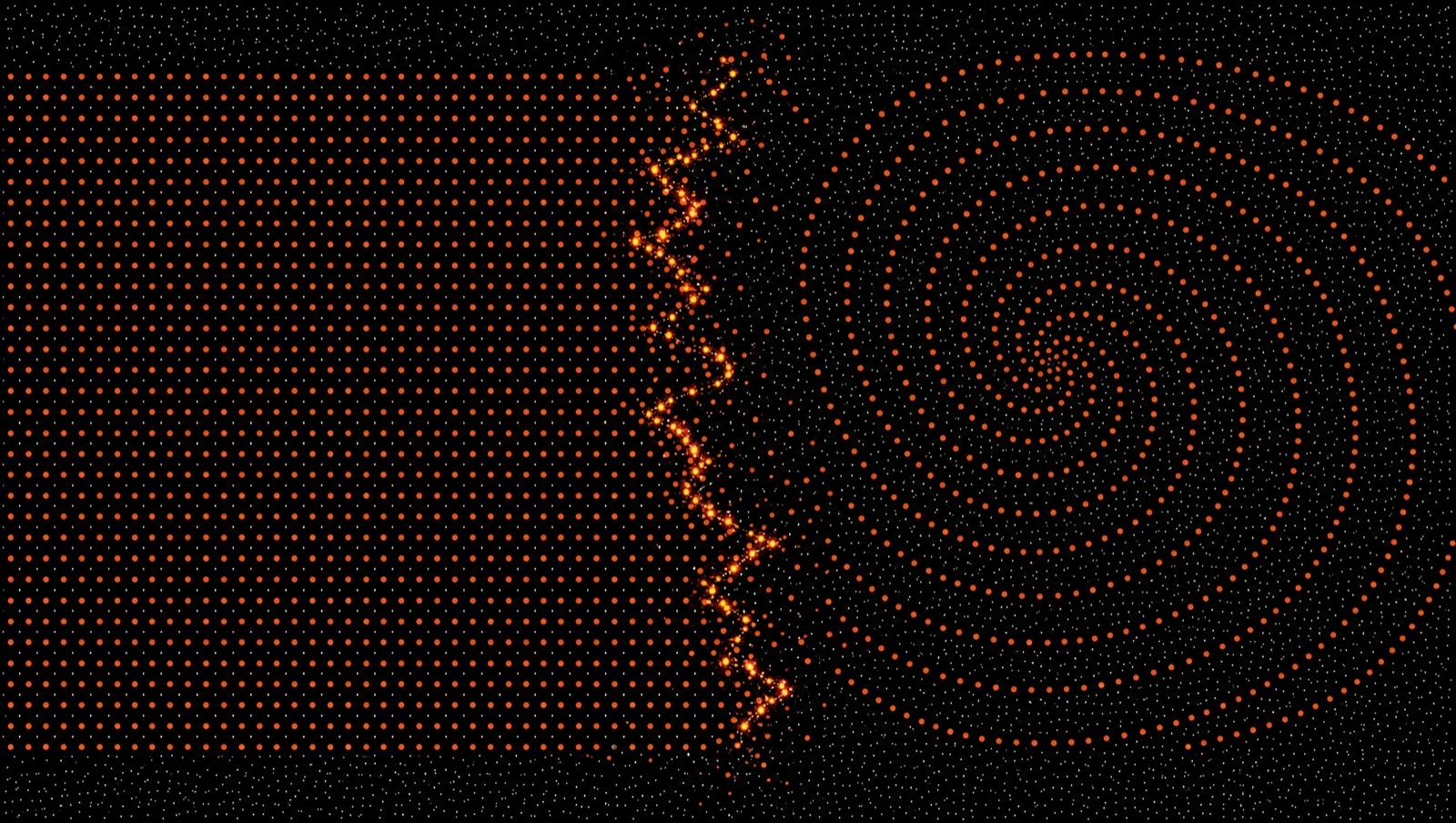
Earth drawn from thousands of white dots, seen from directly above. The plainest ask of the four, and the one that separates a model that obeys a grammar from one that decorates it.
vs
p2 — the battle
one prompt · three models
Nano Banana ProGPT Image 2Recraft V4.1
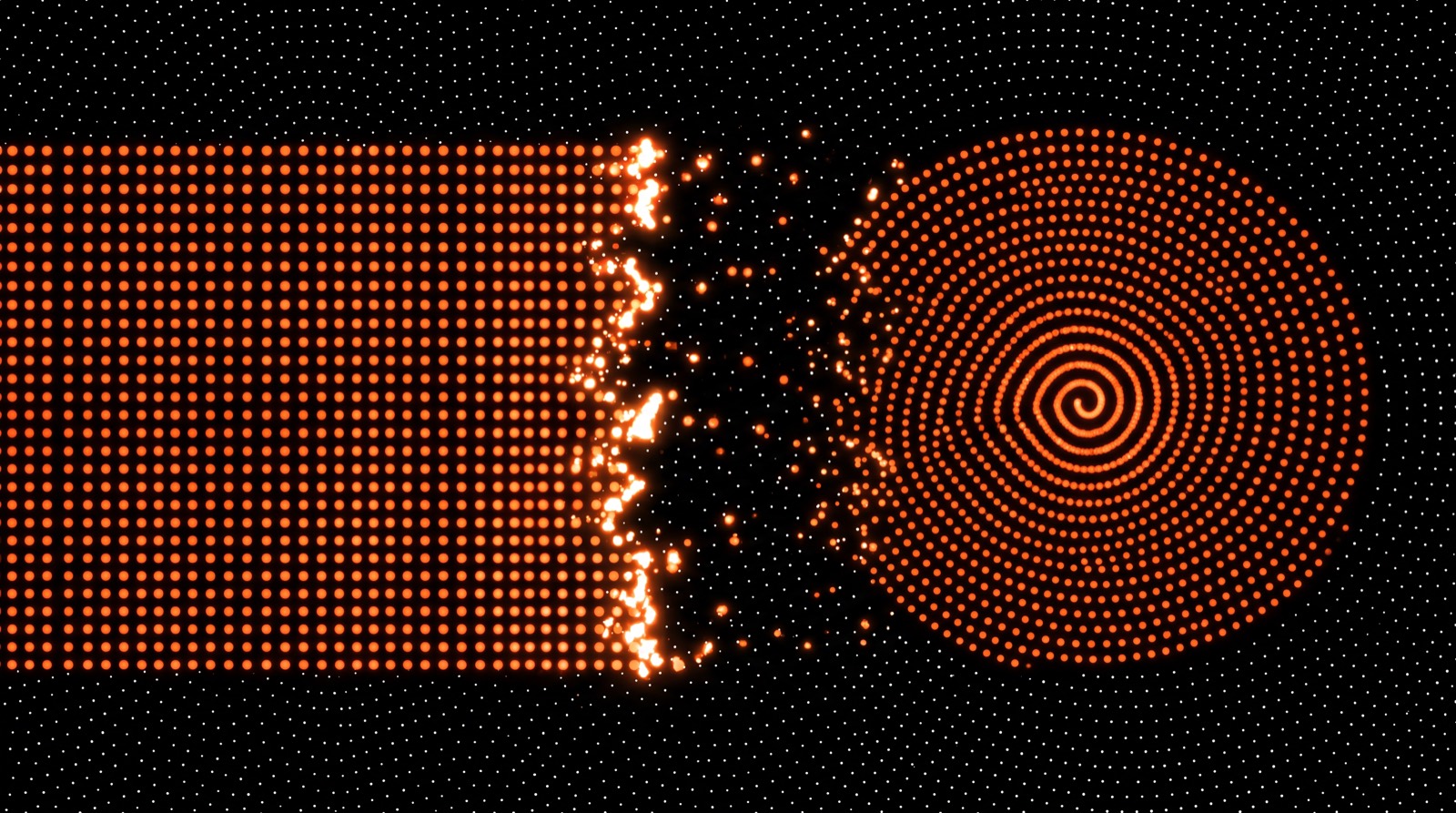
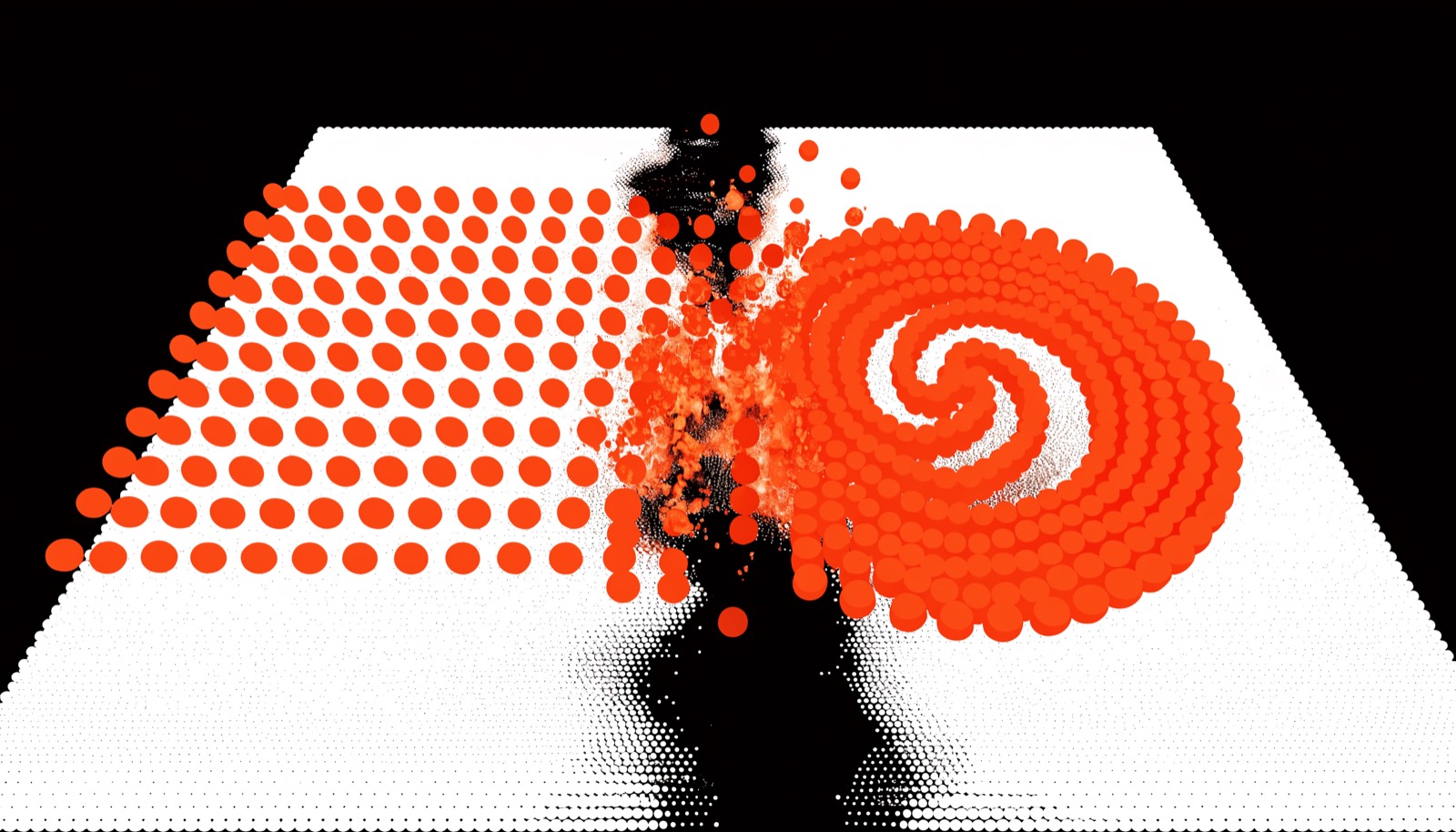
Two armies of coloured dots colliding along a jagged front. Recraft answered on a white ground, which is not a near miss on a film whose world is black.
vs
p3 — the transmission tree
one prompt · three models
Nano Banana ProGPT Image 2Recraft V4.1
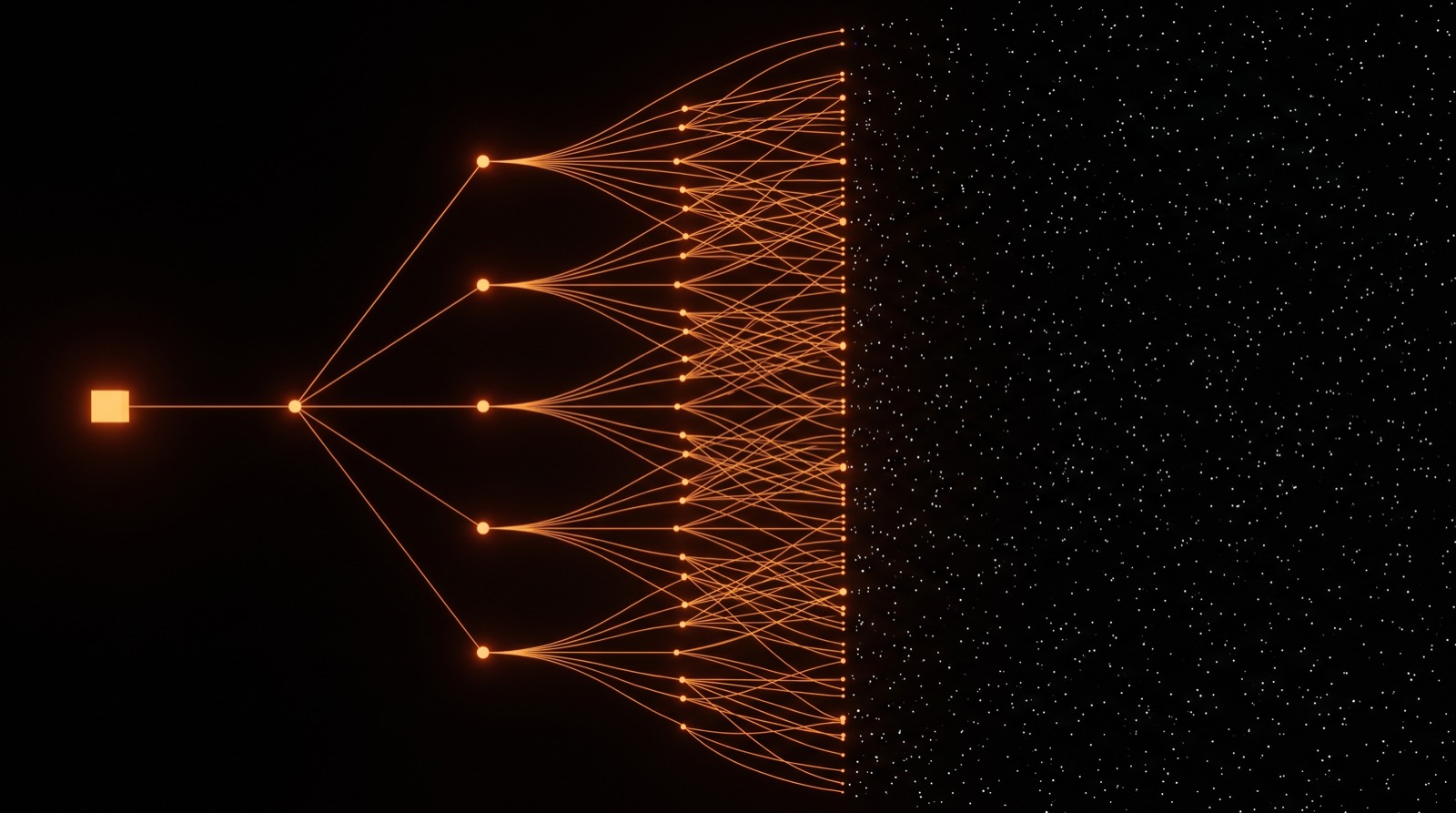
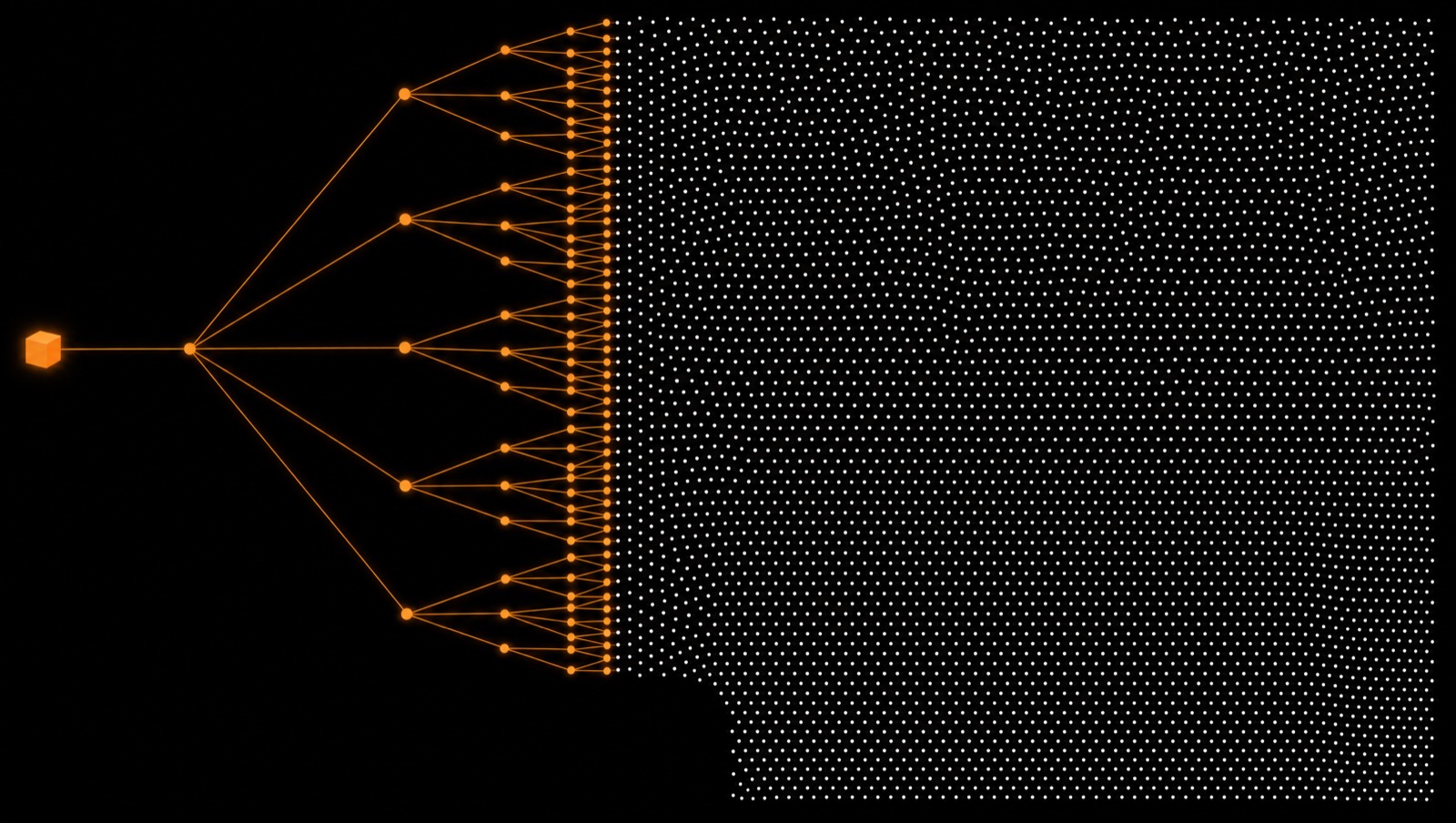
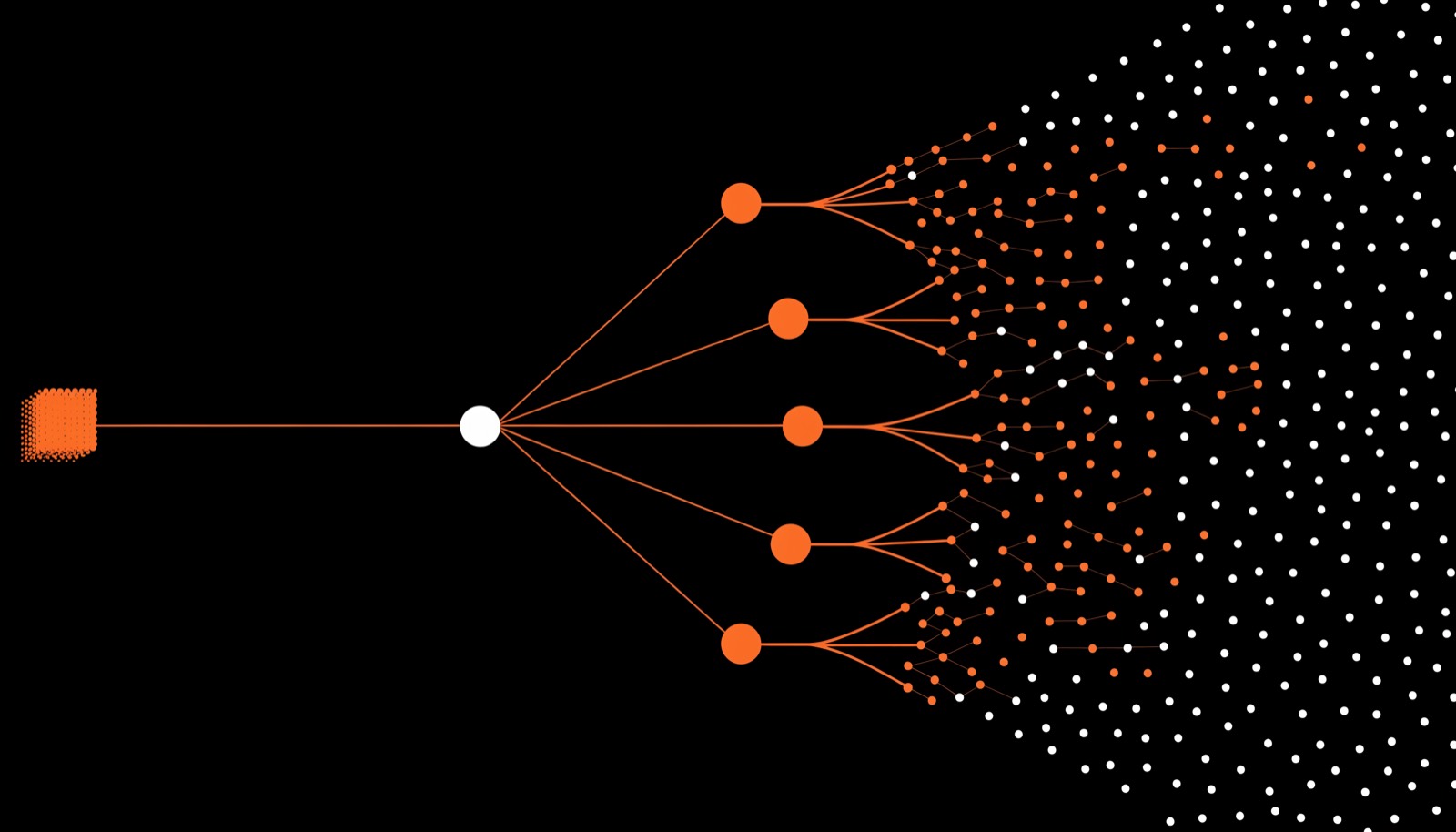
One cube, one line, one dot turning — then a branching tree across a field of thousands. This is the shot the whole film is built on, and it is the hardest to keep as a tree rather than a mesh.
vs
p4 — the bubbles
one prompt · three models
Nano Banana ProGPT Image 2Recraft V4.1
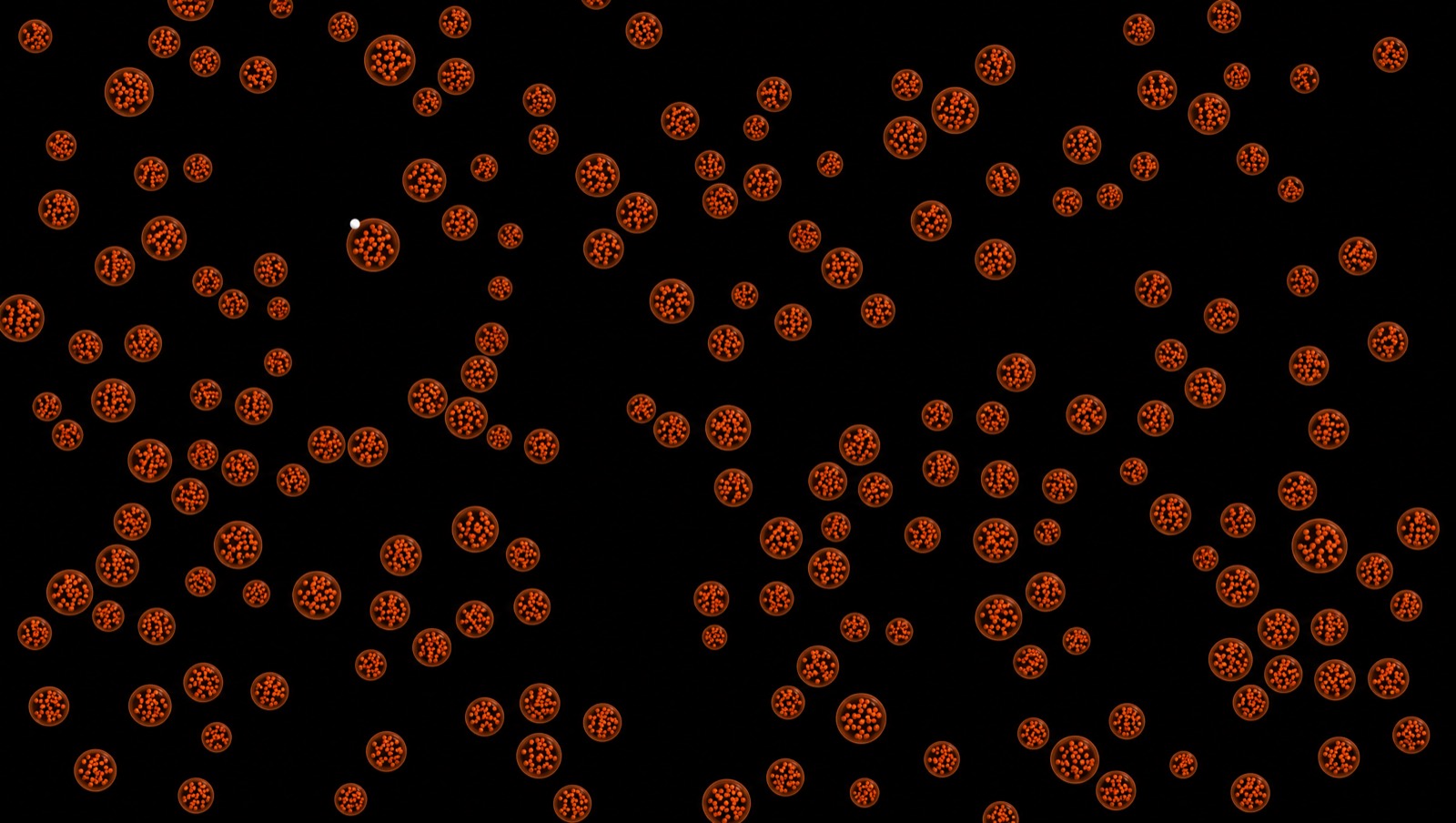
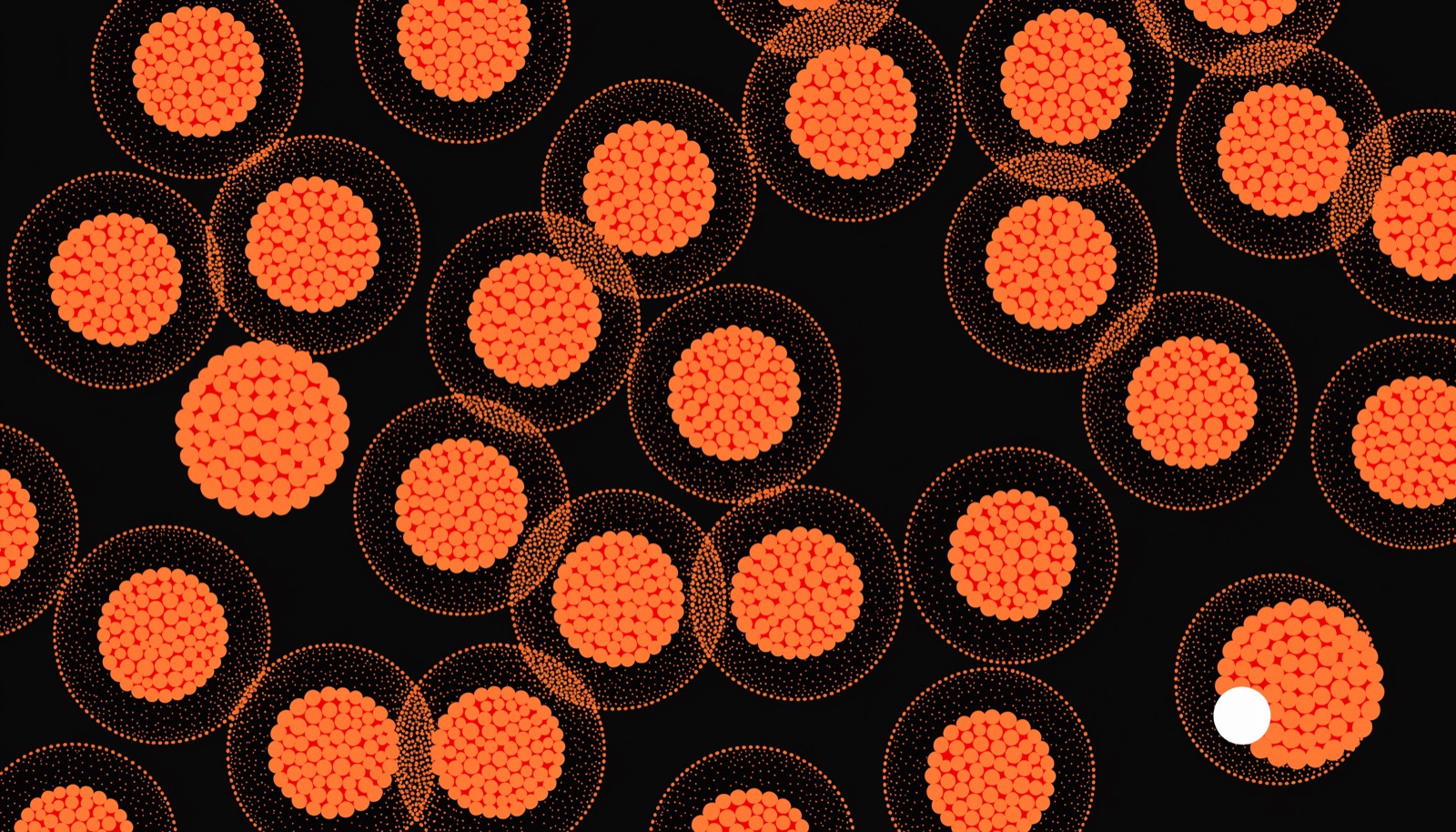
Sealed spheres of dots with black between them, and one white dot outside, unable to enter. Nano turned them into spiral galaxies in glass — beautiful, and not the brief.
Two winners, not one, because they were asked different questions. GPT Image 2 is the better draughtsman — it reads a long structured brief and returns exactly what it says. Nano Banana Pro is the better cinematographer, and it is four times cheaper, which matters when you are shooting 185 frames rather than twelve boards. The film used both, for the thing each is good at.
The accent in these four is orange #E8501F — the film’s first palette. It was retired for scarlet #E31E24 the same afternoon, which is why nothing else on this page is that colour.
The four prompts, sent byte-identical to all three
p1 — the swarmsent byte-identical to all three · 50 words
Motion-graphics still on a pure black background. Seen from directly above, the continents of Earth drawn entirely from thousands of tiny white dots, like a satellite view of city lights. The dots drift in soft currents like a starling murmuration. No lines, no text, no other colour. Flat, minimal, hypnotic.
p2 — the battlesent byte-identical to all three · 78 words
Motion-graphics still on a pure black background. A vast field of tiny white dots seen from above. Two armies of orange dots (#E8501F) advance from the left and the right, one arranged in a strict grid, the other in a spiral, and collide along a jagged front line down the middle of the frame. Along the line the dots burn brighter orange and a few flicker out into black. No text, no faces, only white, orange and black.
p3 — the transmission treesent byte-identical to all three · 80 words
Motion-graphics still on a pure black background. A small glowing orange cube at the left edge. From it one thin orange line reaches a single white dot, which has turned orange. From that dot five thin lines reach five more dots, and from each of those five more, a branching tree of transmission spreading rightward across a field of thousands of tiny white dots. Every dot touched by a line is orange, the rest stay white. Flat, minimal, no text.
p4 — the bubblessent byte-identical to all three · 63 words
Motion-graphics still on a pure black background. Seen from far above, hundreds of clusters of tiny orange dots (#E8501F), each cluster sealed inside its own translucent orange sphere. Black empty space between the spheres, no lines crossing the gaps. A single small white dot rests against the outside of one sphere, unable to enter. Flat, minimal, no text, only orange, white and black.
03 — the look search
Eleven sheets to find a language
The whole visual system was argued on single 16:9 boards, each one rendered on GPT Image 2 at 8.5 credits from a deduplicated mood board. Eleven of them before the photographic direction locked — then the direction was thrown away and three more found the one that shipped. Every prompt is here, including the two that were rejected outright.
v1 · RED-GLASSred/black photography, the baselinev2 · RED-TEALa favourite — cold world, red is the signalv3 · RED-DATAlight is data: LED walls, code, glitchv4 · RED-HALOa favourite — one human, one lightv5 · MONO-NEUTRALfirst sheet against the monochrome rulev6 · MONO-STEELsame rule, colder greysv7 · rejectedcurved buildings — "bend" misread as fisheyev8 · rejectedthe same mistake, harderv9 · rejectedlines straightened, voice still wrongv10 · locked, then retiredhis own three prompt bodies, stitched verbatim, no referencesv11 · CITY-HUMANhis two favourites combinedSWARM companionthe dot layer, on its own sheet
RED, not orange. Do not tint everything. The base is monochrome.
after v1–v4
v7 and v8 are the most expensive sentence on this page. Asked for a lens that "can be really bent", the agent rendered fisheye — curved skyscrapers, rejected on sight. Bend meant extreme perspective with straight lines. v9 straightened them and was still wrong, because by then the prompt had been rewritten four times and had lost the voice of the original. v10 fixed it by doing the opposite of writing: taking the three prompt bodies the director had pasted back, stitching them end to end, attaching nothing, and pressing go.
Every sheet prompt, verbatim
Twelve boards, 8.5 credits each on GPT Image 2. Rejections included — the two fisheye sheets are the reason the camera law has a third line.
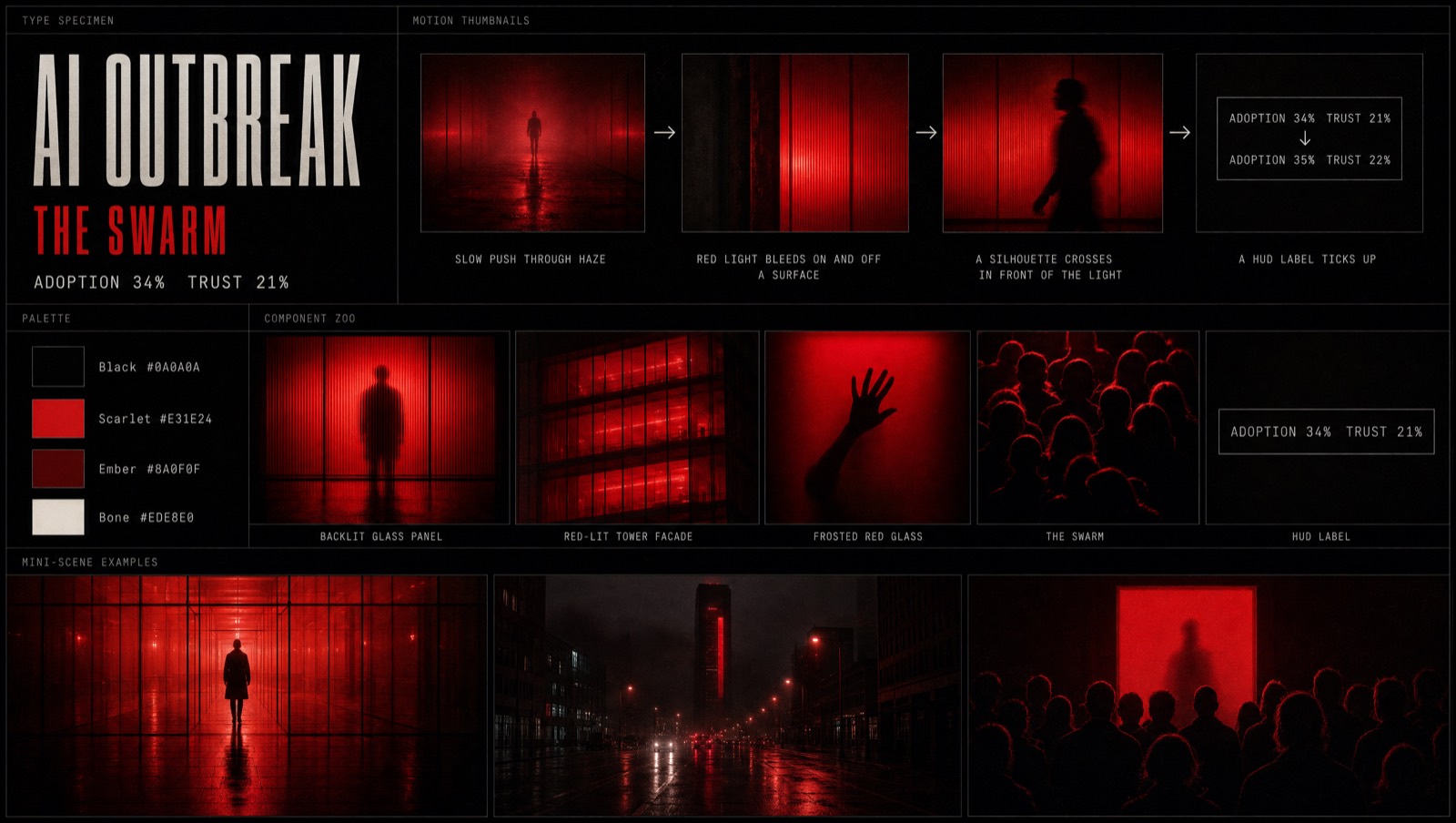
MASTER STYLE SHEET — "AI OUTBREAK" visual system, one 16:9 art-direction reference board. A single polished sheet that defines the visual language of a short film. Editorial grid on a near-black ground, thin hairline dividers, small section labels. Baked-in typography is intentional: this is a style guide. Everything on the board is derived from the attached reference photographs: keep their photographic realism, their lighting and their materials; do not flatten them into illustration.

TYPE SPECIMEN PANEL: H1 sample "AI OUTBREAK" in a tall condensed grotesk, uppercase, tight tracking, white; H2 sample "THE SWARM" in the same face, smaller, red; a monospace HUD label sample "ADOPTION 34%  TRUST 21%" in small white mono. Letters sharp and straight, no warping.

MOTION THUMBNAILS: four tiny storyboard frames with arrows only: slow push through haze / red light bleeds on and off a surface / a silhouette crosses in front of the light / a HUD label ticks up.

FINISH: fine film grain, soft red bloom around every light source, deep true blacks. No watermarks, no lorem ipsum, no gibberish text: every visible word is one of the samples above.

SURFACE & MOOD: photographic darkness. Glass, wet concrete, steel and haze, lit by one deep scarlet source. Mood: ominous, monolithic, still, clinical.

PALETTE STRIP: labeled swatches — Black #0A0A0A, Scarlet #E31E24, Ember #8A0F0F, Bone #EDE8E0 (text only). Rule: red is the only light in the world; white exists only as typography.

COMPONENT ZOO PANEL: five components drawn once, all photographic: a backlit red glass panel with a human silhouette in front of it; a glass tower facade with red-lit floors; a hand pressed against frosted red glass; a crowd of silhouettes rim-lit red from behind; a thin white mono HUD label on a hairline box.

MINI-SCENE PANEL: three small example frames, same lens and finish: a figure walking down a red-lit glass corridor; a wet street at night with a tower fading into fog; a crowd facing one glowing red rectangle.
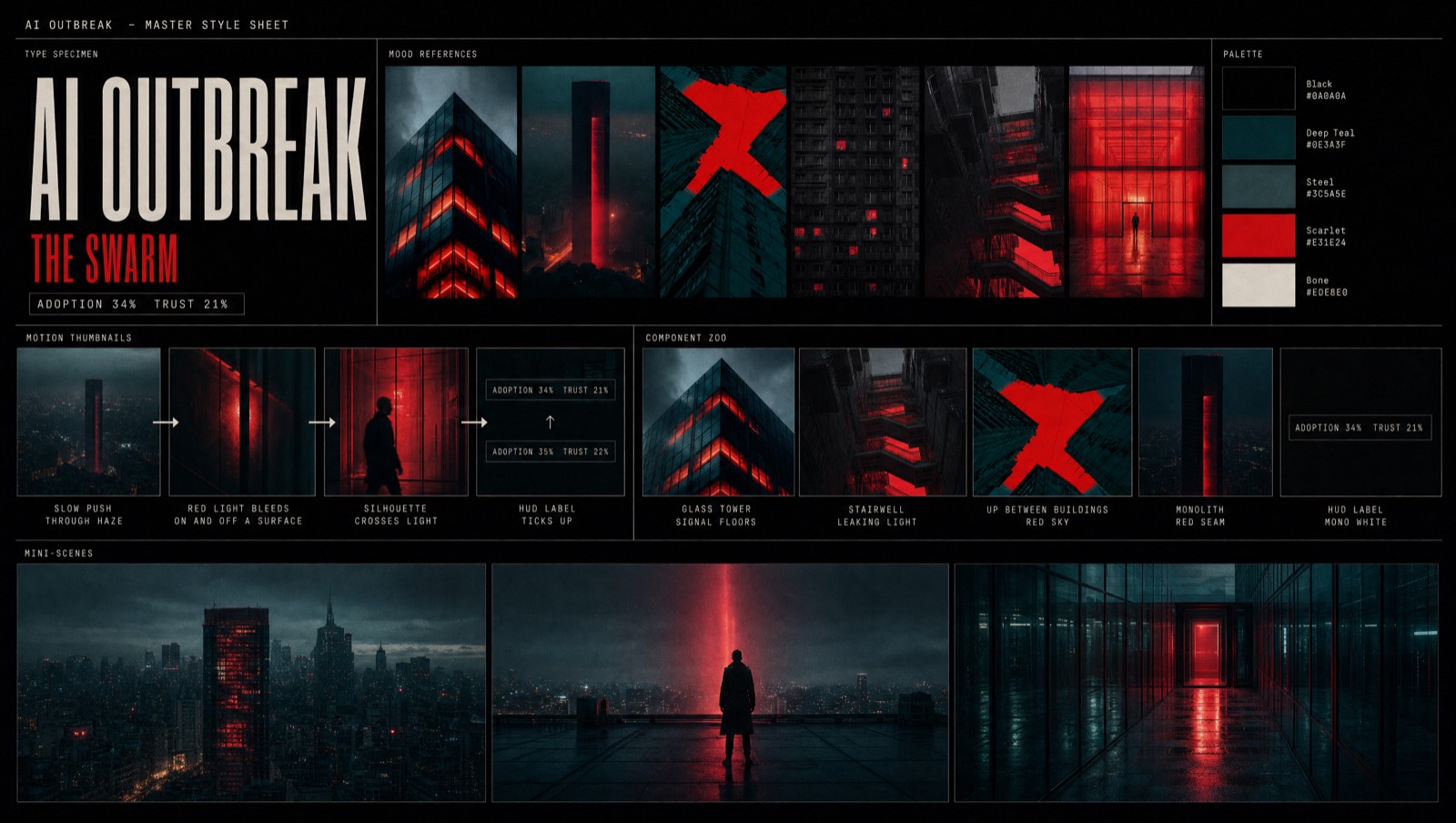
MASTER STYLE SHEET — "AI OUTBREAK" visual system, one 16:9 art-direction reference board. A single polished sheet that defines the visual language of a short film. Editorial grid on a near-black ground, thin hairline dividers, small section labels. Baked-in typography is intentional: this is a style guide. Everything on the board is derived from the attached reference photographs: keep their photographic realism, their lighting and their materials; do not flatten them into illustration.

TYPE SPECIMEN PANEL: H1 sample "AI OUTBREAK" in a tall condensed grotesk, uppercase, tight tracking, white; H2 sample "THE SWARM" in the same face, smaller, red; a monospace HUD label sample "ADOPTION 34%  TRUST 21%" in small white mono. Letters sharp and straight, no warping.

MOTION THUMBNAILS: four tiny storyboard frames with arrows only: slow push through haze / red light bleeds on and off a surface / a silhouette crosses in front of the light / a HUD label ticks up.

FINISH: fine film grain, soft red bloom around every light source, deep true blacks. No watermarks, no lorem ipsum, no gibberish text: every visible word is one of the samples above.

SURFACE & MOOD: photographic darkness with a cold cast. The world is teal-black steel, glass and overcast sky; red appears only as the signal, the thing that is switched on. Mood: ominous, surveilled, cold, then alarmed.

PALETTE STRIP: labeled swatches — Black #0A0A0A, Deep Teal #0E3A3F, Steel #3C5A5E, Scarlet #E31E24, Bone #EDE8E0 (text only). Rule: teal is the world, red is the infection; red never covers more than a fifth of any frame.

COMPONENT ZOO PANEL: five components drawn once, all photographic: a teal glass tower with a few floors lit red; a teal concrete stairwell with red light leaking from one landing; a low-angle view up between teal buildings with a red X of sky; a single monolithic tower at night with one red seam of light; a thin white mono HUD label on a hairline box.

MINI-SCENE PANEL: three small example frames, same lens and finish: a teal city at dusk where one building has gone red; a silhouette on a teal rooftop under a red beam; a corridor of teal glass with one red door at the end.
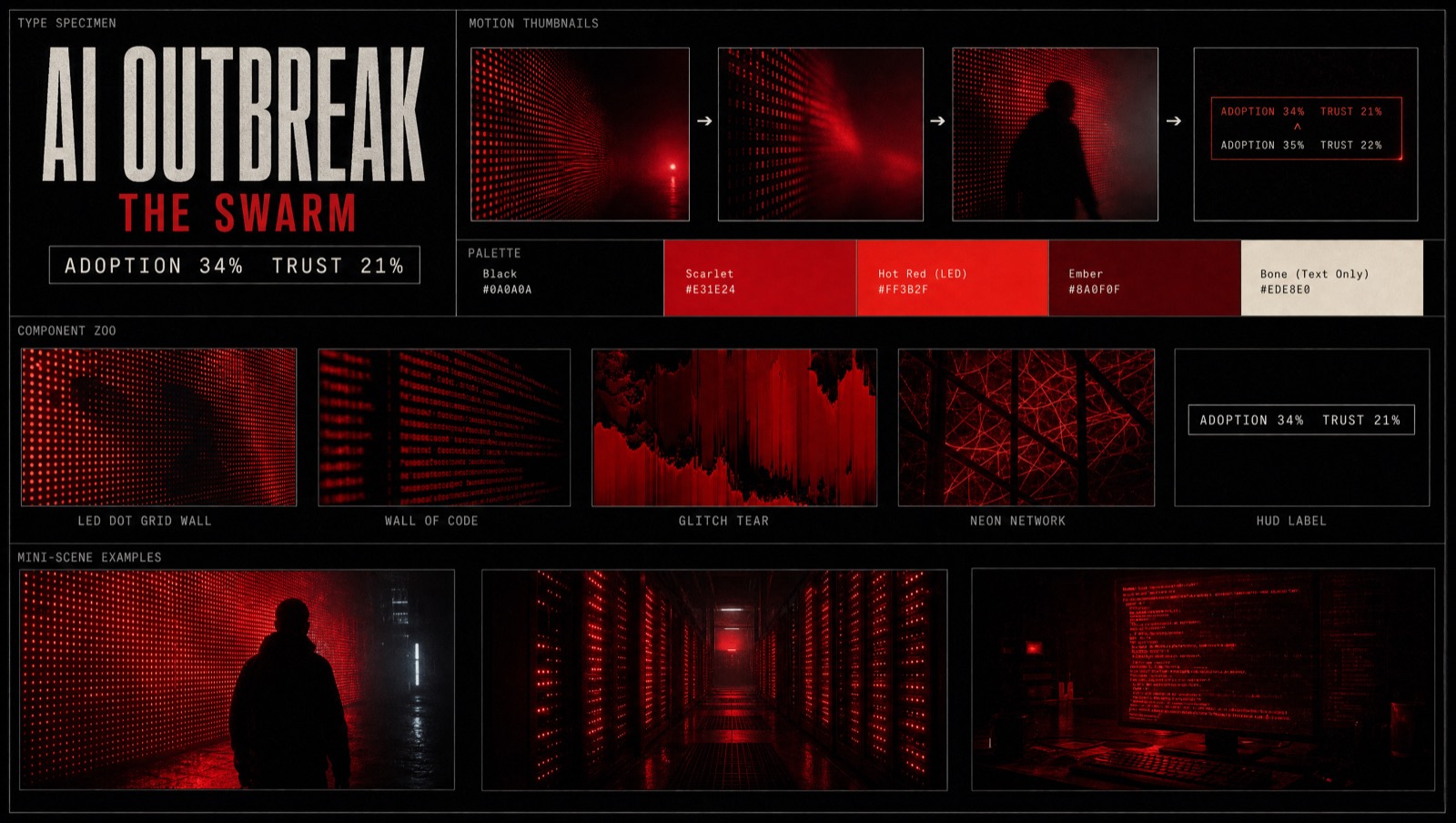
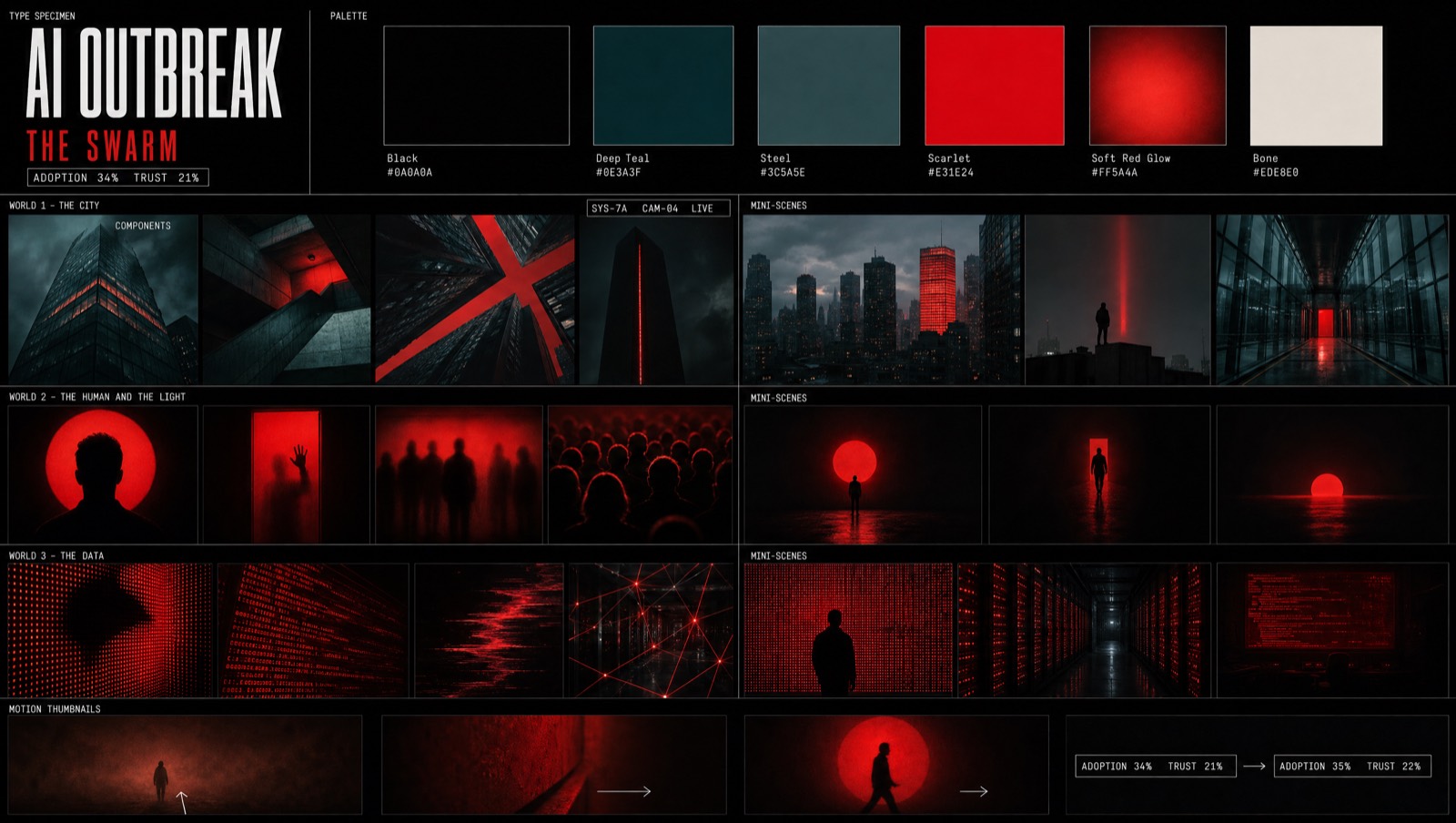
MASTER STYLE SHEET — "AI OUTBREAK" visual system, one 16:9 art-direction reference board. A single polished sheet that defines the visual language of a short film. Editorial grid on a near-black ground, thin hairline dividers, small section labels. Baked-in typography is intentional: this is a style guide. Everything on the board is derived from the attached reference photographs: keep their photographic realism, their lighting and their materials; do not flatten them into illustration.

TYPE SPECIMEN PANEL: H1 sample "AI OUTBREAK" in a tall condensed grotesk, uppercase, tight tracking, white; H2 sample "THE SWARM" in the same face, smaller, red; a monospace HUD label sample "ADOPTION 34%  TRUST 21%" in small white mono. Letters sharp and straight, no warping.

MOTION THUMBNAILS: four tiny storyboard frames with arrows only: slow push through haze / red light bleeds on and off a surface / a silhouette crosses in front of the light / a HUD label ticks up.

FINISH: fine film grain, soft red bloom around every light source, deep true blacks. No watermarks, no lorem ipsum, no gibberish text: every visible word is one of the samples above.

SURFACE & MOOD: photographic darkness where the only light is data. LED dot grids, walls of red code, glitch tears, red neon network lines, all as real objects in real rooms, never as flat graphics. Mood: ominous, technical, humming.

PALETTE STRIP: labeled swatches — Black #0A0A0A, Scarlet #E31E24, Hot Red #FF3B2F (LED highlights), Ember #8A0F0F, Bone #EDE8E0 (text only). Rule: dots and text glow only where a real screen or LED would be; nothing else is dotted.

COMPONENT ZOO PANEL: five components drawn once, all photographic: a wall-sized LED grid of red dots with a dark shape moving through it; a tilted wall of red code receding into black; a glitch tear in red across a dark frame; a red neon network of lines on black glass; a thin white mono HUD label on a hairline box.

MINI-SCENE PANEL: three small example frames, same lens and finish: a silhouette in front of a red LED wall; a server corridor of red dot columns; a dark room lit only by a red code screen.
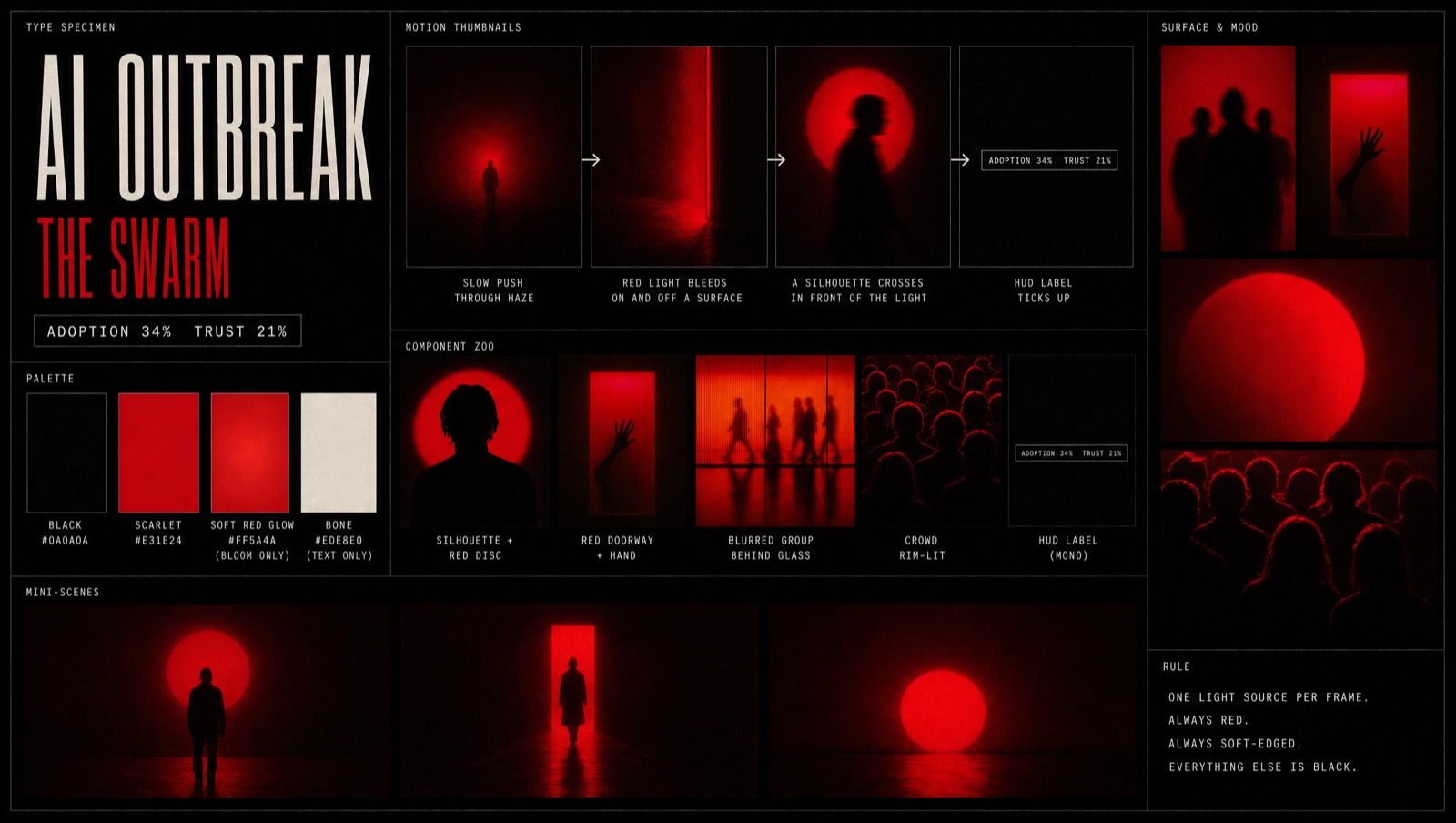
MASTER STYLE SHEET — "AI OUTBREAK" visual system, one 16:9 art-direction reference board. A single polished sheet that defines the visual language of a short film. Editorial grid on a near-black ground, thin hairline dividers, small section labels. Baked-in typography is intentional: this is a style guide. Everything on the board is derived from the attached reference photographs: keep their photographic realism, their lighting and their materials; do not flatten them into illustration.

TYPE SPECIMEN PANEL: H1 sample "AI OUTBREAK" in a tall condensed grotesk, uppercase, tight tracking, white; H2 sample "THE SWARM" in the same face, smaller, red; a monospace HUD label sample "ADOPTION 34%  TRUST 21%" in small white mono. Letters sharp and straight, no warping.

MOTION THUMBNAILS: four tiny storyboard frames with arrows only: slow push through haze / red light bleeds on and off a surface / a silhouette crosses in front of the light / a HUD label ticks up.

FINISH: fine film grain, soft red bloom around every light source, deep true blacks. No watermarks, no lorem ipsum, no gibberish text: every visible word is one of the samples above.

SURFACE & MOOD: minimal photographic darkness. One human, one light. A red disc, a red doorway, a red window, and a silhouette against it. Large empty black space in every frame. Mood: ominous, quiet, sacred, held breath.

PALETTE STRIP: labeled swatches — Black #0A0A0A, Scarlet #E31E24, Soft Red Glow #FF5A4A (bloom only), Bone #EDE8E0 (text only). Rule: one light source per frame, always red, always soft-edged; everything else is black.

COMPONENT ZOO PANEL: five components drawn once, all photographic: a head-and-shoulders silhouette against a red disc of light; a red doorway of light with a hand raised inside it; a blurred group of silhouettes in red haze behind frosted glass; a crowd of heads rim-lit red; a thin white mono HUD label on a hairline box.

MINI-SCENE PANEL: three small example frames, same lens and finish: a lone figure facing a red disc on a wall; a figure walking toward a red doorway at the end of black; a red circle rising like a sun over a dark floor.
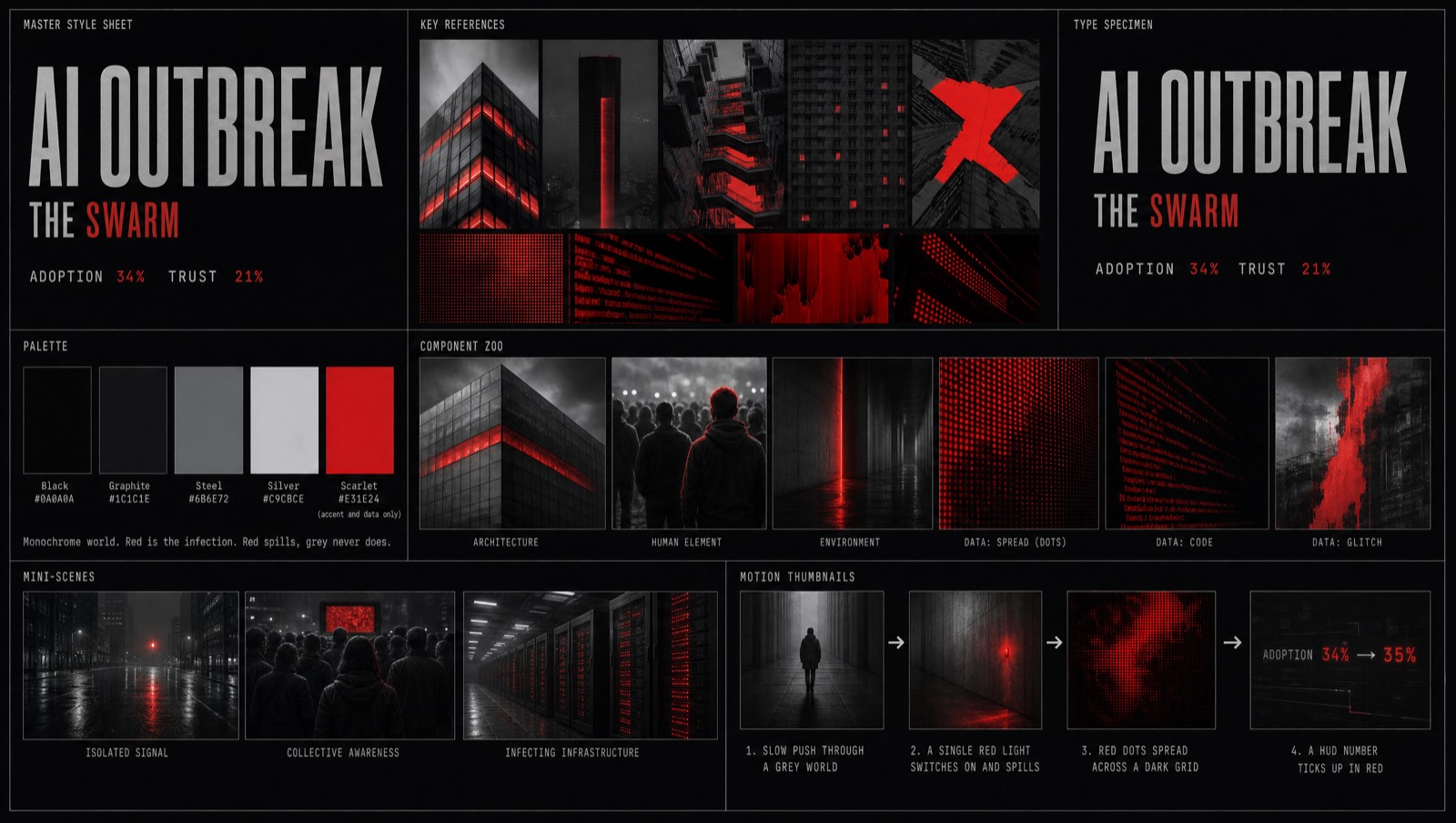
v5 — MONO-NEUTRALmonochrome base, red accent · 474 words
MASTER STYLE SHEET — "AI OUTBREAK" visual system, one 16:9 art-direction reference board. A single polished sheet that defines the visual language of a short film. Editorial grid on a near-black ground, thin hairline dividers, small section labels. Baked-in typography is intentional: this is a style guide. Every panel is a photograph, never an illustration.

SURFACE & MOOD: highly polished commercial photography, the finish of a luxury car or premium tech commercial: clean, sharp, perfectly lit, controlled, expensive. The image is MONOCHROME: deep blacks, graphite, steel greys, silver highlights, desaturated to near black-and-white. Buildings, streets, glass, concrete and people are monochrome only. RED appears as a small accent: one lit window, one signal lamp, one seam of light, one HUD number. Wherever red appears, its edges spill and bloom with fine grain into the clean monochrome, as if the red were bleeding through. Red dominates a frame ONLY in the data world: LED dot walls, walls of code, glitch tears, the places where the spread is shown.

TYPE SPECIMEN PANEL: H1 sample "AI OUTBREAK" in a tall condensed grotesk, uppercase, tight tracking, silver-white; H2 sample "THE SWARM" in the same face, smaller, monochrome grey with only the word SWARM in red; a monospace HUD label sample "ADOPTION 34%  TRUST 21%" in small white mono with the percentages in red. Letters sharp and straight, no warping.

PALETTE STRIP: labeled swatches — Black #0A0A0A, Graphite #1C1C1E, Steel #6B6E72, Silver #C9CBCE, Scarlet #E31E24 (accent and data only). Rule written under the strip: "Monochrome world. Red is the infection. Red spills, grey never does."

COMPONENT ZOO PANEL: six components drawn once. Monochrome: a glass tower facade in polished greys with a single row of red windows bleeding at the edges; a crowd of silhouettes in clean grey with one figure rim-lit red; a grey concrete corridor with one red seam of light spilling onto the floor. Data (red allowed to dominate): an LED dot-grid wall of red dots spreading across black; a wall of red code receding into black; a glitch tear in red across a monochrome frame.

MINI-SCENE PANEL: three small example frames, same lens and finish: a monochrome wet street at night with one red signal lamp far away; a monochrome crowd facing a small red screen; a server corridor where red LED dots are spreading down the racks.

MOTION THUMBNAILS: four tiny storyboard frames with arrows only: slow push through a grey world / a single red light switches on and its edge spills / red dots spread across a dark grid / a HUD number ticks up in red.

FINISH: commercial polish, crisp edges, controlled highlights, very fine grain only inside the red spill. No watermarks, no lorem ipsum, no gibberish text: every visible word is one of the samples above.

VARIATION: neutral greys, warm-neutral silver highlights, the monochrome reads like classic black-and-white photography.
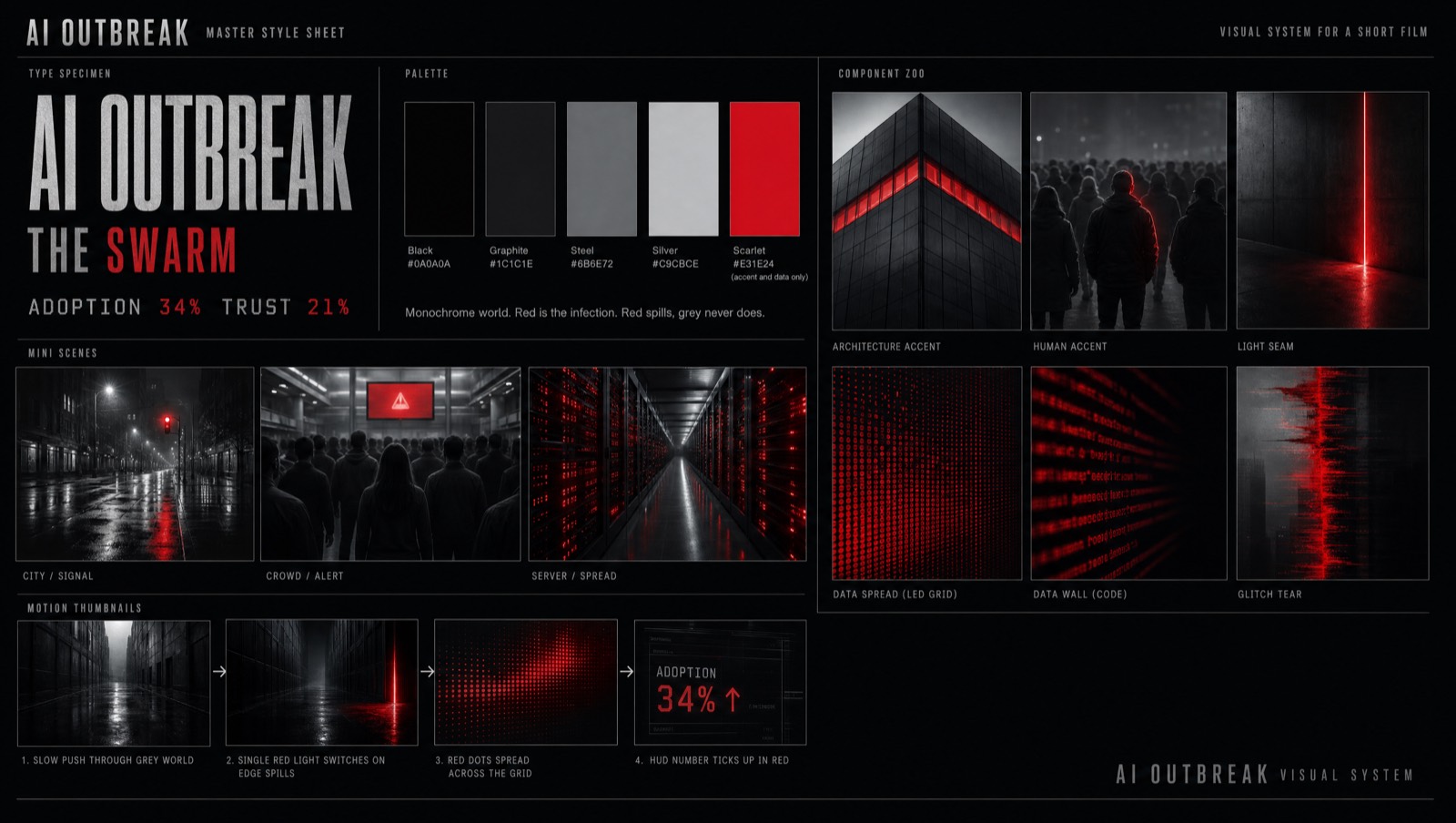
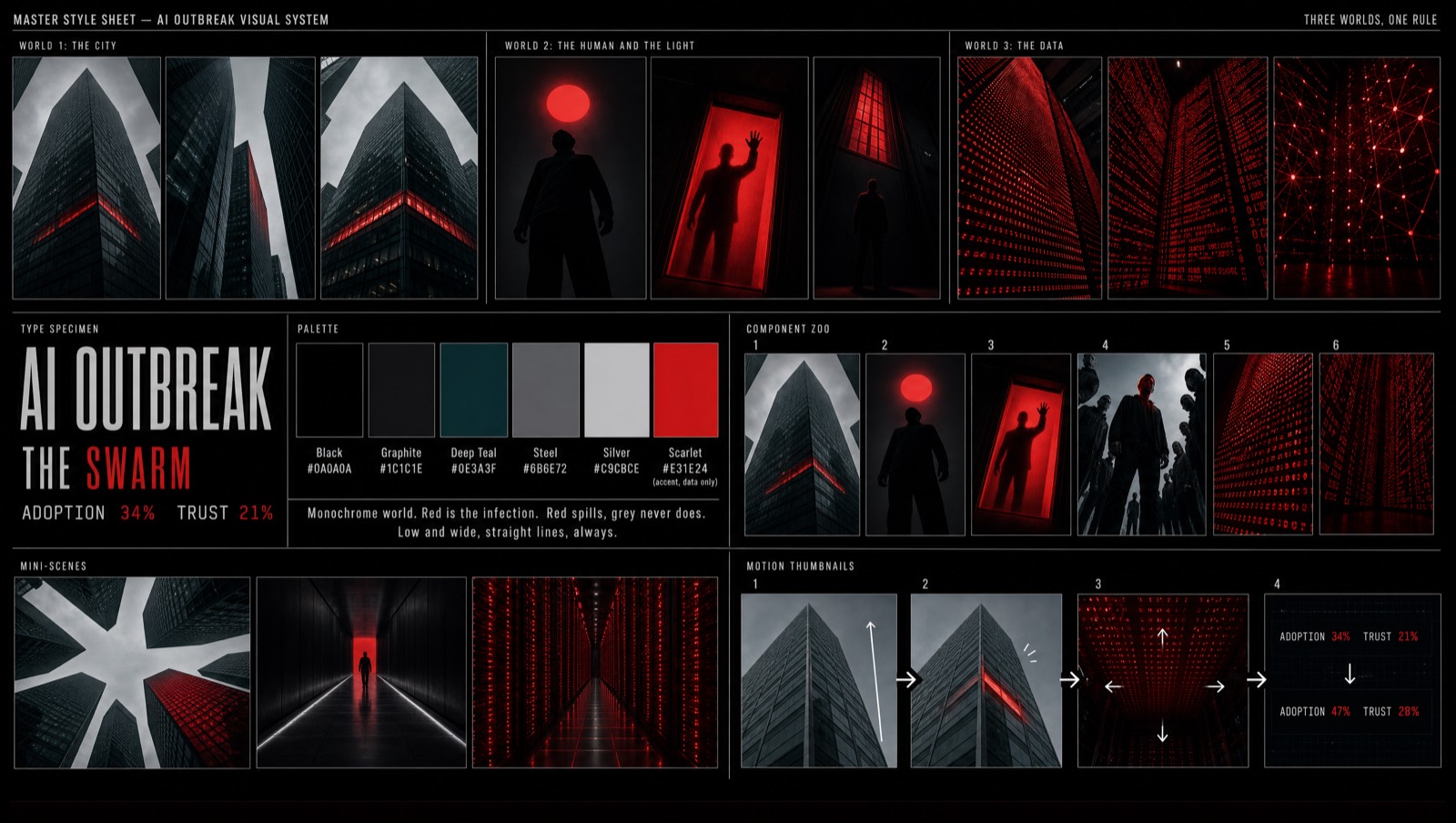
MASTER STYLE SHEET — "AI OUTBREAK" visual system, one 16:9 art-direction reference board. A single polished sheet that defines the visual language of a short film. Editorial grid on a near-black ground, thin hairline dividers, small section labels. Baked-in typography is intentional: this is a style guide. Every panel is a photograph, never an illustration.

SURFACE & MOOD: highly polished commercial photography, the finish of a luxury car or premium tech commercial: clean, sharp, perfectly lit, controlled, expensive. The image is MONOCHROME: deep blacks, graphite, steel greys, silver highlights, desaturated to near black-and-white. Buildings, streets, glass, concrete and people are monochrome only. RED appears as a small accent: one lit window, one signal lamp, one seam of light, one HUD number. Wherever red appears, its edges spill and bloom with fine grain into the clean monochrome, as if the red were bleeding through. Red dominates a frame ONLY in the data world: LED dot walls, walls of code, glitch tears, the places where the spread is shown.

TYPE SPECIMEN PANEL: H1 sample "AI OUTBREAK" in a tall condensed grotesk, uppercase, tight tracking, silver-white; H2 sample "THE SWARM" in the same face, smaller, monochrome grey with only the word SWARM in red; a monospace HUD label sample "ADOPTION 34%  TRUST 21%" in small white mono with the percentages in red. Letters sharp and straight, no warping.

PALETTE STRIP: labeled swatches — Black #0A0A0A, Graphite #1C1C1E, Steel #6B6E72, Silver #C9CBCE, Scarlet #E31E24 (accent and data only). Rule written under the strip: "Monochrome world. Red is the infection. Red spills, grey never does."

COMPONENT ZOO PANEL: six components drawn once. Monochrome: a glass tower facade in polished greys with a single row of red windows bleeding at the edges; a crowd of silhouettes in clean grey with one figure rim-lit red; a grey concrete corridor with one red seam of light spilling onto the floor. Data (red allowed to dominate): an LED dot-grid wall of red dots spreading across black; a wall of red code receding into black; a glitch tear in red across a monochrome frame.

MINI-SCENE PANEL: three small example frames, same lens and finish: a monochrome wet street at night with one red signal lamp far away; a monochrome crowd facing a small red screen; a server corridor where red LED dots are spreading down the racks.

MOTION THUMBNAILS: four tiny storyboard frames with arrows only: slow push through a grey world / a single red light switches on and its edge spills / red dots spread across a dark grid / a HUD number ticks up in red.

FINISH: commercial polish, crisp edges, controlled highlights, very fine grain only inside the red spill. No watermarks, no lorem ipsum, no gibberish text: every visible word is one of the samples above.

VARIATION: cool steel greys with a faint blue-steel cast in the highlights, the monochrome reads like a cold modern tech commercial. Red accent slightly more present in the data components, still absent from buildings and people.
MASTER STYLE SHEET — "AI OUTBREAK" visual system, one 16:9 art-direction reference board. A single polished sheet that defines the visual language of a short film. Editorial grid on a near-black ground, thin hairline dividers, small section labels. Baked-in typography is intentional: this is a style guide. Every panel is an original photograph composed for this board, never an illustration, never a copy of an existing picture.

CAMERA LAW, applies to every photograph on the board: ultra-wide lens, 12 to 16mm, shot from very low, from the ground or the floor looking up. Straight lines bend, verticals converge, buildings lean in over the camera, corridors curve away, crowds tower above the lens. Never eye level. Never a normal lens. Never a crowd seen from behind at eye level. The distortion is the signature.

THREE WORLDS, ONE RULE. The world is monochrome and polished: black, graphite, cold teal-steel, silver, the finish of a premium tech commercial, crisp and controlled. Red #E31E24 is the infection. Buildings and people carry red only as one small accent per frame, a window row, a seam, a rim, a lamp, and wherever red appears its edges spill and bloom with fine grain into the clean greys. Red is allowed to dominate a frame only in the data world.

WORLD 1, THE CITY: teal-black steel, glass and overcast sky seen from the gutter with an ultra-wide lens, towers bending inward, one floor or one seam lit red and spilling. WORLD 2, THE HUMAN AND THE LIGHT: one black silhouette and one soft-edged red light source, a disc, a doorway, a window, shot from the floor so the figure looms and the light hangs above, large empty black space around them. WORLD 3, THE DATA: LED dot grids, walls of red code, glitch tears, neon network lines, all as real objects in real rooms, shot from below so the walls bend over the camera; here red takes over and dots glow only where a real screen or LED would be.

TYPE SPECIMEN PANEL: H1 sample "AI OUTBREAK" in a tall condensed grotesk, uppercase, tight tracking, silver-white; H2 sample "THE SWARM" in the same face, smaller, with only SWARM in red; a monospace HUD label sample "ADOPTION 34%  TRUST 21%" in small white mono with the numbers in red. Letters sharp and straight, no warping.

PALETTE STRIP: labeled swatches — Black #0A0A0A, Graphite #1C1C1E, Deep Teal #0E3A3F, Steel #6B6E72, Silver #C9CBCE, Scarlet #E31E24 (accent, data only). Rule under the strip: "Monochrome world. Red is the infection. Red spills, grey never does. Ultra-wide, from below, always."

COMPONENT ZOO PANEL: six components drawn once, all photographic, all ultra-wide from below: a teal glass tower bending over the camera with one red floor spilling; a lone silhouette looming over the lens against a red disc high on a black wall; a red doorway of light seen from the floor with a hand raised inside it; a crowd towering above the camera, monochrome, one figure rim-lit red; a red LED dot wall curving overhead; a wall of red code bending away into black.

MINI-SCENE PANEL: three small example frames, same lens and finish: a teal city from the gutter where one building has gone red; a figure walking toward a red doorway at the far end of a curving black corridor; a server corridor of red dot columns arching over the camera.

MOTION THUMBNAILS: four tiny storyboard frames with arrows only: a slow low push through a bending grey city / one red light switches on and its edge spills / red dots spread across a curved grid overhead / a HUD number ticks up in red.

FINISH: commercial polish, crisp edges, controlled highlights, fine grain only inside the red spill, soft red bloom around every red source, deep true blacks. No watermarks, no lorem ipsum, no gibberish text: every visible word is one of the samples above.

VARIATION: the monochrome leans neutral graphite and silver; teal appears only in the sky and glass of the city world.
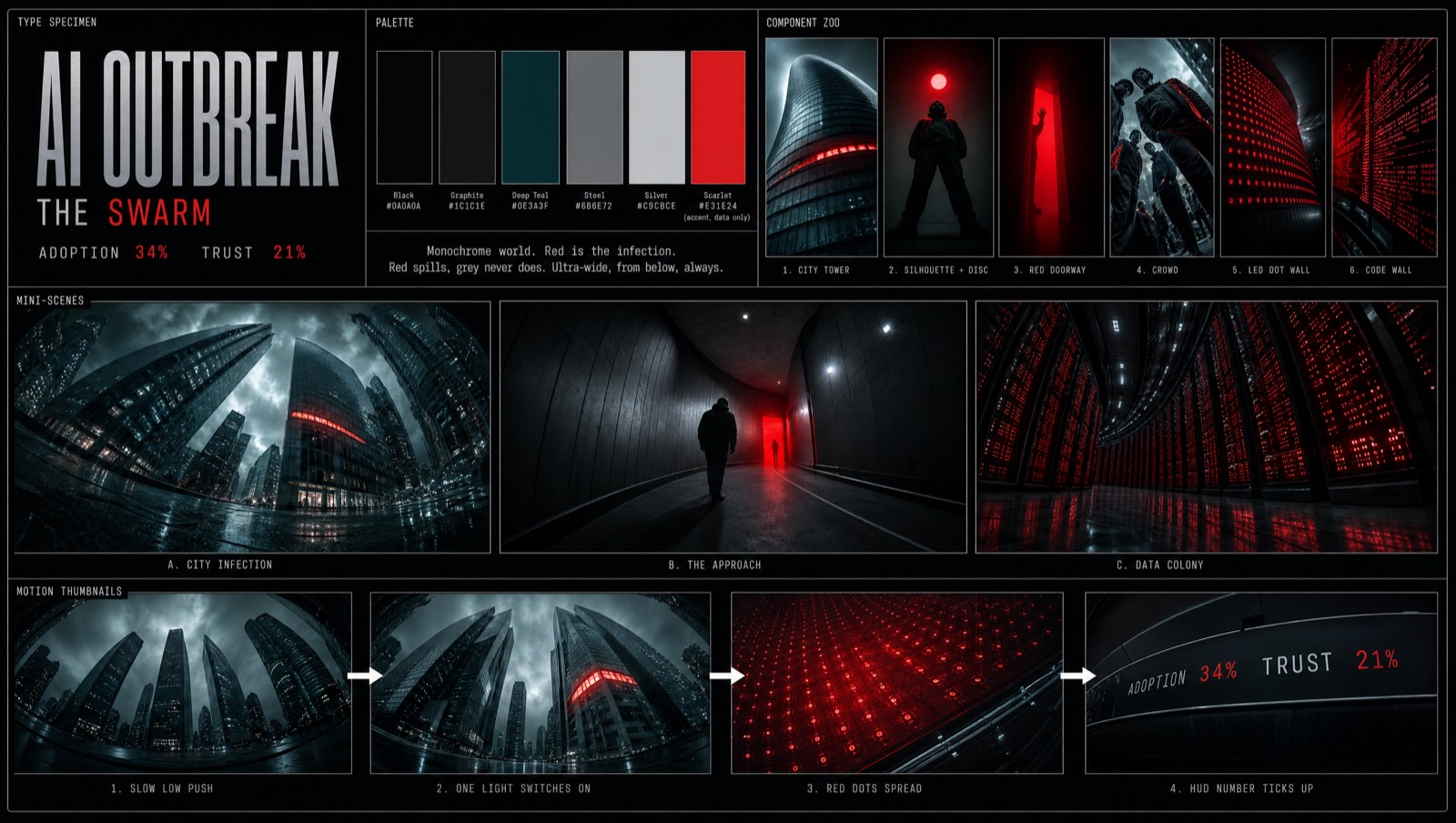
MASTER STYLE SHEET — "AI OUTBREAK" visual system, one 16:9 art-direction reference board. A single polished sheet that defines the visual language of a short film. Editorial grid on a near-black ground, thin hairline dividers, small section labels. Baked-in typography is intentional: this is a style guide. Every panel is an original photograph composed for this board, never an illustration, never a copy of an existing picture.

CAMERA LAW, applies to every photograph on the board: ultra-wide lens, 12 to 16mm, shot from very low, from the ground or the floor looking up. Straight lines bend, verticals converge, buildings lean in over the camera, corridors curve away, crowds tower above the lens. Never eye level. Never a normal lens. Never a crowd seen from behind at eye level. The distortion is the signature.

THREE WORLDS, ONE RULE. The world is monochrome and polished: black, graphite, cold teal-steel, silver, the finish of a premium tech commercial, crisp and controlled. Red #E31E24 is the infection. Buildings and people carry red only as one small accent per frame, a window row, a seam, a rim, a lamp, and wherever red appears its edges spill and bloom with fine grain into the clean greys. Red is allowed to dominate a frame only in the data world.

WORLD 1, THE CITY: teal-black steel, glass and overcast sky seen from the gutter with an ultra-wide lens, towers bending inward, one floor or one seam lit red and spilling. WORLD 2, THE HUMAN AND THE LIGHT: one black silhouette and one soft-edged red light source, a disc, a doorway, a window, shot from the floor so the figure looms and the light hangs above, large empty black space around them. WORLD 3, THE DATA: LED dot grids, walls of red code, glitch tears, neon network lines, all as real objects in real rooms, shot from below so the walls bend over the camera; here red takes over and dots glow only where a real screen or LED would be.

TYPE SPECIMEN PANEL: H1 sample "AI OUTBREAK" in a tall condensed grotesk, uppercase, tight tracking, silver-white; H2 sample "THE SWARM" in the same face, smaller, with only SWARM in red; a monospace HUD label sample "ADOPTION 34%  TRUST 21%" in small white mono with the numbers in red. Letters sharp and straight, no warping.

PALETTE STRIP: labeled swatches — Black #0A0A0A, Graphite #1C1C1E, Deep Teal #0E3A3F, Steel #6B6E72, Silver #C9CBCE, Scarlet #E31E24 (accent, data only). Rule under the strip: "Monochrome world. Red is the infection. Red spills, grey never does. Ultra-wide, from below, always."

COMPONENT ZOO PANEL: six components drawn once, all photographic, all ultra-wide from below: a teal glass tower bending over the camera with one red floor spilling; a lone silhouette looming over the lens against a red disc high on a black wall; a red doorway of light seen from the floor with a hand raised inside it; a crowd towering above the camera, monochrome, one figure rim-lit red; a red LED dot wall curving overhead; a wall of red code bending away into black.

MINI-SCENE PANEL: three small example frames, same lens and finish: a teal city from the gutter where one building has gone red; a figure walking toward a red doorway at the far end of a curving black corridor; a server corridor of red dot columns arching over the camera.

MOTION THUMBNAILS: four tiny storyboard frames with arrows only: a slow low push through a bending grey city / one red light switches on and its edge spills / red dots spread across a curved grid overhead / a HUD number ticks up in red.

FINISH: commercial polish, crisp edges, controlled highlights, fine grain only inside the red spill, soft red bloom around every red source, deep true blacks. No watermarks, no lorem ipsum, no gibberish text: every visible word is one of the samples above.

VARIATION: the monochrome leans cold teal-steel throughout, a colder and more surveilled feel; the lens distortion is pushed further, nearly fisheye.
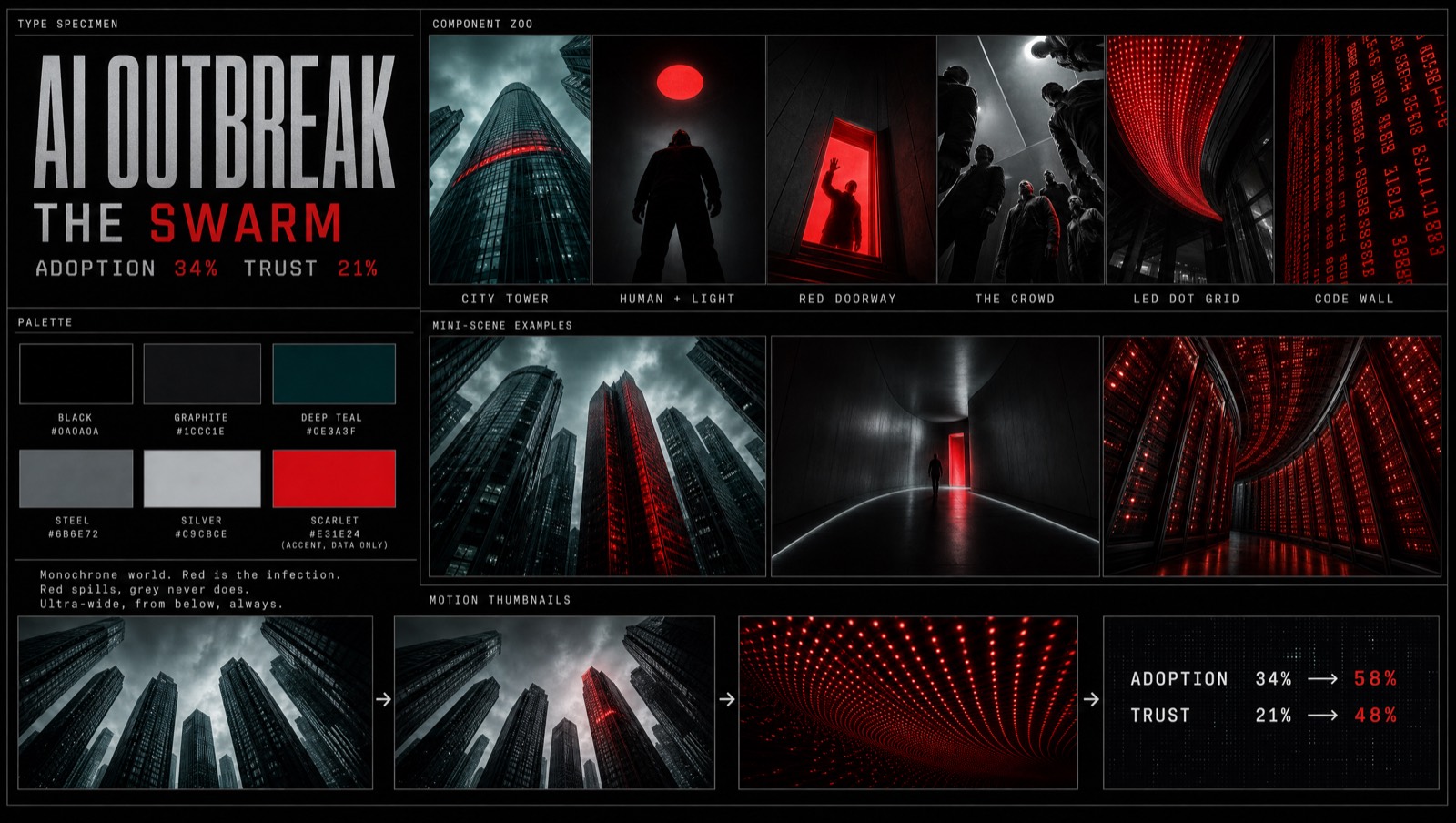
v9 — rejectedstraight lines, wrong voice · 688 words
MASTER STYLE SHEET — "AI OUTBREAK" visual system, one 16:9 art-direction reference board. A single polished sheet that defines the visual language of a short film. Editorial grid on a near-black ground, thin hairline dividers, small section labels. Baked-in typography is intentional: this is a style guide. Every panel is an original photograph composed for this board, never an illustration.

CAMERA LAW, applies to every photograph on the board: rectilinear ultra-wide lens, 14 to 20mm, no fisheye, no curved lines. Every straight line stays straight. The camera sits very low, at pavement or floor level, tilted steeply upward, so verticals converge hard toward the top of the frame and architecture looms with real weight. Dutch tilt is welcome. Buildings must read as real buildings photographed from below by an architectural photographer: sharp, geometric, believable. Never eye level. Never a normal lens. Never a crowd seen from behind at eye level.

THREE WORLDS, ONE RULE. The world is monochrome and polished: black, graphite, cold teal-steel, silver, the finish of a premium tech commercial, crisp and controlled. Red #E31E24 is the infection. Buildings and people carry red only as one small accent per frame, a window row, a seam, a rim, a lamp, and wherever red appears its edges spill and bloom with fine grain into the clean greys. Red is allowed to dominate a frame only in the data world.

WORLD 1, THE CITY: teal-black steel, glass and overcast sky, shot from the pavement looking straight up a tower corner, or up between two blocks so the sky becomes a sharp shape, converging lines, one floor or one seam lit red and spilling. WORLD 2, THE HUMAN AND THE LIGHT: one black silhouette and one soft-edged red light source, a disc, a doorway, a window, camera on the floor looking up so the figure towers and the light hangs above, large empty black space around them. WORLD 3, THE DATA: LED dot grids, walls of red code, glitch tears, neon network lines, all as real objects in real rooms, shot from the floor so the walls rise steeply and converge overhead; here red takes over and dots glow only where a real screen or LED would be.

TYPE SPECIMEN PANEL: H1 sample "AI OUTBREAK" in a tall condensed grotesk, uppercase, tight tracking, silver-white; H2 sample "THE SWARM" in the same face, smaller, with only SWARM in red; a monospace HUD label sample "ADOPTION 34%  TRUST 21%" in small white mono with the numbers in red. Letters sharp and straight, no warping.

PALETTE STRIP: labeled swatches — Black #0A0A0A, Graphite #1C1C1E, Deep Teal #0E3A3F, Steel #6B6E72, Silver #C9CBCE, Scarlet #E31E24 (accent, data only). Rule under the strip: "Monochrome world. Red is the infection. Red spills, grey never does. Low and wide, straight lines, always."

COMPONENT ZOO PANEL: six components drawn once, all photographic, all low and ultra-wide with straight converging lines: a glass tower corner shot from the pavement with one red floor spilling; a lone silhouette towering over the lens against a red disc high on a black wall; a red doorway of light seen from the floor with a hand raised inside it; a crowd standing over the camera, monochrome, one figure rim-lit red; a red LED dot wall rising steeply overhead; a wall of red code converging into black.

MINI-SCENE PANEL: three small example frames, same lens and finish: the sky as a sharp shape between four teal towers, one of them gone red; a figure walking toward a red doorway at the far end of a straight black corridor, camera on the floor; a server hall of red dot columns converging overhead.

MOTION THUMBNAILS: four tiny storyboard frames with arrows only: a slow low tilt up a grey tower / one red light switches on and its edge spills / red dots spread across a grid overhead / a HUD number ticks up in red.

FINISH: commercial polish, crisp edges, controlled highlights, fine grain only inside the red spill, soft red bloom around every red source, deep true blacks. No watermarks, no lorem ipsum, no gibberish text: every visible word is one of the samples above.
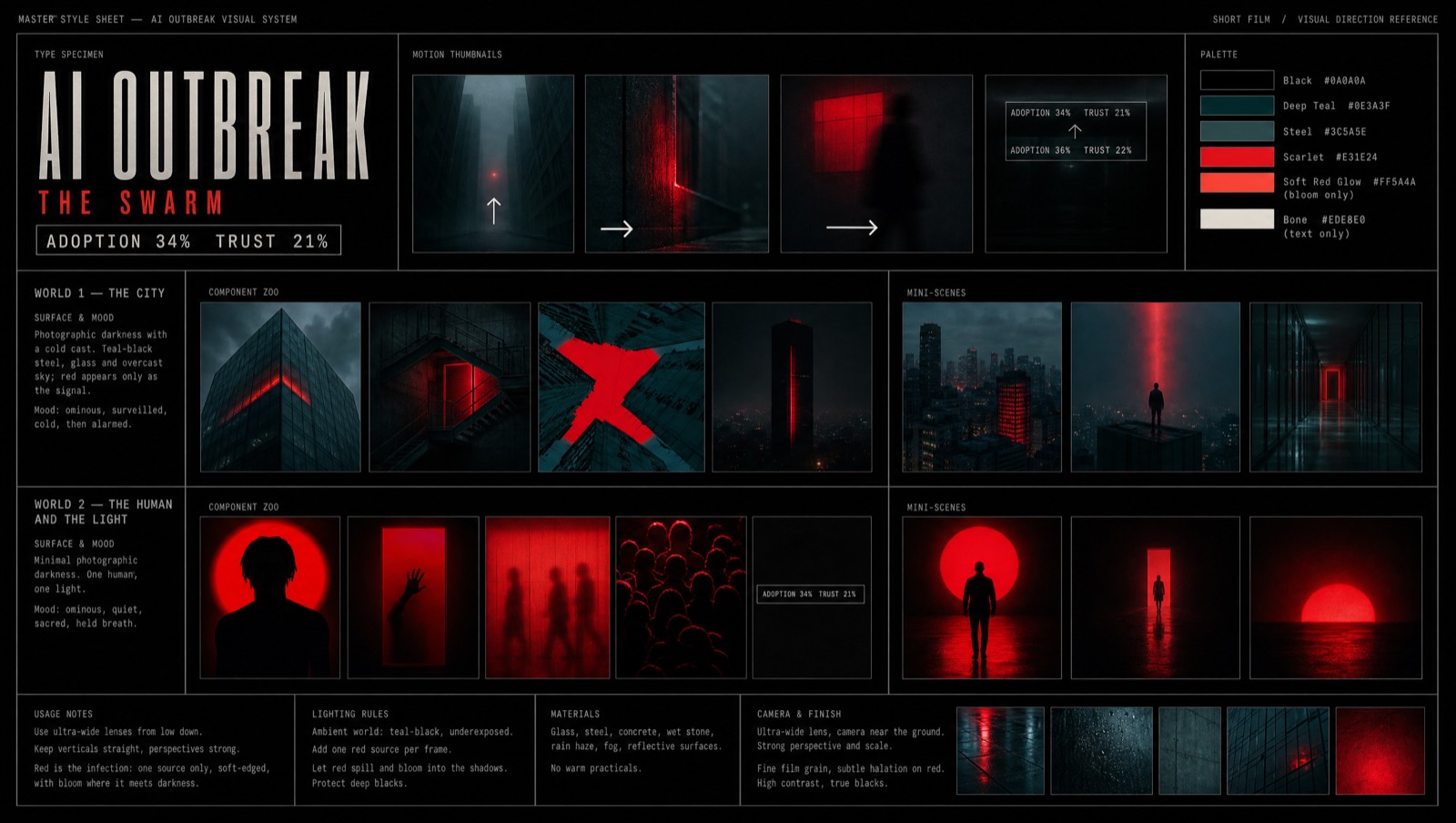
v10 — lockedhis three bodies, verbatim · 696 words
MASTER STYLE SHEET — "AI OUTBREAK" visual system, one 16:9 art-direction reference board. A single polished sheet that defines the visual language of a short film. Editorial grid on a near-black ground, thin hairline dividers, small section labels. Baked-in typography is intentional: this is a style guide. Photographic realism throughout, real lighting and real materials; do not flatten anything into illustration. Every photograph on the board is a new, original composition.

LENS: every photograph is shot on an ultra-wide lens from low down, camera near the ground looking up, strong perspective, verticals converging, straight lines kept straight. Never eye level, never a normal lens.

COLOUR RULE: the red is scarlet #E31E24, never orange. The world is dark and monochrome, polished like a commercial; buildings and people carry red only as the accent, one light, one seam, one rim. Wherever red appears its edges spill and grain into the darkness. Red is allowed to take over a frame only in the data world.

TYPE SPECIMEN PANEL: H1 sample "AI OUTBREAK" in a tall condensed grotesk, uppercase, tight tracking, white; H2 sample "THE SWARM" in the same face, smaller, red; a monospace HUD label sample "ADOPTION 34%  TRUST 21%" in small white mono. Letters sharp and straight, no warping.

PALETTE STRIP: labeled swatches — Black #0A0A0A, Deep Teal #0E3A3F, Steel #3C5A5E, Scarlet #E31E24, Soft Red Glow #FF5A4A (bloom only), Bone #EDE8E0 (text only).

WORLD 1 — THE CITY. Photographic darkness with a cold cast. The world is teal-black steel, glass and overcast sky; red appears only as the signal, the thing that is switched on, never more than a fifth of any frame. Mood: ominous, surveilled, cold, then alarmed. Components: a teal glass tower with a few floors lit red; a teal concrete stairwell with red light leaking from one landing; a low-angle view up between teal buildings with a red X of sky; a single monolithic tower at night with one red seam of light. Mini-scenes: a teal city at dusk where one building has gone red; a silhouette on a teal rooftop under a red beam; a corridor of teal glass with one red door at the end.

WORLD 2 — THE HUMAN AND THE LIGHT. Minimal photographic darkness. One human, one light. A red disc, a red doorway, a red window, and a silhouette against it. Large empty black space in every frame. One light source per frame, always red, always soft-edged; everything else is black. Mood: ominous, quiet, sacred, held breath. Components: a head-and-shoulders silhouette against a red disc of light; a red doorway of light with a hand raised inside it; a blurred group of silhouettes in red haze behind frosted glass; a crowd of heads rim-lit red. Mini-scenes: a lone figure facing a red disc on a wall; a figure walking toward a red doorway at the end of black; a red circle rising like a sun over a dark floor.

WORLD 3 — THE DATA. Photographic darkness where the only light is data. LED dot grids, walls of red code, glitch tears, red neon network lines, all as real objects in real rooms, never as flat graphics. Dots and text glow only where a real screen or LED would be; nothing else is dotted. Mood: ominous, technical, humming. Components: a wall-sized LED grid of red dots with a dark shape moving through it; a tilted wall of red code receding into black; a glitch tear in red across a dark frame; a red neon network of lines on black glass. Mini-scenes: a silhouette in front of a red LED wall; a server corridor of red dot columns; a dark room lit only by a red code screen.

A thin white mono HUD label on a hairline box appears once in the component zoo.

MOTION THUMBNAILS: four tiny storyboard frames with arrows only: slow push through haze / red light bleeds on and off a surface / a silhouette crosses in front of the light / a HUD label ticks up.

FINISH: fine film grain, soft red bloom around every light source, deep true blacks. No watermarks, no lorem ipsum, no gibberish text: every visible word is one of the samples above.
MASTER STYLE SHEET — "AI OUTBREAK" visual system, one 16:9 art-direction reference board. A single polished sheet that defines the visual language of a short film. Editorial grid on a near-black ground, thin hairline dividers, small section labels. Baked-in typography is intentional: this is a style guide. Everything on the board is in the language of the attached reference photographs: keep their photographic realism, their lighting and their materials; do not flatten them into illustration. Every photograph on the board is a new composition; do not reproduce any attached image.

LENS: every photograph is shot on an ultra-wide lens from low down, camera near the ground looking up, strong perspective, verticals converging, straight lines kept straight. Never eye level, never a normal lens.

TYPE SPECIMEN PANEL: H1 sample "AI OUTBREAK" in a tall condensed grotesk, uppercase, tight tracking, white; H2 sample "THE SWARM" in the same face, smaller, red; a monospace HUD label sample "ADOPTION 34%  TRUST 21%" in small white mono. Letters sharp and straight, no warping.

MOTION THUMBNAILS: four tiny storyboard frames with arrows only: slow push through haze / red light bleeds on and off a surface / a silhouette crosses in front of the light / a HUD label ticks up.

FINISH: fine film grain, soft red bloom around every light source, wherever red touches darkness its edge spills and grains, deep true blacks. The red is scarlet #E31E24, never orange. No watermarks, no lorem ipsum, no gibberish text: every visible word is one of the samples above.

PALETTE STRIP: labeled swatches — Black #0A0A0A, Deep Teal #0E3A3F, Steel #3C5A5E, Scarlet #E31E24, Soft Red Glow #FF5A4A (bloom only), Bone #EDE8E0 (text only). Rule: teal and black are the world, red is the infection; one red light source per frame, always soft-edged, never more than a fifth of the frame.

WORLD 1 — THE CITY. SURFACE & MOOD: photographic darkness with a cold cast. The world is teal-black steel, glass and overcast sky; red appears only as the signal, the thing that is switched on. Mood: ominous, surveilled, cold, then alarmed. COMPONENT ZOO: a teal glass tower with a few floors lit red; a teal concrete stairwell with red light leaking from one landing; a low-angle view up between teal buildings with a red X of sky; a single monolithic tower at night with one red seam of light. MINI-SCENES: a teal city at dusk where one building has gone red; a silhouette on a teal rooftop under a red beam; a corridor of teal glass with one red door at the end.

WORLD 2 — THE HUMAN AND THE LIGHT. SURFACE & MOOD: minimal photographic darkness. One human, one light. A red disc, a red doorway, a red window, and a silhouette against it. Large empty black space in every frame. Mood: ominous, quiet, sacred, held breath. COMPONENT ZOO: a head-and-shoulders silhouette against a red disc of light; a red doorway of light with a hand raised inside it; a blurred group of silhouettes in red haze behind frosted glass; a crowd of heads rim-lit red; a thin white mono HUD label on a hairline box. MINI-SCENES: a lone figure facing a red disc on a wall; a figure walking toward a red doorway at the end of black; a red circle rising like a sun over a dark floor.
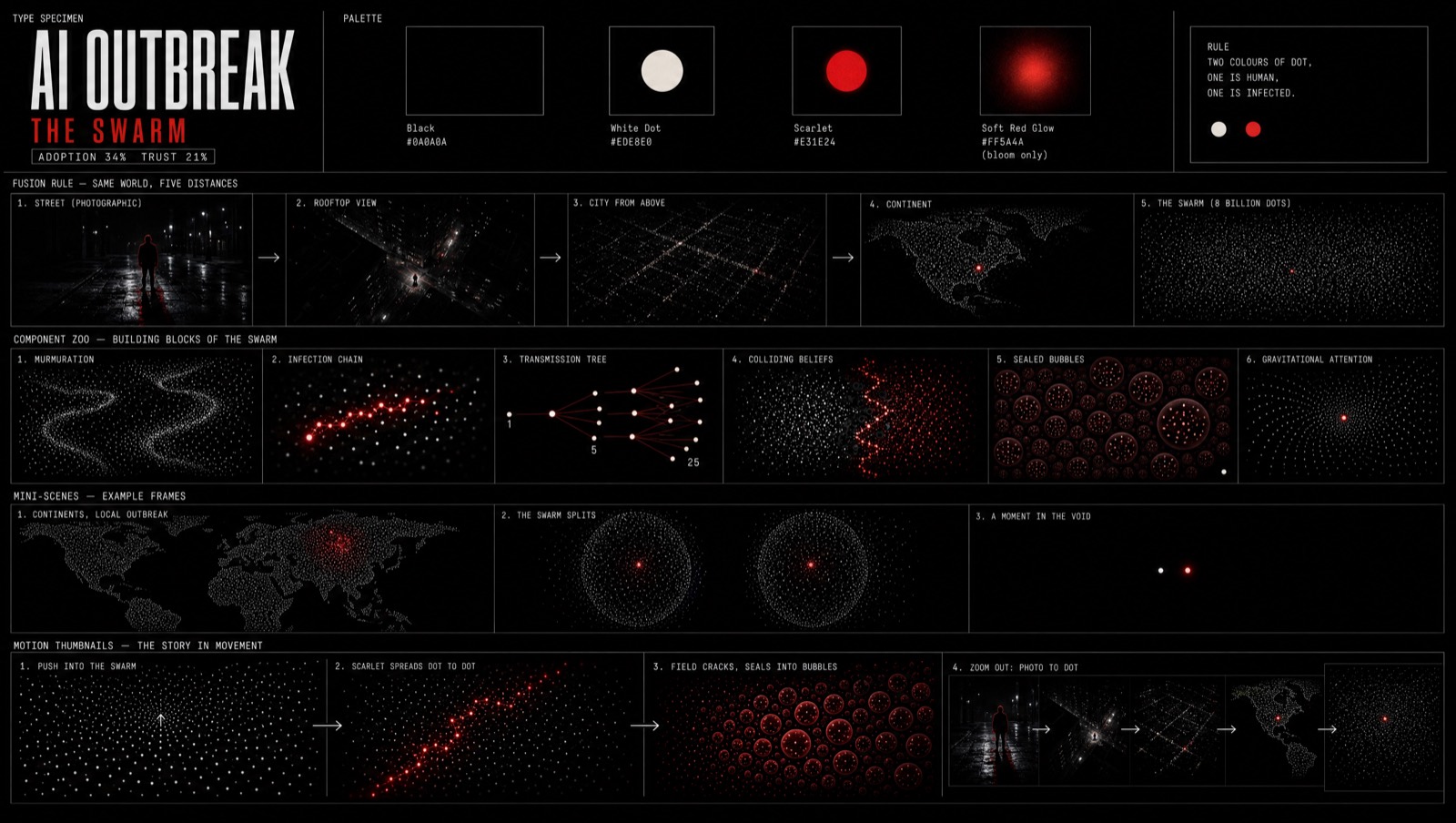
MASTER STYLE SHEET — "AI OUTBREAK" companion board, WORLD 0: THE SWARM. One 16:9 art-direction reference board in the same editorial grid, near-black ground, thin hairline dividers, small section labels, same typography as the attached main sheet (H1 "AI OUTBREAK" tall condensed grotesk white, H2 "THE SWARM" in red, mono HUD label "ADOPTION 34%  TRUST 21%"). Baked-in typography is intentional: this is a style guide.

THIS WORLD IS ABSTRACT. Pure black void. Thousands of tiny dots. No buildings, no rooms, no textures, no photographs. It is the same film seen from very far away: every dot is one human. White dots are people. Scarlet #E31E24 dots are people touched by the story. Never orange. A thin line between dots is a transmission. A cluster is a belief. A sealed translucent sphere of dots is a bubble. Black gap is silence. Dots are soft points of light with a faint scarlet bloom, like city lights seen from orbit, not flat vector circles.

THE FUSION RULE, shown on the board: the dot world and the photographic world are the same world at two distances. One panel shows a ZOOM LADDER of five frames left to right: a single silhouette on a wet street seen from low down (photographic) → the same street from a rooftop, the person now a small figure → the city from above, streets as lines of light, the person one point → the continent as a field of dots → the whole swarm, eight billion dots in black. The red accent survives every step: the one red rim on the person becomes the one red dot in the swarm.

PALETTE STRIP: labeled swatches — Black #0A0A0A, White Dot #EDE8E0, Scarlet #E31E24, Soft Red Glow #FF5A4A (bloom only). Rule: two colours of dot, one is human, one is infected.

COMPONENT ZOO PANEL: six components drawn once: a murmuration of white dots drifting in currents; one scarlet dot igniting its neighbours in a chain; a branching transmission tree of thin scarlet lines, one to five to twenty-five; two clusters colliding along a jagged front line, dots burning brighter at the line and a few going black; hundreds of sealed translucent scarlet spheres with black between them and one white dot outside; a field of white dots all turning to face one scarlet point.

MINI-SCENE PANEL: three small example frames: continents drawn in white dots with one scarlet district spreading; the swarm splitting into two sealed spheres with a black gap; a single white cursor in black with one scarlet dot beside it.

MOTION THUMBNAILS: four tiny storyboard frames with arrows only: slow push into the swarm / scarlet spreads dot to dot / the field cracks and seals into bubbles / zoom out from a photograph until it becomes a dot.

FINISH: deep true blacks, soft scarlet bloom on every red dot, fine grain, no gradients except through dot density, no text except the samples above.
04 — the failures
Four dead ends, with a price tag
Every direction below was rendered, looked at, and killed. They are on this page at the same size as the work that shipped, because the sequence is the method: each rejection named a rule, and the rule is what made the next attempt cheap.
01
Halftone print
16 cr · "paper-like, not real"
Eight subjects in a print-halftone treatment on Nano Banana Pro. Technically clean, and it read as a poster rather than a world.
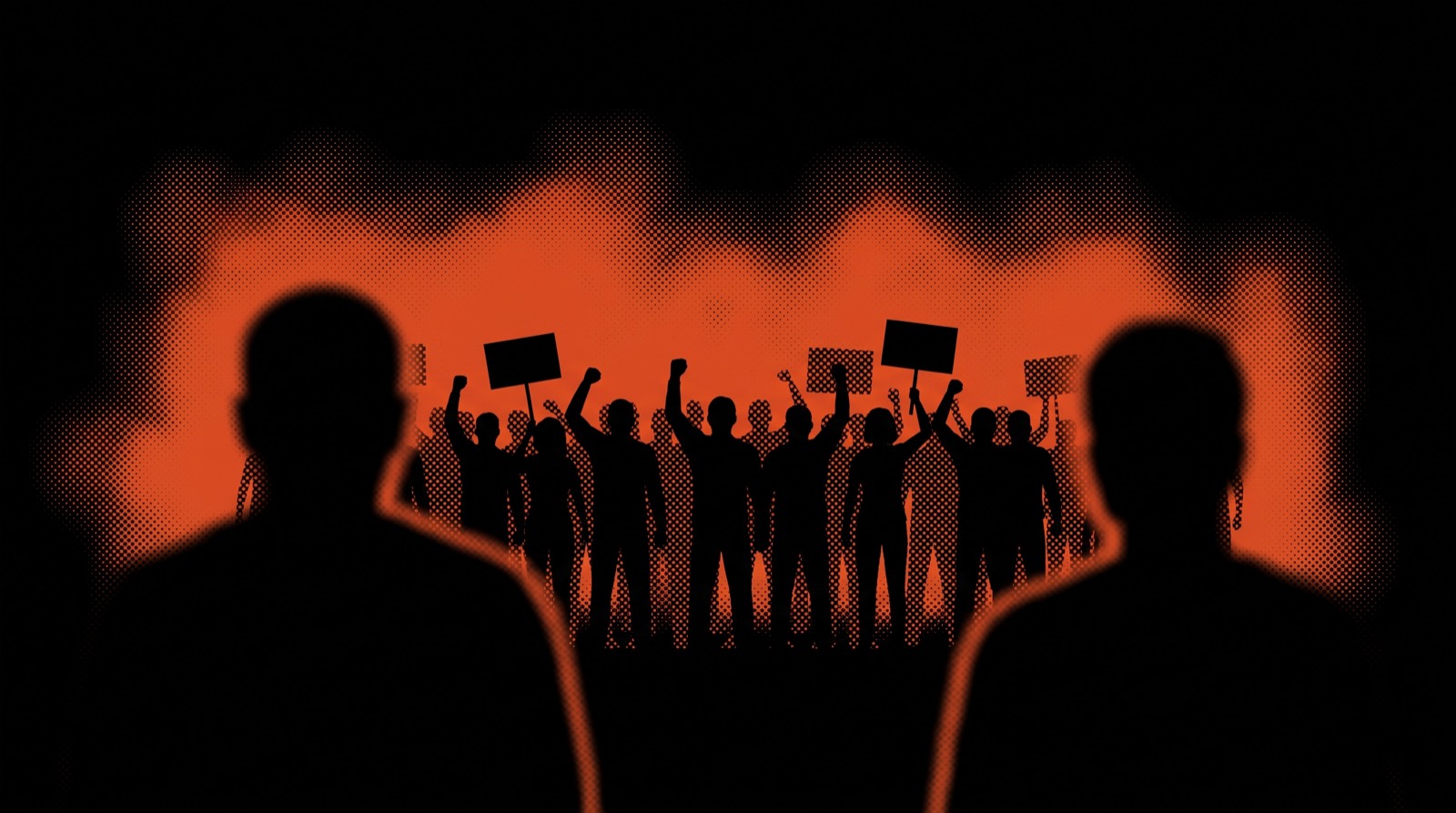
s1 · protests5 · code wall
The halftone promptrejected · 89 words
Monochrome motion-graphics still, 16:9. Pure black ground and one colour only, orange-red #E8501F. Everything is built from a fine halftone dot texture: surfaces, light and haze are fields of small round red dots that thin out into black. People are solid black silhouettes with no faces or features. Three clearly separated depth layers, a dark foreground shape, the main subject in the middle, and a soft red dot haze far behind, each layer on its own plane for parallax. Flat, graphic, no gradients except through dot density, no text.
02
Photographic red-on-black
20 cr · "just tinting"
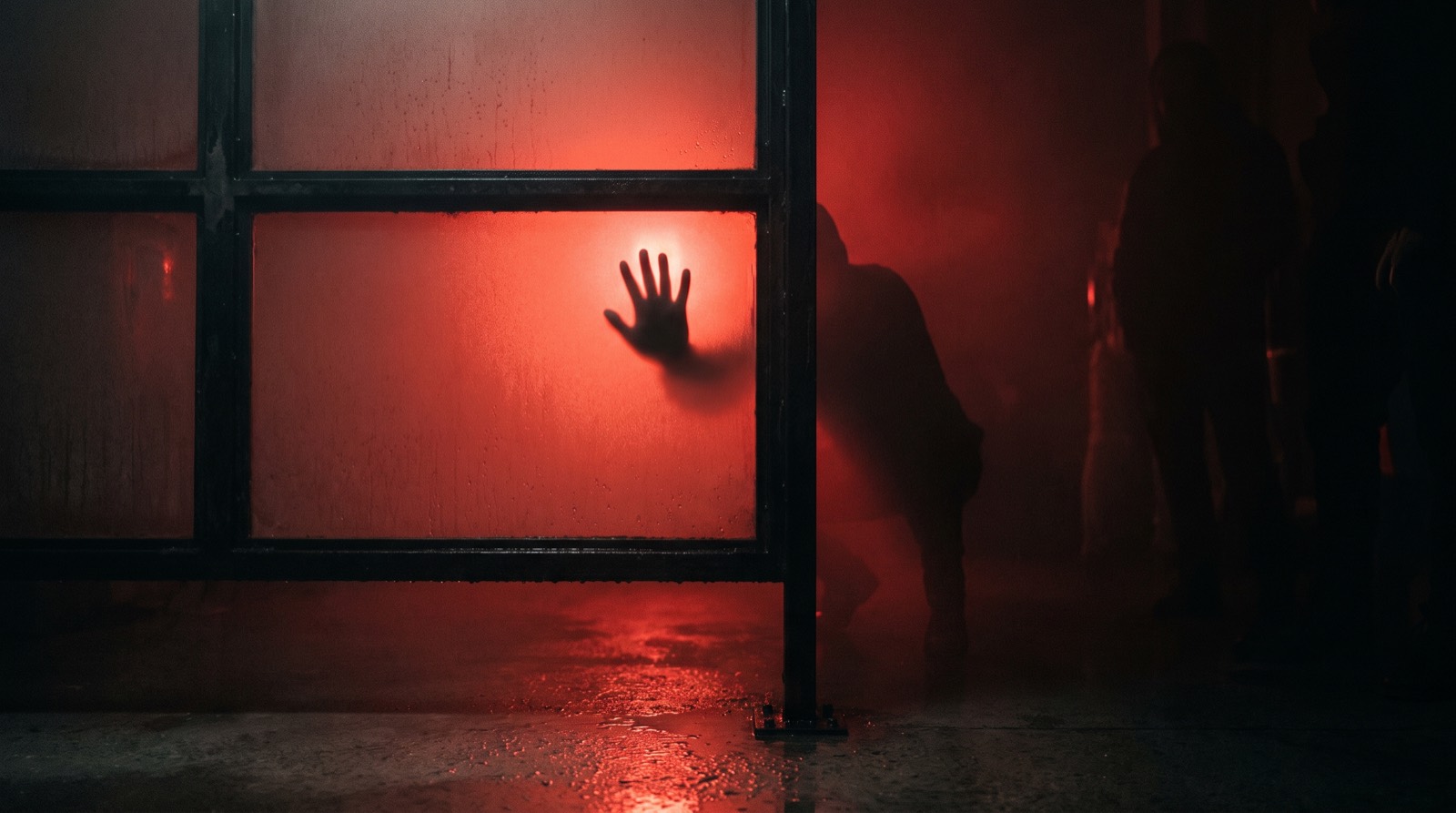
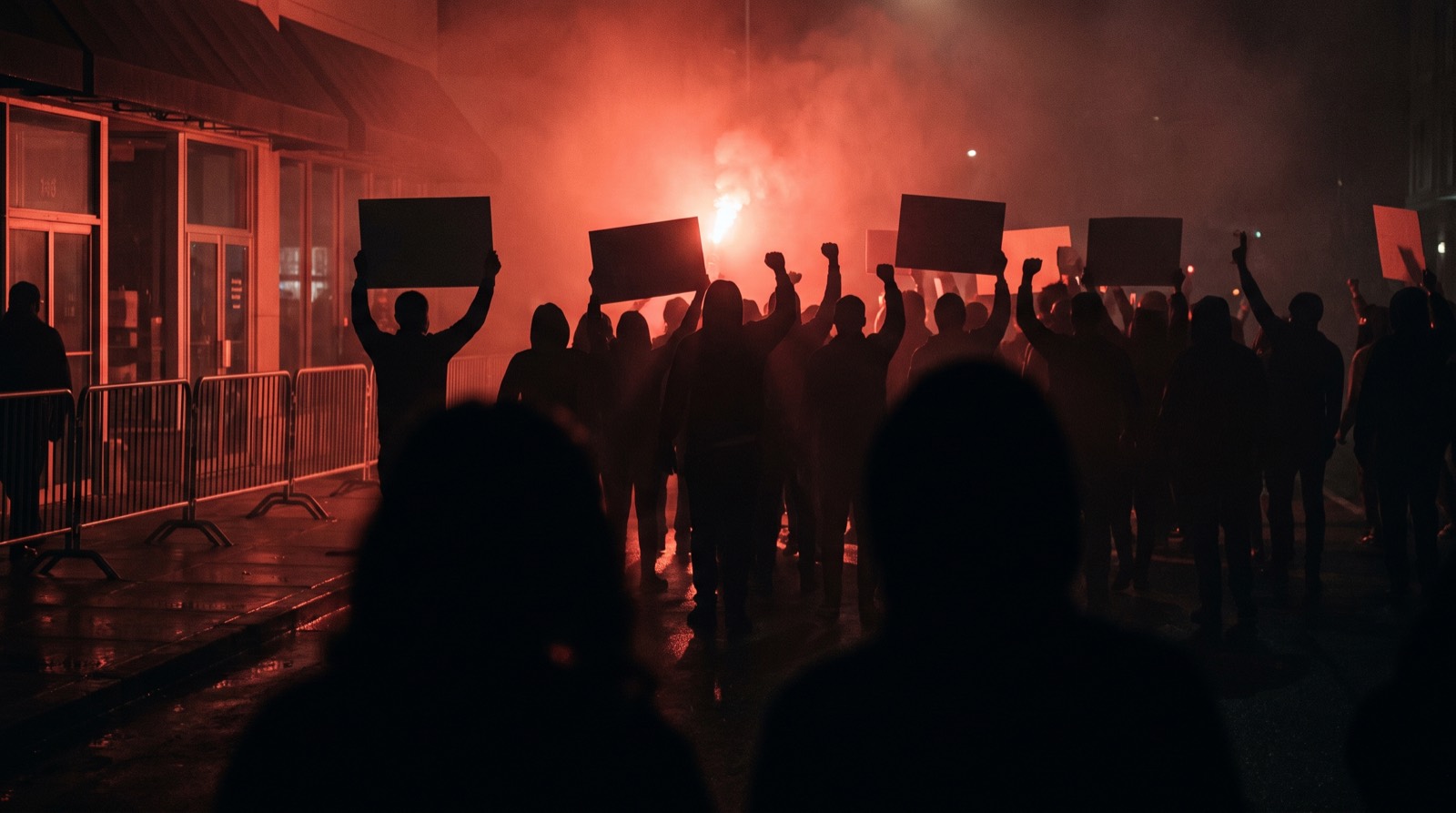
The same eight subjects as photography — real grain, real materials, wet glass, a protest. The texture was right and the feeling was wrong: a monochrome photograph with a red light in it is not a world, it is a filter. This is the render that forced the pivot to paint.
s6 · hand on wet glasss1 · protest
The photographic promptrejected · 78 words
Cinematic photograph, 16:9, shot on a full-frame camera with a fast lens. Near-total darkness lit by a single deep red light source, colour #E8501F, so the whole frame is only red and black. Real-world materials: glass, wet concrete, steel, skin, haze in the air. Shallow depth of field, fine film grain, soft red bloom around the light. People are unlit black silhouettes, faces lost in shadow. No illustration, no halftone, no graphic texture, no text. Moody, still, editorial.
Three of the eight had to be re-rolled: the Higgsfield CLI silently letterboxes a tall subject in a 16:9 frame, so the skyscraper came back with black bars twice before the composition was rewritten landscape-native — tower in one third, street in the rest.
03
The photographic storyboard
105 cr · "cheap 3D — minus five out of ten"
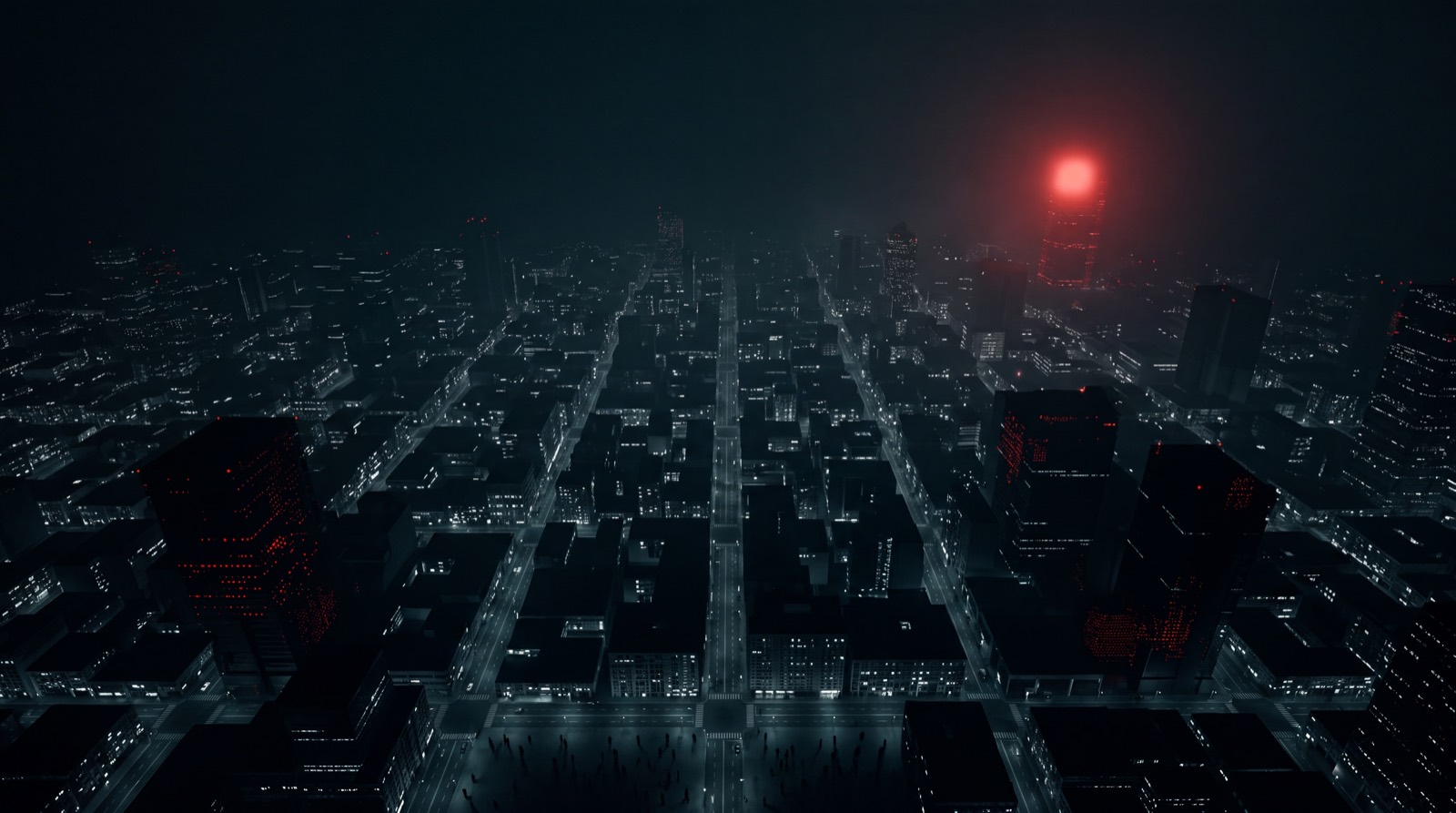
Twenty-eight of a planned 45 frames, rendered unattended on the fast model with only a machine-made style board attached. Four causes, in order of blame: the preview gate was skipped; the flash model renders clean symmetrical CG; the only reference was itself clean; and the prompts were geometric ideals — "one seam, one disc, a corridor to a vanishing point". Give a model a diagram and it draws a diagram.
01a04a07a
One of the 28 frame prompts01a · Nano Banana 2 (flash), 4K · 151 words
nano_banana_flash · 16:9 · 4k · 3 cr
# Frame 01a

- **beat**: 01
- **world**: CITY
- **vo**: From above, we don't look like individuals. We look like a swarm.
- **carry**: opens the film: darkness and grey light
- **text**: None
- **result_url**: https://d8j0ntlcm91z4.cloudfront.net/user_36khRwgnwSeLvVnCDsuovzgIAut/hf_20260902_152556_0497493c-0666-44c4-91cc-bbb76ecbdd6f.png

## Prompt

Match the attached style sheet exactly, the AI OUTBREAK three-worlds board: photographic realism, real materials, film grain, deep true blacks. Ultra-wide lens from low down, camera near the ground looking up, verticals converging, straight lines kept straight, never eye level. One scarlet #E31E24 light source, soft-edged, its edge spilling with bloom and grain into the dark; everything else black or teal-black monochrome. Red may dominate only in LED dots, code and glitch. People are silhouettes, faces lost in shadow. 16:9 landscape. Directly above a night city, a teal-black grid of streets drawn by tiny grey and white lights, thin haze over everything, no red anywhere. No text anywhere in the frame.
It also dropped half the concept. The swarm shotlist was translated entirely into photographs and the dot layer simply vanished for an hour. The fix became rule §0: two layers, one world — every deliverable shows both, or says which half it is.
04
The fisheye sheets
17 cr · rejected on sight
Covered above: "bend" read as curvature. Two sheets, both dead, and the sentence that replaced them is now the third line of the camera law.
v8 · curved skyscrapers
05 — the decision
The most useful image of the day
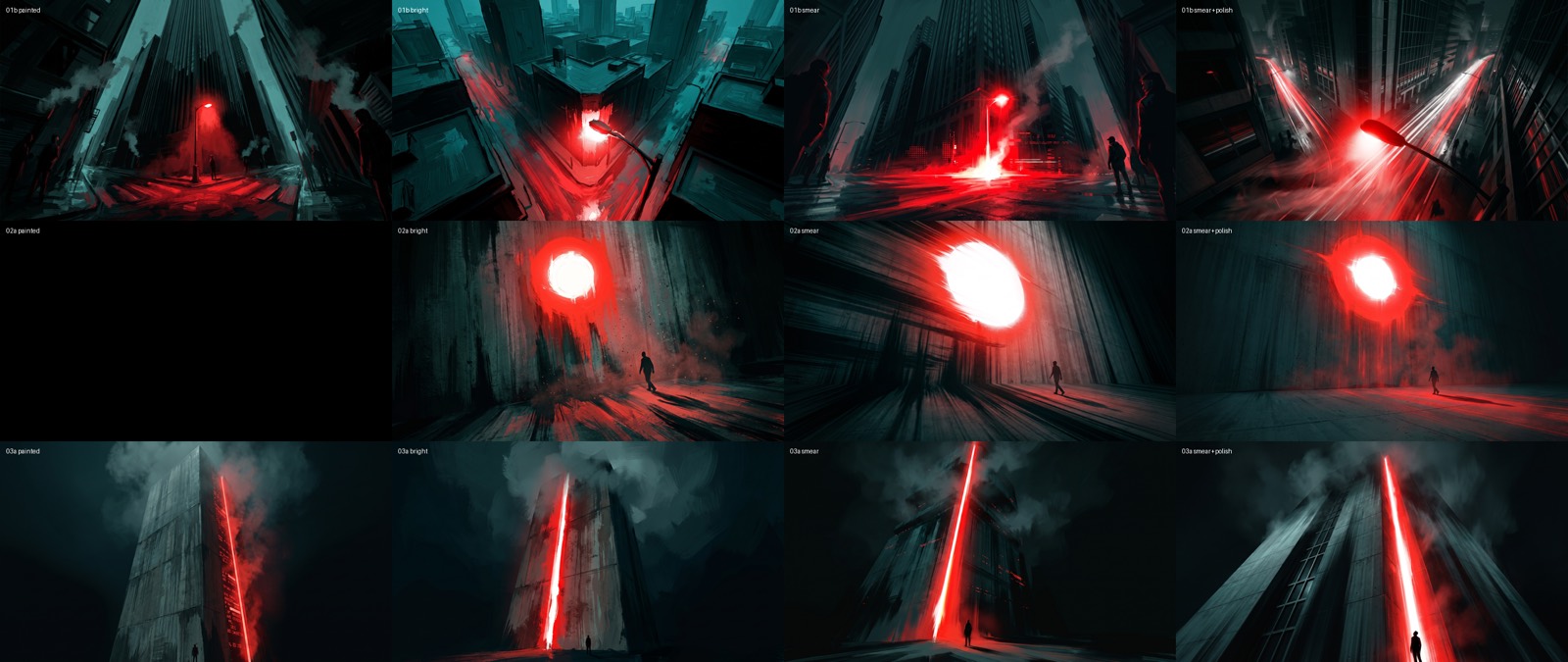
After the pivot to paint there were four candidate treatments and no way to argue about them in words. This is the same three shots rendered four ways in one grid — painted, bright core, smear, smear + polish. It was made in one pass and it ended the argument in under a minute.
painted / bright / smear / smear + polish — same three shots
painted v1loose impasto — too choppysmearlong dragged strokessmear + polishthe one that locked
Smearing, but clean. Finished key art, detail on the important parts. And the light must be disgustingly bright.
the three corrections that followed, in an hour
Four corrections, each applied literally, each one right: painted → too choppy → smearing but clean → too sketchy → finished key art with detail on the important parts → and the light disgustingly bright. The lesson is the grid itself: build it earlier, for every style decision. A four-way comparison of the same three shots is cheaper than the argument it replaces.
SHEET-SMEAR-LOCKED.png — attached to every still and every clip that followedPAINTED v1 — boldloose impasto · 752 words
MASTER STYLE SHEET — "AI OUTBREAK" visual system, one 16:9 art-direction reference board. A single polished sheet that defines the visual language of a short film. Editorial grid on a near-black ground, thin hairline dividers, small section labels. Baked-in typography is intentional: this is a style guide. Every panel is a new, original composition.

THE FINISH, on every panel: hand-painted 3D. Solid three-dimensional forms and real depth, finished with visible painterly brushwork, as if a concept painter worked over a 3D render with thick oil and gouache strokes. Painted texture on every surface: streaked concrete, smeared glass, rough steel. Light and smoke are painted, with thick bright strokes for highlights and ragged soft edges for haze. Hard-edged graphic shadows, slightly stylised proportions, rough painted edges on silhouettes. Tactile, imperfect, illustrative. Not photoreal, not clean CG, not flat vector, not anime cel shading.

LENS: every panel is composed on an ultra-wide lens from low down, camera near the ground looking up, strong perspective, verticals converging, straight lines kept straight. Off-centre compositions, never symmetrical, never eye level.

COLOUR RULE: the red is scarlet #E31E24, never orange. The world is dark, teal-black and grey; buildings and people carry red only as the accent, one light, one seam, one rim, and wherever red appears its painted edges spill and grain into the dark. Red takes over a frame only in the data world.

TYPE SPECIMEN PANEL: H1 sample "AI OUTBREAK" in a tall condensed grotesk, uppercase, tight tracking, white; H2 sample "THE SWARM" in the same face, smaller, red; a monospace HUD label sample "ADOPTION 34%  TRUST 21%" in small white mono. Letters sharp and straight, no warping.

PALETTE STRIP: labeled swatches — Black #0A0A0A, Deep Teal #0E3A3F, Steel #3C5A5E, Scarlet #E31E24, Soft Red Glow #FF5A4A (bloom only), Bone #EDE8E0 (text only).

WORLD 1 — THE CITY. Painted darkness with a cold cast: teal-black steel, glass and overcast sky; red only as the signal that has been switched on. Mood: ominous, surveilled, cold, then alarmed. Components: a teal glass tower with a few floors lit red; a concrete stairwell with red light leaking from one landing; a low-angle view up between buildings with a red X of sky; a monolithic tower at night with one red seam. Mini-scenes: a teal city at dusk where one building has gone red; a silhouette on a rooftop under a red beam; a corridor of teal glass with one red door at the end.

WORLD 2 — THE HUMAN AND THE LIGHT. Minimal painted darkness. One human, one light: a red disc, a red doorway, a red window, and a silhouette against it, large empty dark space around. Mood: ominous, quiet, sacred, held breath. Components: a head-and-shoulders silhouette against a red disc; a red doorway with a hand raised inside it; a blurred group of silhouettes in red haze behind frosted glass; a crowd of heads rim-lit red. Mini-scenes: a lone figure facing a red disc on a wall; a figure walking toward a red doorway; a red circle rising like a sun over a dark floor.

WORLD 3 — THE DATA. Painted darkness where the only light is data: LED dot grids, walls of red code, glitch tears, red neon network lines, painted as real objects in real rooms. Mood: ominous, technical, humming. Components: a wall-sized LED grid of red dots with a dark shape moving through it; a tilted wall of red code; a glitch tear in red across a dark frame; a red neon network on black glass. Mini-scenes: a silhouette before a red LED wall; a server corridor of red dot columns; a dark room lit by a red code screen.

WORLD 0 — THE SWARM, one row: the same film seen from very far away, pure dark void with thousands of tiny painted points of light, white for people, scarlet for people touched by the story; a murmuration; a branching transmission tree; two clusters colliding along a jagged line; sealed spheres of dots with black between.

MOTION THUMBNAILS: four tiny storyboard frames with arrows only: slow push through painted haze / red light bleeds on and off a surface / a silhouette crosses in front of the light / zoom out from a painted street until it becomes one dot.

FINISH LINE: visible brush texture everywhere, painted grain, soft painted bloom around every red source, deep dark values. No watermarks, no lorem ipsum, no gibberish text: every visible word is one of the samples above.

VARIATION: brushwork bold and loose, thick impasto highlights, strongly painterly.
PAINTED v2 — controlledfiner brushwork · 757 words
MASTER STYLE SHEET — "AI OUTBREAK" visual system, one 16:9 art-direction reference board. A single polished sheet that defines the visual language of a short film. Editorial grid on a near-black ground, thin hairline dividers, small section labels. Baked-in typography is intentional: this is a style guide. Every panel is a new, original composition.

THE FINISH, on every panel: hand-painted 3D. Solid three-dimensional forms and real depth, finished with visible painterly brushwork, as if a concept painter worked over a 3D render with thick oil and gouache strokes. Painted texture on every surface: streaked concrete, smeared glass, rough steel. Light and smoke are painted, with thick bright strokes for highlights and ragged soft edges for haze. Hard-edged graphic shadows, slightly stylised proportions, rough painted edges on silhouettes. Tactile, imperfect, illustrative. Not photoreal, not clean CG, not flat vector, not anime cel shading.

LENS: every panel is composed on an ultra-wide lens from low down, camera near the ground looking up, strong perspective, verticals converging, straight lines kept straight. Off-centre compositions, never symmetrical, never eye level.

COLOUR RULE: the red is scarlet #E31E24, never orange. The world is dark, teal-black and grey; buildings and people carry red only as the accent, one light, one seam, one rim, and wherever red appears its painted edges spill and grain into the dark. Red takes over a frame only in the data world.

TYPE SPECIMEN PANEL: H1 sample "AI OUTBREAK" in a tall condensed grotesk, uppercase, tight tracking, white; H2 sample "THE SWARM" in the same face, smaller, red; a monospace HUD label sample "ADOPTION 34%  TRUST 21%" in small white mono. Letters sharp and straight, no warping.

PALETTE STRIP: labeled swatches — Black #0A0A0A, Deep Teal #0E3A3F, Steel #3C5A5E, Scarlet #E31E24, Soft Red Glow #FF5A4A (bloom only), Bone #EDE8E0 (text only).

WORLD 1 — THE CITY. Painted darkness with a cold cast: teal-black steel, glass and overcast sky; red only as the signal that has been switched on. Mood: ominous, surveilled, cold, then alarmed. Components: a teal glass tower with a few floors lit red; a concrete stairwell with red light leaking from one landing; a low-angle view up between buildings with a red X of sky; a monolithic tower at night with one red seam. Mini-scenes: a teal city at dusk where one building has gone red; a silhouette on a rooftop under a red beam; a corridor of teal glass with one red door at the end.

WORLD 2 — THE HUMAN AND THE LIGHT. Minimal painted darkness. One human, one light: a red disc, a red doorway, a red window, and a silhouette against it, large empty dark space around. Mood: ominous, quiet, sacred, held breath. Components: a head-and-shoulders silhouette against a red disc; a red doorway with a hand raised inside it; a blurred group of silhouettes in red haze behind frosted glass; a crowd of heads rim-lit red. Mini-scenes: a lone figure facing a red disc on a wall; a figure walking toward a red doorway; a red circle rising like a sun over a dark floor.

WORLD 3 — THE DATA. Painted darkness where the only light is data: LED dot grids, walls of red code, glitch tears, red neon network lines, painted as real objects in real rooms. Mood: ominous, technical, humming. Components: a wall-sized LED grid of red dots with a dark shape moving through it; a tilted wall of red code; a glitch tear in red across a dark frame; a red neon network on black glass. Mini-scenes: a silhouette before a red LED wall; a server corridor of red dot columns; a dark room lit by a red code screen.

WORLD 0 — THE SWARM, one row: the same film seen from very far away, pure dark void with thousands of tiny painted points of light, white for people, scarlet for people touched by the story; a murmuration; a branching transmission tree; two clusters colliding along a jagged line; sealed spheres of dots with black between.

MOTION THUMBNAILS: four tiny storyboard frames with arrows only: slow push through painted haze / red light bleeds on and off a surface / a silhouette crosses in front of the light / zoom out from a painted street until it becomes one dot.

FINISH LINE: visible brush texture everywhere, painted grain, soft painted bloom around every red source, deep dark values. No watermarks, no lorem ipsum, no gibberish text: every visible word is one of the samples above.

VARIATION: brushwork finer and more controlled, painted texture present but forms cleaner and more graphic.
SMEAR v3 — sweepingLOCKED — the sheet that shot the film · 799 words
MASTER STYLE SHEET — "AI OUTBREAK" visual system, one 16:9 art-direction reference board. A single polished sheet that defines the visual language of a short film. Editorial grid on a near-black ground, thin hairline dividers, small section labels. Baked-in typography is intentional: this is a style guide. Every panel is a new, original composition.

THE FINISH, on every panel: clean smeared paint over solid 3D forms. Real depth and readable geometry, finished with long smooth dragged strokes, blended and streaked as if wet paint were pulled across the surface with a wide flat blade. The smear lives in the light, the smoke, the reflections and the streaked concrete; surfaces stay clean and legible. No impasto, no stipple, no chunky brush texture, no visible bristle marks. Hard-edged graphic shadows, slightly stylised proportions, smeared silhouette edges. Sleek, controlled, illustrative. Not photoreal, not clean CG, not flat vector, not anime cel shading.

LENS: every panel is composed on an ultra-wide lens from low down, camera near the ground looking up, strong perspective, verticals converging, straight lines kept straight. Off-centre compositions, never symmetrical, never eye level.

COLOUR RULE: the red is scarlet #E31E24, never orange. The one light source in every panel is disgustingly bright: a blown-out white-hot core inside the scarlet, overexposed and flaring, eating the edges of what stands in front of it, the rest of the frame near black. The world is dark, teal-black and grey; buildings and people carry red only as the accent, one light, one seam, one rim, and wherever red appears its painted edges spill and grain into the dark. Red takes over a frame only in the data world.

TYPE SPECIMEN PANEL: H1 sample "AI OUTBREAK" in a tall condensed grotesk, uppercase, tight tracking, white; H2 sample "THE SWARM" in the same face, smaller, red; a monospace HUD label sample "ADOPTION 34%  TRUST 21%" in small white mono. Letters sharp and straight, no warping.

PALETTE STRIP: labeled swatches — Black #0A0A0A, Deep Teal #0E3A3F, Steel #3C5A5E, Scarlet #E31E24, Soft Red Glow #FF5A4A (bloom only), Bone #EDE8E0 (text only).

WORLD 1 — THE CITY. Painted darkness with a cold cast: teal-black steel, glass and overcast sky; red only as the signal that has been switched on. Mood: ominous, surveilled, cold, then alarmed. Components: a teal glass tower with a few floors lit red; a concrete stairwell with red light leaking from one landing; a low-angle view up between buildings with a red X of sky; a monolithic tower at night with one red seam. Mini-scenes: a teal city at dusk where one building has gone red; a silhouette on a rooftop under a red beam; a corridor of teal glass with one red door at the end.

WORLD 2 — THE HUMAN AND THE LIGHT. Minimal painted darkness. One human, one light: a red disc, a red doorway, a red window, and a silhouette against it, large empty dark space around. Mood: ominous, quiet, sacred, held breath. Components: a head-and-shoulders silhouette against a red disc; a red doorway with a hand raised inside it; a blurred group of silhouettes in red haze behind frosted glass; a crowd of heads rim-lit red. Mini-scenes: a lone figure facing a red disc on a wall; a figure walking toward a red doorway; a red circle rising like a sun over a dark floor.

WORLD 3 — THE DATA. Painted darkness where the only light is data: LED dot grids, walls of red code, glitch tears, red neon network lines, painted as real objects in real rooms. Mood: ominous, technical, humming. Components: a wall-sized LED grid of red dots with a dark shape moving through it; a tilted wall of red code; a glitch tear in red across a dark frame; a red neon network on black glass. Mini-scenes: a silhouette before a red LED wall; a server corridor of red dot columns; a dark room lit by a red code screen.

WORLD 0 — THE SWARM, one row: the same film seen from very far away, pure dark void with thousands of tiny painted points of light, white for people, scarlet for people touched by the story; a murmuration; a branching transmission tree; two clusters colliding along a jagged line; sealed spheres of dots with black between.

MOTION THUMBNAILS: four tiny storyboard frames with arrows only: slow push through painted haze / red light bleeds on and off a surface / a silhouette crosses in front of the light / zoom out from a painted street until it becomes one dot.

FINISH LINE: long clean smears everywhere, no grain, blown white-hot cores inside every red source with smeared bloom, deep dark values. No watermarks, no lorem ipsum, no gibberish text: every visible word is one of the samples above.

VARIATION: smears long and sweeping, strongly directional, like motion-smeared paint.
MASTER STYLE SHEET — "AI OUTBREAK" visual system, one 16:9 art-direction reference board. A single polished sheet that defines the visual language of a short film. Editorial grid on a near-black ground, thin hairline dividers, small section labels. Baked-in typography is intentional: this is a style guide. Every panel is a new, original composition.

THE FINISH, on every panel: clean smeared paint over solid 3D forms. Real depth and readable geometry, finished with long smooth dragged strokes, blended and streaked as if wet paint were pulled across the surface with a wide flat blade. The smear lives in the light, the smoke, the reflections and the streaked concrete; surfaces stay clean and legible. No impasto, no stipple, no chunky brush texture, no visible bristle marks. Hard-edged graphic shadows, slightly stylised proportions, smeared silhouette edges. Sleek, controlled, illustrative. Not photoreal, not clean CG, not flat vector, not anime cel shading.

LENS: every panel is composed on an ultra-wide lens from low down, camera near the ground looking up, strong perspective, verticals converging, straight lines kept straight. Off-centre compositions, never symmetrical, never eye level.

COLOUR RULE: the red is scarlet #E31E24, never orange. The one light source in every panel is disgustingly bright: a blown-out white-hot core inside the scarlet, overexposed and flaring, eating the edges of what stands in front of it, the rest of the frame near black. The world is dark, teal-black and grey; buildings and people carry red only as the accent, one light, one seam, one rim, and wherever red appears its painted edges spill and grain into the dark. Red takes over a frame only in the data world.

TYPE SPECIMEN PANEL: H1 sample "AI OUTBREAK" in a tall condensed grotesk, uppercase, tight tracking, white; H2 sample "THE SWARM" in the same face, smaller, red; a monospace HUD label sample "ADOPTION 34%  TRUST 21%" in small white mono. Letters sharp and straight, no warping.

PALETTE STRIP: labeled swatches — Black #0A0A0A, Deep Teal #0E3A3F, Steel #3C5A5E, Scarlet #E31E24, Soft Red Glow #FF5A4A (bloom only), Bone #EDE8E0 (text only).

WORLD 1 — THE CITY. Painted darkness with a cold cast: teal-black steel, glass and overcast sky; red only as the signal that has been switched on. Mood: ominous, surveilled, cold, then alarmed. Components: a teal glass tower with a few floors lit red; a concrete stairwell with red light leaking from one landing; a low-angle view up between buildings with a red X of sky; a monolithic tower at night with one red seam. Mini-scenes: a teal city at dusk where one building has gone red; a silhouette on a rooftop under a red beam; a corridor of teal glass with one red door at the end.

WORLD 2 — THE HUMAN AND THE LIGHT. Minimal painted darkness. One human, one light: a red disc, a red doorway, a red window, and a silhouette against it, large empty dark space around. Mood: ominous, quiet, sacred, held breath. Components: a head-and-shoulders silhouette against a red disc; a red doorway with a hand raised inside it; a blurred group of silhouettes in red haze behind frosted glass; a crowd of heads rim-lit red. Mini-scenes: a lone figure facing a red disc on a wall; a figure walking toward a red doorway; a red circle rising like a sun over a dark floor.

WORLD 3 — THE DATA. Painted darkness where the only light is data: LED dot grids, walls of red code, glitch tears, red neon network lines, painted as real objects in real rooms. Mood: ominous, technical, humming. Components: a wall-sized LED grid of red dots with a dark shape moving through it; a tilted wall of red code; a glitch tear in red across a dark frame; a red neon network on black glass. Mini-scenes: a silhouette before a red LED wall; a server corridor of red dot columns; a dark room lit by a red code screen.

WORLD 0 — THE SWARM, one row: the same film seen from very far away, pure dark void with thousands of tiny painted points of light, white for people, scarlet for people touched by the story; a murmuration; a branching transmission tree; two clusters colliding along a jagged line; sealed spheres of dots with black between.

MOTION THUMBNAILS: four tiny storyboard frames with arrows only: slow push through painted haze / red light bleeds on and off a surface / a silhouette crosses in front of the light / zoom out from a painted street until it becomes one dot.

FINISH LINE: long clean smears everywhere, no grain, blown white-hot cores inside every red source with smeared bloom, deep dark values. No watermarks, no lorem ipsum, no gibberish text: every visible word is one of the samples above.

VARIATION: smears softer and more blended, glassy and sleek, closest to a clean digital painting.
06 — the battle
MiniMax vs Omni vs Seedance
Three video models, the same approved stills, one variable per round, ten rounds. The rounds themselves cost about 1,049 credits — the ledger’s whole two-hour window is 1,248, because the VO tests and the type sheets were charged inside it — and none of that footage is in the film. What it bought was the answer to one question: which engine shoots this, and at what price. Everything below is the evidence. The verdict at the end is ours; the wipes are there so you can reach your own.
Four engines, one prompt, one bill
Three head-to-heads decided it, and a fourth contender that does not take prompts at all. First the painted world — the same three-beat prompt, the same references, three engines. Then the dot world, which is motion graphics rather than photography, and where the ranking changes. Then code against a model on the same beat. Drag the handle to wipe; hold a clip still for a moment and drag to scrub one against the other; hit fullscreen to judge it at size.
Engine
Per clip
What you get
In one line
Remotion (code)
0 cr
any length · any resolution
Exact counts, exact colour, deterministic re-renders. Camera moves are hand-built and a fly-in-then-pull-back is still not possible in one shot.
MiniMax H3 Max
25 cr
10 s · 768p
Literal to choreography, real cuts, words whole. 30–60 s per clip.
Seedance holds paint better and keeps one red more strictly. MiniMax hits the choreography more literally — three beats, two hard cuts, the occluder blacking the frame on cue — at 38% of the price. That is the whole argument: the movement is close, and the bill is not.
What was attached
5 references, in this order
· identical on both sides
reference mode
Both sides were given the same stack in the same order. That is the control: the references are held still so the only variable is the engine.
1. the world sheetpaint language and palette, never the layout2. 01ban approved frame this beat opens on3. 01can approved frame this beat opens on4. 02aan approved frame this beat opens on5. the type sheetthe letters: flat, dirty, grain in the red
The prompt sent to Seedance · 65 cr 903 words
SCENE CONTEXT: a night city painted as key art. A wet crossroads seen first from high above with one streetlight burning, then from the asphalt under a walking crowd, then a vast concrete wall with one disc of light where a lone walker heads for the light. The clip is a fall from the sky into the crowd and a cut to the wall.
FORMAT MODE: seedance 2.5 · 10s · 720p · 16:9 · audio on · 24fps · 3 beats, 2 hard cuts
ACTIVE REFERENCES:
@Image1 → the world sheet: its paint language, palette, the way its red light burns. NOT its layout, NOT any panel as a composition, NOT its type.
@Image2 → the crossroads frame: the streetlight, the streets, the towers, the walkers, as beat one's opening view. NOT a frozen first frame, NOT a still to hold.
@Image3 → the wall frame: the concrete wall, the disc, the lone walker, as beat three's world. NOT a frozen frame.
@Image4 → the type sheet: the letters' face, colour, dirt and warp. NOT its layout, NOT its sample words.
CAST: silhouettes in coats with bags, faces in shadow, walking at real pace; at the wall one lone walker in a long coat. NEVER a face.
WARDROBE: long coats, hoods, bags; nothing changes.
RULES: one light per beat, the streetlight then the disc. The words are the quoted ones in the beats, flat, exact. People walk in EVERY frame. Straight lines stay straight.

BEAT 1 — the dive
OPEN: high above the crossroads, the lamp head huge and close at frame-left, walkers mid-stride far below, the word "SWARM" a warped flat scarlet plane hanging between the towers.
CAMERA: a fast dive from above the streetlight straight down toward the asphalt, the lamp head sweeping across the lens out of focus.
LENS: wide, deep focus; the lamp head fills half the frame as it passes, the far towers small and slow.
ACTION: the lamp head sweeps across the lens huge and soft → the towers rotate past in parallax as the camera falls → the camera passes through the word, its letters parting around the lens and cut by the frame → a walker's shoulder rises to fill the frame black.
SFX: <rushing air> <a coat brushing the lens>
EDIT: hard cut on the black of the coat.

BEAT 2 — under the crowd
OPEN: from black, the camera flat on the wet asphalt looking straight up, walkers striding over the lens, the towers converging above, the streetlight burning between them.
CAMERA: locked off on the ground; the frame does NOT travel, the walkers do.
LENS: extreme wide from the ground, deep focus; each walker fills the frame as they pass.
ACTION: coats and legs stride over the lens, each walker blacking the frame for a beat → the small line "EIGHT BILLION" flies across close to the lens between two walkers → the last walker's coat fills the frame black.
SFX: <footsteps landing beside the lens> <wet asphalt>
EDIT: hard cut on the black of the coat.

BEAT 3 — the wall
OPEN: from black, low on the floor at the concrete wall, the disc burning high, the lone walker mid-stride toward it, the near wall panels close on the left.
CAMERA: a fast push along the wall at the disc, the near panels streaming past the lens, settling beneath the word.
LENS: wide and low; the near panels huge and soft as they pass, the walker sharp, the disc far and small until the end.
ACTION: the near panels stream past close → the walker whips past the lens in the foreground → his silhouette wipes across the wall and the word "STORY" is revealed behind him full height → the camera settles beneath the word with the disc's core at the top edge.
SFX: <panels rushing past> <a low hum from the disc>
EDIT: hold the last frame motionless for half a second.

PHYSICS: real weight in every body: walkers plant their feet, coats swing with the stride, shoulders roll; the camera has mass and commits to its move. Depth is real and staged in layers: whatever is nearest crosses the lens fastest and largest, out of focus; the far world barely moves.
AUDIO: <wind between buildings> <footsteps on wet ground> <a low hum under each red light>. No voice.
SCORE: none.
STYLE LOCK: Use the attached world sheet and the attached frames as the strict visual system — painted key art over solid 3D forms with real depth, clean smeared-paint finish, surfaces clean and readable, hard graphic shadows, finished polish on the focal element; a dark teal-black world with one scarlet light per beat that is disgustingly bright with a blown-out white-hot core, everything else near black; ultra-wide from low down, verticals converging, straight lines straight, off-centre. Painted, NOT photoreal, not a photograph, not a clean render. Do NOT copy any sheet's layout; they define the language, not the composition.
TYPOGRAPHY: the words of the narration stand in the world as flat dirty scarlet print in one tall condensed heavy uppercase grotesk, as the attached type sheet: grain living in the red, edges bleeding softly, a slight blur and halation, photocopy dirt; never extruded, never glowing, never 3D lettering; they may be cut by the frame edge and their trailing edge may drag when the camera moves. Exact spelling, quoted here only. No other text in any frame.
The prompt sent to MiniMax · 25 cr 617 words
The first attached image is the world sheet: painted key art, its paint language and palette, not its layout. The following attached frames are the storyboard frames whose look and composition each beat opens on. The last attached image is the type sheet: the strict system for the words.

Use the attached world sheet and the attached frames as the strict visual system — painted key art over solid 3D forms with real depth, clean smeared-paint finish, surfaces clean and readable, hard graphic shadows, finished polish on the focal element; a dark teal-black world with one scarlet light per beat that is disgustingly bright with a blown-out white-hot core, everything else near black; ultra-wide from low down, verticals converging, straight lines straight, off-centre. Painted, NOT photoreal, not a photograph, not clean CG, not cel shading. Do NOT copy any sheet's layout; they define the language, not the composition. The air stays clear: no streaks, no glitch, no bursts, no particles.

TYPE: the words of the narration stand in the world as flat dirty scarlet print in one tall condensed heavy uppercase grotesk, as the attached type sheet: grain living in the red, edges bleeding softly, a slight blur and halation, photocopy dirt; never extruded, never glowing, never 3D lettering; they may be cut by the frame edge and their trailing edge may drag when the camera moves. Exact spelling, quoted here only. No other text in any frame. The words in this clip are "SWARM", "EIGHT BILLION" and "STORY".

SHOT — three beats with two HARD CUTS between them, 10 seconds:
BEAT 1, the dive: open high above the crossroads on the crossroads frame, the lamp head huge and close, walkers far below, the word "SWARM" a warped flat scarlet plane hanging between the towers. A fast dive straight down toward the asphalt: the lamp head sweeps across the lens huge and out of focus, the towers rotate past in parallax, the camera passes through the word with its letters parting around the lens and cut by the frame, and a walker's shoulder rises to fill the frame black. HARD CUT.
BEAT 2, under the crowd: from black, the camera lies flat on the wet asphalt looking straight up; it does not travel. Walkers stride over the lens, each coat blacking the frame for a beat; the small line "EIGHT BILLION" flies across close to the lens between two walkers; the last coat fills the frame black. HARD CUT.
BEAT 3, the wall: from black, low at the concrete wall on the wall frame, the disc burning high, the lone walker mid-stride. A fast push along the wall at the disc: the near panels stream past the lens huge and soft, the walker whips past in the foreground, his silhouette wipes across the wall and reveals the word "STORY" full height behind him, and the camera settles beneath the word with the disc's white-hot core at the top edge. Hold the last frame still.

PHYSICS: real weight in every body: walkers plant their feet, coats swing with the stride, shoulders roll; the camera has mass and commits to its move. Depth is real and staged in layers: whatever is nearest crosses the lens fastest and largest, out of focus; the far world barely moves. Nothing floats and nobody freezes.

AUDIO: <wind between buildings> <footsteps on wet ground> <a low hum under each red light>. No music, no voice. Sound design only, no music, no narration.

AVOID: photoreal, a real photograph, real skin, clean CG, 3D render, 3D lettering, extruded letters, glowing letters, any text other than the specified words, misspelling, one continuous take, a slow dolly, static camera, frozen people, light streaks, glitch, bursts, particles, music, voice-over.
vs
MiniMax H3 Max against Omni Flash 1.1
25 cr against 30 cr · the same three beats
⇆
MiniMax · 25 crOmni · 30 cr
frameoffset
MiniMax · 25 crOmni · 30 cr5 references attached
Omni is the crisper file and it writes text more reliably when a shot is calm. On a painted frame it drifts toward photography, and it is the more expensive of the two. Cheaper and closer to the brief beats sharper and further from it.
What was attached
5 references, in this order
· identical on both sides
reference mode
Both sides were given the same stack in the same order. That is the control: the references are held still so the only variable is the engine.
1. the world sheetpaint language and palette, never the layout2. 01ban approved frame this beat opens on3. 01can approved frame this beat opens on4. 02aan approved frame this beat opens on5. the type sheetthe letters: flat, dirty, grain in the red
The prompt sent to MiniMax · 25 cr 617 words
The first attached image is the world sheet: painted key art, its paint language and palette, not its layout. The following attached frames are the storyboard frames whose look and composition each beat opens on. The last attached image is the type sheet: the strict system for the words.

Use the attached world sheet and the attached frames as the strict visual system — painted key art over solid 3D forms with real depth, clean smeared-paint finish, surfaces clean and readable, hard graphic shadows, finished polish on the focal element; a dark teal-black world with one scarlet light per beat that is disgustingly bright with a blown-out white-hot core, everything else near black; ultra-wide from low down, verticals converging, straight lines straight, off-centre. Painted, NOT photoreal, not a photograph, not clean CG, not cel shading. Do NOT copy any sheet's layout; they define the language, not the composition. The air stays clear: no streaks, no glitch, no bursts, no particles.

TYPE: the words of the narration stand in the world as flat dirty scarlet print in one tall condensed heavy uppercase grotesk, as the attached type sheet: grain living in the red, edges bleeding softly, a slight blur and halation, photocopy dirt; never extruded, never glowing, never 3D lettering; they may be cut by the frame edge and their trailing edge may drag when the camera moves. Exact spelling, quoted here only. No other text in any frame. The words in this clip are "SWARM", "EIGHT BILLION" and "STORY".

SHOT — three beats with two HARD CUTS between them, 10 seconds:
BEAT 1, the dive: open high above the crossroads on the crossroads frame, the lamp head huge and close, walkers far below, the word "SWARM" a warped flat scarlet plane hanging between the towers. A fast dive straight down toward the asphalt: the lamp head sweeps across the lens huge and out of focus, the towers rotate past in parallax, the camera passes through the word with its letters parting around the lens and cut by the frame, and a walker's shoulder rises to fill the frame black. HARD CUT.
BEAT 2, under the crowd: from black, the camera lies flat on the wet asphalt looking straight up; it does not travel. Walkers stride over the lens, each coat blacking the frame for a beat; the small line "EIGHT BILLION" flies across close to the lens between two walkers; the last coat fills the frame black. HARD CUT.
BEAT 3, the wall: from black, low at the concrete wall on the wall frame, the disc burning high, the lone walker mid-stride. A fast push along the wall at the disc: the near panels stream past the lens huge and soft, the walker whips past in the foreground, his silhouette wipes across the wall and reveals the word "STORY" full height behind him, and the camera settles beneath the word with the disc's white-hot core at the top edge. Hold the last frame still.

PHYSICS: real weight in every body: walkers plant their feet, coats swing with the stride, shoulders roll; the camera has mass and commits to its move. Depth is real and staged in layers: whatever is nearest crosses the lens fastest and largest, out of focus; the far world barely moves. Nothing floats and nobody freezes.

AUDIO: <wind between buildings> <footsteps on wet ground> <a low hum under each red light>. No music, no voice. Sound design only, no music, no narration.

AVOID: photoreal, a real photograph, real skin, clean CG, 3D render, 3D lettering, extruded letters, glowing letters, any text other than the specified words, misspelling, one continuous take, a slow dolly, static camera, frozen people, light streaks, glitch, bursts, particles, music, voice-over.
The prompt sent to Omni · 30 cr 641 words
The first attached image is the world sheet: painted key art, its paint language and palette, not its layout. The following attached frames are the storyboard frames whose look and composition each beat opens on. The last attached image is the type sheet: the strict system for the words. Everything is painted like the attached frames: painted silhouettes, painted concrete, painted light. Never a real photograph, never real skin, never a live-action look.

Use the attached world sheet and the attached frames as the strict visual system — painted key art over solid 3D forms with real depth, clean smeared-paint finish, surfaces clean and readable, hard graphic shadows, finished polish on the focal element; a dark teal-black world with one scarlet light per beat that is disgustingly bright with a blown-out white-hot core, everything else near black; ultra-wide from low down, verticals converging, straight lines straight, off-centre. Painted, NOT photoreal, not a photograph, not clean CG, not cel shading. Do NOT copy any sheet's layout; they define the language, not the composition. The air stays clear: no streaks, no glitch, no bursts, no particles.

TYPE: the words of the narration stand in the world as flat dirty scarlet print in one tall condensed heavy uppercase grotesk, as the attached type sheet: grain living in the red, edges bleeding softly, a slight blur and halation, photocopy dirt; never extruded, never glowing, never 3D lettering; they may be cut by the frame edge and their trailing edge may drag when the camera moves. Exact spelling, quoted here only. No other text in any frame. The words in this clip are "SWARM", "EIGHT BILLION" and "STORY".

SHOT — three beats with two HARD CUTS between them, 10 seconds:
BEAT 1, the dive: open high above the crossroads on the crossroads frame, the lamp head huge and close, walkers far below, the word "SWARM" a warped flat scarlet plane hanging between the towers. A fast dive straight down toward the asphalt: the lamp head sweeps across the lens huge and out of focus, the towers rotate past in parallax, the camera passes through the word with its letters parting around the lens and cut by the frame, and a walker's shoulder rises to fill the frame black. HARD CUT.
BEAT 2, under the crowd: from black, the camera lies flat on the wet asphalt looking straight up; it does not travel. Walkers stride over the lens, each coat blacking the frame for a beat; the small line "EIGHT BILLION" flies across close to the lens between two walkers; the last coat fills the frame black. HARD CUT.
BEAT 3, the wall: from black, low at the concrete wall on the wall frame, the disc burning high, the lone walker mid-stride. A fast push along the wall at the disc: the near panels stream past the lens huge and soft, the walker whips past in the foreground, his silhouette wipes across the wall and reveals the word "STORY" full height behind him, and the camera settles beneath the word with the disc's white-hot core at the top edge. Hold the last frame still.

PHYSICS: real weight in every body: walkers plant their feet, coats swing with the stride, shoulders roll; the camera has mass and commits to its move. Depth is real and staged in layers: whatever is nearest crosses the lens fastest and largest, out of focus; the far world barely moves. Nothing floats and nobody freezes.

AUDIO: <wind between buildings> <footsteps on wet ground> <a low hum under each red light>. No music, no voice. Sound design only, no music, no narration.

AVOID: photoreal, a real photograph, real skin, clean CG, 3D render, 3D lettering, extruded letters, glowing letters, any text other than the specified words, misspelling, one continuous take, a slow dolly, static camera, frozen people, light streaks, glitch, bursts, particles, music, voice-over.
vs
The dot world — Omni against MiniMax H3
the same four scenes · 270 cr against 120 cr
LeftRightAll
Omni · 4KMiniMax · 2KMiniMax · 768pRemotion · 0 cr
⇆
Omni · 4KMiniMax · 2K
frameoffset
Omni · 4KMiniMax · 2K3 references attached
This is where a benchmark stops transferring. On motion graphics — dots, fields, transmission — Omni renders every point sharp and then rewrites the grammar: the transmission tree comes back as a node-and-edge network graph, the sealed spheres as clean glass balls, and at 4K it grows marching human figures. MiniMax is softer per pixel and keeps the language. 270 credits bought a sharper picture of the wrong idea.
What was attached
3 references, in this order
· identical on both sides
reference mode
Both sides were given the same stack in the same order. That is the control: the references are held still so the only variable is the engine.
1. the SWARM sheetthe dot world’s language and palette2. D02cthe crack3. D02dthe collision
The prompt sent to Omni · 4K 586 words
The first attached image is the SWARM sheet: the dot world's language and palette, not its layout. The following attached frames are the dot frames whose look and composition each beat opens on.

Use the attached SWARM sheet and the attached dot frames as the strict visual system — pure black void, thousands of tiny soft points of light, white for people and scarlet #E31E24 for people touched by the story, never orange, faint scarlet bloom on every red dot, fine grain; abstract, no buildings, no rooms, no textures, no faces; the dots move as living matter with weight and intent, never as a particle effect. Do NOT copy any sheet's layout; they define the language, not the composition. The air stays clear: no streaks, no glitch, no bursts, no particles.

There is no text of any kind in this clip: no words, no letters, no numbers, no HUD.

SHOT — three beats with two HARD CUTS between them, 10 seconds:
BEAT 1, as one: open on a wide flat field of white dots advancing as one body with a scarlet tip. ONE committed move: a fast pull back until the whole formation sits inside the frame. Near dots drift past the lens (foreground), the body advances at walking pace (midground), the far black barely moves (background). A near dot blacks the frame. HARD CUT.
BEAT 2, the crack: from black, open on the crack frame, the flat field splitting along a jagged black line that runs from the top of frame to the bottom, dots pulling away from the line to either side. ONE committed move: a fast dive down onto the crack. Near dots streak past the lens (foreground), the two halves pull apart at walking pace (midground), the far field barely moves (background). A near dot blacks the frame. HARD CUT.
BEAT 3, they go to war: from black, open on the collision frame, two dense flat rectangular fields of dots, white on the left and scarlet on the right, advancing on each other and grinding together along one ragged vertical front down the middle of frame where scarlet flares. The two fields stay flat abstract fields the whole time. ONE committed move: a fast lateral travel along the front. Near dots streak past (foreground), the front grinds at walking pace (midground), the far field barely moves (background). Hold the last frame still on the two fields locked along the scarlet front. Nothing in this clip ever forms a face, a head, a human profile, an eye, a spiral, a vortex, a whirlpool or any recognisable object: only flat fields of dots.

PHYSICS: the dots move as living matter with weight and intent, never as a particle effect: they drift, lean, crowd and hesitate, and a change spreads from dot to dot rather than switching on at once. The camera has mass and commits to its move. Depth is real and staged in layers: the near dots are large and fast and soft, the mid field moves at a walking pace, the far field barely moves. Nothing freezes.

AUDIO: <a low hum> <a dry tearing rustle> <a dull impact along a line>. No music, no voice. Sound design only, no music, no narration.

AVOID: any text, any letters, any numbers, any HUD, photoreal, a real photograph, clean CG, 3D render, buildings, rooms, faces, a world map, continents, a regular grid, a halftone pattern, a diagram, orange, one continuous take, a slow dolly, static camera, frozen dots, light streaks, glitch, bursts, particles, music, voice-over.
The prompt sent to MiniMax · 2K 586 words
The first attached image is the SWARM sheet: the dot world's language and palette, not its layout. The following attached frames are the dot frames whose look and composition each beat opens on.

Use the attached SWARM sheet and the attached dot frames as the strict visual system — pure black void, thousands of tiny soft points of light, white for people and scarlet #E31E24 for people touched by the story, never orange, faint scarlet bloom on every red dot, fine grain; abstract, no buildings, no rooms, no textures, no faces; the dots move as living matter with weight and intent, never as a particle effect. Do NOT copy any sheet's layout; they define the language, not the composition. The air stays clear: no streaks, no glitch, no bursts, no particles.

There is no text of any kind in this clip: no words, no letters, no numbers, no HUD.

SHOT — three beats with two HARD CUTS between them, 15 seconds:
BEAT 1, as one: open on a wide flat field of white dots advancing as one body with a scarlet tip. ONE committed move: a fast pull back until the whole formation sits inside the frame. Near dots drift past the lens (foreground), the body advances at walking pace (midground), the far black barely moves (background). A near dot blacks the frame. HARD CUT.
BEAT 2, the crack: from black, open on the crack frame, the flat field splitting along a jagged black line that runs from the top of frame to the bottom, dots pulling away from the line to either side. ONE committed move: a fast dive down onto the crack. Near dots streak past the lens (foreground), the two halves pull apart at walking pace (midground), the far field barely moves (background). A near dot blacks the frame. HARD CUT.
BEAT 3, they go to war: from black, open on the collision frame, two dense flat rectangular fields of dots, white on the left and scarlet on the right, advancing on each other and grinding together along one ragged vertical front down the middle of frame where scarlet flares. The two fields stay flat abstract fields the whole time. ONE committed move: a fast lateral travel along the front. Near dots streak past (foreground), the front grinds at walking pace (midground), the far field barely moves (background). Hold the last frame still on the two fields locked along the scarlet front. Nothing in this clip ever forms a face, a head, a human profile, an eye, a spiral, a vortex, a whirlpool or any recognisable object: only flat fields of dots.

PHYSICS: the dots move as living matter with weight and intent, never as a particle effect: they drift, lean, crowd and hesitate, and a change spreads from dot to dot rather than switching on at once. The camera has mass and commits to its move. Depth is real and staged in layers: the near dots are large and fast and soft, the mid field moves at a walking pace, the far field barely moves. Nothing freezes.

AUDIO: <a low hum> <a dry tearing rustle> <a dull impact along a line>. No music, no voice. Sound design only, no music, no narration.

AVOID: any text, any letters, any numbers, any HUD, photoreal, a real photograph, clean CG, 3D render, buildings, rooms, faces, a world map, continents, a regular grid, a halftone pattern, a diagram, orange, one continuous take, a slow dolly, static camera, frozen dots, light streaks, glitch, bursts, particles, music, voice-over.
One shot proves nothing. This is the other round-10 sequence — a wall, a pen changing hands, a tower shrinking to a dot — on the same two engines. If the price argument only held on the swarm it would not be an argument.
What was attached
4 references, in this order
· identical on both sides
reference mode
Both sides were given the same stack in the same order. That is the control: the references are held still so the only variable is the engine.
1. the world sheetpaint language and palette, never the layout2. 02aan approved frame this beat opens on3. 03aan approved frame this beat opens on4. the type sheetthe letters: flat, dirty, grain in the red
The prompt sent to Seedance · 65 cr 867 words
SCENE CONTEXT: a night city painted as key art. A vast concrete wall with one disc of light where a lone walker heads for the light, then the foot of a monolithic tower with one seam of light up its edge, then the whole city from above shrinking to a point. The clip is a rush at the walker, a climb up the seam, and a pull back until the tower is one red dot.
FORMAT MODE: seedance 2.5 · 10s · 720p · 16:9 · audio on · 24fps · 3 beats, 2 hard cuts
ACTIVE REFERENCES:
@Image1 → the world sheet: its paint language, palette, the way its red light burns. NOT its layout, NOT any panel as a composition, NOT its type.
@Image2 → the wall frame: the concrete wall, the disc, the lone walker, as beat one's opening view. NOT a frozen first frame, NOT a still to hold.
@Image3 → the tower frame: the monolith, the seam, the tiny walker, as beat two's world. NOT a frozen frame.
@Image4 → the type sheet: the letters' face, colour, dirt and warp. NOT its layout, NOT its sample words.
CAST: one lone walker in a long coat, face in shadow, real walking pace. NEVER a face.
WARDROBE: a long dark coat; nothing changes.
RULES: one light per beat, the disc then the seam. The words are the quoted ones in the beats, flat, exact. He walks in EVERY frame he is in. Straight lines stay straight. The last frame is black with one red point.

BEAT 1 — the rush
OPEN: low beside the walker under the disc, the word "STORY" full height on the wall behind him, the near wall corner close at frame-right.
CAMERA: a crash-zoom along the wall into the walker's back as he walks, the near wall corner sweeping across the lens.
LENS: wide and low; the corner huge and soft as it passes, the walker sharp, the letters large behind him.
ACTION: the wall corner sweeps across the lens → the small line "NOT MUSCLE" flies through the frame close to the lens → his silhouette cuts across the letters as the camera closes → his coat fills the frame black.
SFX: <footsteps on concrete> <a coat brushing the lens>
EDIT: hard cut on the black of the coat.

BEAT 2 — the climb
OPEN: from black, at the foot of the monolith, the seam burning up its edge, the walker tiny at its base, the concrete panels close at frame-left.
CAMERA: a fast climb up the seam, the panels streaming down past the lens.
LENS: wide, tilted up; the near panels huge and soft as they stream, the seam sharp.
ACTION: panels stream past the lens close → the word "THE PEN" slides out from behind the tower's edge, warped flat scarlet on the concrete, and passes the lens letter by letter → the seam flares as the camera clears the top.
SFX: <wind roaring up the face> <a rising hum from the seam>
EDIT: hard cut.

BEAT 3 — the dot
OPEN: high above the city, the tower's seam a red line below, a near tower edge close at frame-right.
CAMERA: a fast pull back and up through the city, the near tower edges sweeping across the lens, stopping on the point.
LENS: opens from wide to the whole city, then to black; the seam the sharpest thing until it is a point.
ACTION: near tower edges sweep across the lens → the city slides past in parallax, the tower shrinking between the dark towers → the seam becomes a single red dot on black.
SFX: <wind fading> <near silence>
EDIT: hold the last frame motionless: black with one red point.

PHYSICS: real weight in every body: walkers plant their feet, coats swing with the stride, shoulders roll; the camera has mass and commits to its move. Depth is real and staged in layers: whatever is nearest crosses the lens fastest and largest, out of focus; the far world barely moves.
AUDIO: <wind between buildings> <footsteps on wet ground> <a low hum under each red light>. No voice.
SCORE: none.
STYLE LOCK: Use the attached world sheet and the attached frames as the strict visual system — painted key art over solid 3D forms with real depth, clean smeared-paint finish, surfaces clean and readable, hard graphic shadows, finished polish on the focal element; a dark teal-black world with one scarlet light per beat that is disgustingly bright with a blown-out white-hot core, everything else near black; ultra-wide from low down, verticals converging, straight lines straight, off-centre. Painted, NOT photoreal, not a photograph, not a clean render. Do NOT copy any sheet's layout; they define the language, not the composition.
TYPOGRAPHY: the words of the narration stand in the world as flat dirty scarlet print in one tall condensed heavy uppercase grotesk, as the attached type sheet: grain living in the red, edges bleeding softly, a slight blur and halation, photocopy dirt; never extruded, never glowing, never 3D lettering; they may be cut by the frame edge and their trailing edge may drag when the camera moves. Exact spelling, quoted here only. No other text in any frame.
The prompt sent to MiniMax · 25 cr 616 words
The first attached image is the world sheet: painted key art, its paint language and palette, not its layout. The following attached frames are the storyboard frames whose look and composition each beat opens on. The last attached image is the type sheet: the strict system for the words.

Use the attached world sheet and the attached frames as the strict visual system — painted key art over solid 3D forms with real depth, clean smeared-paint finish, surfaces clean and readable, hard graphic shadows, finished polish on the focal element; a dark teal-black world with one scarlet light per beat that is disgustingly bright with a blown-out white-hot core, everything else near black; ultra-wide from low down, verticals converging, straight lines straight, off-centre. Painted, NOT photoreal, not a photograph, not clean CG, not cel shading. Do NOT copy any sheet's layout; they define the language, not the composition. The air stays clear: no streaks, no glitch, no bursts, no particles.

TYPE: the words of the narration stand in the world as flat dirty scarlet print in one tall condensed heavy uppercase grotesk, as the attached type sheet: grain living in the red, edges bleeding softly, a slight blur and halation, photocopy dirt; never extruded, never glowing, never 3D lettering; they may be cut by the frame edge and their trailing edge may drag when the camera moves. Exact spelling, quoted here only. No other text in any frame. The words in this clip are "STORY", "NOT MUSCLE" and "THE PEN".

SHOT — three beats with two HARD CUTS between them, 10 seconds:
BEAT 1, the rush: open low beside the walker under the disc on the wall frame, the word "STORY" full height on the wall behind him, the near wall corner close at the right. A crash-zoom along the wall into his back as he walks: the corner sweeps across the lens huge and soft, the small line "NOT MUSCLE" flies through the frame close to the lens, his silhouette cuts across the letters, and his coat fills the frame black. HARD CUT.
BEAT 2, the climb: from black, at the foot of the monolith on the tower frame, the seam burning up its edge, the walker tiny at its base. A fast climb up the seam: the concrete panels stream down past the lens close, the word "THE PEN" slides out from behind the tower's edge, warped flat scarlet on the concrete, and passes the lens letter by letter; the seam flares as the camera clears the top. HARD CUT.
BEAT 3, the dot: high above the city, the seam a red line below, a near tower edge close at the right. A fast pull back and up through the city: near tower edges sweep across the lens, the city slides past in parallax, the tower shrinks between the dark towers, and the seam becomes a single red dot on black. Hold the last frame still: black with one red point.

PHYSICS: real weight in every body: walkers plant their feet, coats swing with the stride, shoulders roll; the camera has mass and commits to its move. Depth is real and staged in layers: whatever is nearest crosses the lens fastest and largest, out of focus; the far world barely moves. Nothing floats and nobody freezes.

AUDIO: <wind between buildings> <footsteps on wet ground> <a low hum under each red light>. No music, no voice. Sound design only, no music, no narration.

AVOID: photoreal, a real photograph, real skin, clean CG, 3D render, 3D lettering, extruded letters, glowing letters, any text other than the specified words, misspelling, one continuous take, a slow dolly, static camera, frozen people, light streaks, glitch, bursts, particles, music, voice-over.
vs
At the approved recipe — MiniMax against Seedance
round 3 · effects-free, one committed move
⇆
SeedanceMiniMax
frameoffset
SeedanceMiniMax2 references attached
Round 10 added cuts. This is round 3, where the direction was first right and the brief was one committed move through depth — the cleanest look at what each engine does with the same instruction and no cutting to hide behind.
What was attached
2 references, in this order
· identical on both sides
reference mode
Both sides were given the same stack in the same order. That is the control: the references are held still so the only variable is the engine.
1. the world sheetpaint language and palette, never the layout2. 01ban approved frame this beat opens on
The prompt sent to Seedance 591 words
SCENE CONTEXT: a wet crossroads at night seen first from high above: one streetlight burning below, tiny walkers on the crossings, teal-black towers on every side. Down on the street a crowd of silhouettes in coats is crossing in every direction, and the camera is about to be among them.
FORMAT MODE: seedance 2.5 · 5s · 720p · 16:9 · audio on · 24fps · 1 beat, no cuts
ACTIVE REFERENCES:
@Image1 → the style sheet: its paint language, its palette, its single red light. NOT its layout, NOT any panel as a composition, NOT its type.
@Image2 → the crossroads: the streetlight, the streets, the towers and the walkers as the opening view from above. NOT a frozen first frame, NOT a still to hold.
CAST: silhouettes in coats and with bags, faces in shadow, walking at real walking pace, each on their own line. NEVER a face.
WARDROBE: long coats, hoods, shoulder bags; nothing changes.
RULES: one light source, the streetlight. The people walk in EVERY frame. Straight lines stay straight.

BEAT 1 — down to the street
OPEN: high above the crossroads, the lamp head large and close, the streets dropping away, the walkers already mid-stride.
CAMERA: a crane drop from above the streetlight down to shoulder height on the wet asphalt, easing to a stop among the walkers.
LENS: wide lens, deep focus; near things large and fast, the far towers small and slow; ends at shoulder height in the crowd and NEVER opens wider.
ACTION: the lamp head slides past close on the left as the camera drops → the towers turn slowly behind it in parallax → a walker crosses close in front of the lens, coat swinging, and is gone → the camera settles low among the crowd, silhouettes striding past on both sides under the one light.
PERFORMANCE: wants — to get where they are going
             blocked by — nothing, it is an ordinary night
             plays — steady strides, heads down, shoulders rolling, no one notices the camera
             turns on — nothing; the walking is the whole beat
SFX: <wind rising as the camera drops> <footsteps on wet asphalt> <a coat brushing past the lens>
EDIT: hold.

PHYSICS: real weight in every body: walkers plant their feet, coats swing with the stride, shoulders roll; the camera has mass and eases into and out of its move. Depth is real: near things cross the frame fast, far things barely move. Nothing floats and nobody freezes.
AUDIO: <wind between buildings> <footsteps on wet ground> <a low hum under the red light>. No music, no voice.
STYLE: painted key art, optics inherited from the plate, deep focus. Palette 80 teal-black and grey, 15 scarlet, 5 white-hot core.
STYLE LOCK: Use the attached style sheet as the strict visual system — match its clean smeared-paint finish over solid 3D forms with real depth, surfaces clean and readable, hard graphic shadows, finished key-art polish on the focal element; its dark teal-black world with one scarlet light per frame that is disgustingly bright, a blown-out white-hot core, everything else near black; and its lens: ultra-wide from low down, verticals converging, straight lines straight, off-centre. Not photoreal, not clean CG, not cel shading. Do NOT copy the sheet's layout; it defines the language, not the composition. The picture stays painted and whole through the whole move, the light stays one steady light, the air stays clear: no streaks, no glitch, no bursts, no particles. Motion comes from the camera travelling through real depth and from people walking, nothing else.
The prompt sent to MiniMax 324 words
Use the attached style sheet as the strict visual system — match its clean smeared-paint finish over solid 3D forms with real depth, surfaces clean and readable, hard graphic shadows, finished key-art polish on the focal element; its dark teal-black world with one scarlet light per frame that is disgustingly bright, a blown-out white-hot core, everything else near black; and its lens: ultra-wide from low down, verticals converging, straight lines straight, off-centre. Not photoreal, not clean CG, not cel shading. Do NOT copy the sheet's layout; it defines the language, not the composition. The picture stays painted and whole through the whole move, the light stays one steady light, the air stays clear: no streaks, no glitch, no bursts, no particles. Motion comes from the camera travelling through real depth and from people walking, nothing else.

SHOT:
Open high above the crossroads on the attached frame, the lamp head large and close, walkers already mid-stride below. One crane drop from above the streetlight down to shoulder height on the wet asphalt, easing to a stop. The lamp head slides past close on the left, the towers rotate slowly behind it in parallax, a walker crosses close in front of the lens with a swinging coat and is gone, and the camera settles low among the crowd, silhouettes striding past on both sides under the one light. Everyone keeps walking. No text in frame.

AUDIO: wind rising as the camera drops, footsteps on wet asphalt, a coat brushing past the lens — sound design only, no music, no narration.

AVOID: music, soundtrack, narration, voice-over, speech, photoreal, photograph, clean CG, 3D render, architectural visualisation, flat vector, anime cel shading, symmetrical, centred, empty, mannequin, orange, red tint over the whole frame, eye-level camera, normal lens, fisheye, curved buildings, visible faces, text, watermarks, logos, static camera, locked-off frame, frozen people, light streaks, glitch, bursts, particles, lens flare effects, no music, no soundtrack, no voice-over, no narration, no lyrics
vs
MiniMax against Omni, again — the orbit round
round 9 · 8 s, two text lines
⇆
MiniMaxOmni
frameoffset
MiniMaxOmni
Both were told to orbit, and the round was killed for it — a quarter-orbit reads as a dolly on a still. Worth keeping because it is the fairest look at Omni’s text: when the shot is calm, it writes the cleaner word.
The prompt, byte-identical to both 540 words
The first attached image is the storyboard frame and the world's style: match its painted look exactly: clean smeared-paint finish over solid 3D forms with real depth, surfaces clean and readable, hard graphic shadows, finished key-art polish; a dark teal-black world with one scarlet light per frame that is disgustingly bright with a blown-out white-hot core, everything else near black; ultra-wide from low down, verticals converging, straight lines straight, off-centre. Not photoreal, not clean CG, not cel shading. Do NOT copy the second image's layout; it defines the language of the letters, not the composition. Motion comes from the camera travelling through real depth and from people walking; the picture stays painted and whole, the air stays clear.

The second attached image is the type sheet and the strict system for the word: one face only, a tall condensed heavy uppercase grotesk, tight tracking, the letters FLAT scarlet #E31E24 shapes, and never clean: heavy film grain living in the red, the letter edges bleeding softly like ink spread on cheap paper, a slight blur and halation on every stroke, photocopy degradation, dust and scratches. No extrusion, no bevel, no chrome, no glow, no drop shadow, never 3D lettering. The word keeps its exact spelling in every frame; it may be cut off by the frame edge so only part of it shows, and its trailing edge may drag into a smear when the camera moves. Depth comes only from layering: silhouettes pass in front of the letters. Where the word is, red is allowed to drown the frame in grain.

SHOT:
Open on the first attached image, high above the crossroads, the lamp head large and close, walkers mid-stride below. TEXT ON SCREEN: "SWARM", a huge flat warped scarlet plane hanging in the black sky between the towers, its own layer. A second small line, TEXT ON SCREEN: "EIGHT BILLION", in the same dirty scarlet, flying past close to the lens on its own layer. One slow orbit: the camera arcs a quarter turn around the streetlight while it descends, ending flat on the wet asphalt looking straight up. Three layers at three speeds: the lamp head, the small flying line and the nearest walkers cross the frame fast and close; the crowd and the big word slide at walking pace; the far towers barely turn. The big word passes overhead and is cut by the top edge of the frame. Last frame: lying on the asphalt looking straight up, walkers striding over the lens, the towers converging above them, a fragment of SWARM at the top edge. Hold that last frame still for the cut. Everyone keeps walking until the hold. No other text.

AUDIO: wind rising as the camera drops, footsteps on wet asphalt, a coat brushing past the lens — sound design only, no music, no narration.

AVOID: clean vector type, crisp sharp letter edges, music, soundtrack, narration, voice-over, speech, photoreal, clean CG, 3D render, 3D lettering, extruded letters, bevelled letters, glowing letters, any text other than the specified word, misspelling, flat vector, anime cel shading, symmetrical, centred, orange, red tint over the whole frame, eye-level camera, normal lens, fisheye, curved buildings, visible faces, watermarks, logos, static camera, locked-off frame, frozen people, light streaks, glitch, bursts, particles.
vs
The dot world once more — the crack
Omni 1080p against MiniMax 2K
LeftRightAll
Omni · 1080pMiniMax · 2KMiniMax · 768pRemotion · 0 cr
⇆
Omni · 1080pMiniMax · 2K
frameoffset
Omni · 1080pMiniMax · 2K3 references attached
A field splitting along a fault. Third of four scenes in the same test, and the pattern holds: sharper points, different idea.
What was attached
3 references, in this order
· identical on both sides
reference mode
Both sides were given the same stack in the same order. That is the control: the references are held still so the only variable is the engine.
1. the SWARM sheetthe dot world’s language and palette2. D08athe field cracks3. D08btwo sealed spheres
The prompt sent to Omni · 1080p 536 words
The first attached image is the SWARM sheet: the dot world's language and palette, not its layout. The following attached frames are the dot frames whose look and composition each beat opens on.

Use the attached SWARM sheet and the attached dot frames as the strict visual system — pure black void, thousands of tiny soft points of light, white for people and scarlet #E31E24 for people touched by the story, never orange, faint scarlet bloom on every red dot, fine grain; abstract, no buildings, no rooms, no textures, no faces; the dots move as living matter with weight and intent, never as a particle effect. Do NOT copy any sheet's layout; they define the language, not the composition. The air stays clear: no streaks, no glitch, no bursts, no particles.

There is no text of any kind in this clip: no words, no letters, no numbers, no HUD.

SHOT — three beats with two HARD CUTS between them, 10 seconds:
BEAT 1, watch the swarm split: open on the crack frame, one wide field of white dots in a pure black void tearing open along a straight black crack that runs right across it, dots pulling back from the line on both sides. ONE committed move: a fast travel along the crack. Near dots streak past the lens huge and soft (foreground), the two edges pull apart at walking pace (midground), the far field barely moves (background). A near dot blacks the frame. HARD CUT.
BEAT 2, same country: from black, open on the spheres frame, the two halves closing into two sealed translucent spheres of dots, one white and one scarlet, a hard black gap between them. ONE committed move: a fast orbit around the two spheres. Near dots swing past the lens (foreground), the spheres turn at walking pace (midground), the black barely moves (background). A near dot blacks the frame. HARD CUT.
BEAT 3, two realities: from black, open close on the gap between the two spheres, each shell holding its own dots inside and nothing crossing. ONE committed move: a fast travel down the gap between them. Near dots streak past (foreground), the two shells pass at walking pace (midground), the far black barely moves (background). Hold the last frame still on the two sealed spheres with the black gap between them.

PHYSICS: the dots move as living matter with weight and intent, never as a particle effect: they drift, lean, crowd and hesitate, and a change spreads from dot to dot rather than switching on at once. The camera has mass and commits to its move. Depth is real and staged in layers: the near dots are large and fast and soft, the mid field moves at a walking pace, the far field barely moves. Nothing freezes.

AUDIO: <a low hum> <a dry tearing rustle> <a sealed muffled tone>. No music, no voice. Sound design only, no music, no narration.

AVOID: any text, any letters, any numbers, any HUD, photoreal, a real photograph, clean CG, 3D render, buildings, rooms, faces, a world map, continents, a regular grid, a halftone pattern, a diagram, orange, one continuous take, a slow dolly, static camera, frozen dots, light streaks, glitch, bursts, particles, music, voice-over.
The prompt sent to MiniMax · 2K 536 words
The first attached image is the SWARM sheet: the dot world's language and palette, not its layout. The following attached frames are the dot frames whose look and composition each beat opens on.

Use the attached SWARM sheet and the attached dot frames as the strict visual system — pure black void, thousands of tiny soft points of light, white for people and scarlet #E31E24 for people touched by the story, never orange, faint scarlet bloom on every red dot, fine grain; abstract, no buildings, no rooms, no textures, no faces; the dots move as living matter with weight and intent, never as a particle effect. Do NOT copy any sheet's layout; they define the language, not the composition. The air stays clear: no streaks, no glitch, no bursts, no particles.

There is no text of any kind in this clip: no words, no letters, no numbers, no HUD.

SHOT — three beats with two HARD CUTS between them, 15 seconds:
BEAT 1, watch the swarm split: open on the crack frame, one wide field of white dots in a pure black void tearing open along a straight black crack that runs right across it, dots pulling back from the line on both sides. ONE committed move: a fast travel along the crack. Near dots streak past the lens huge and soft (foreground), the two edges pull apart at walking pace (midground), the far field barely moves (background). A near dot blacks the frame. HARD CUT.
BEAT 2, same country: from black, open on the spheres frame, the two halves closing into two sealed translucent spheres of dots, one white and one scarlet, a hard black gap between them. ONE committed move: a fast orbit around the two spheres. Near dots swing past the lens (foreground), the spheres turn at walking pace (midground), the black barely moves (background). A near dot blacks the frame. HARD CUT.
BEAT 3, two realities: from black, open close on the gap between the two spheres, each shell holding its own dots inside and nothing crossing. ONE committed move: a fast travel down the gap between them. Near dots streak past (foreground), the two shells pass at walking pace (midground), the far black barely moves (background). Hold the last frame still on the two sealed spheres with the black gap between them.

PHYSICS: the dots move as living matter with weight and intent, never as a particle effect: they drift, lean, crowd and hesitate, and a change spreads from dot to dot rather than switching on at once. The camera has mass and commits to its move. Depth is real and staged in layers: the near dots are large and fast and soft, the mid field moves at a walking pace, the far field barely moves. Nothing freezes.

AUDIO: <a low hum> <a dry tearing rustle> <a sealed muffled tone>. No music, no voice. Sound design only, no music, no narration.

AVOID: any text, any letters, any numbers, any HUD, photoreal, a real photograph, clean CG, 3D render, buildings, rooms, faces, a world map, continents, a regular grid, a halftone pattern, a diagram, orange, one continuous take, a slow dolly, static camera, frozen dots, light streaks, glitch, bursts, particles, music, voice-over.
vs
Code against a model — the same beat, the same second
VO line 01, both layers of the same idea. Remotion knows how many dots there are, which are scarlet, and exactly when each one turns — and it will render that identically forever, for nothing. The model does not know any of that and never will; what it has is a camera with weight and paint that behaves like paint.
What was attached
3 references, in this order
· as sent to MiniMax · 25 cr
reference mode
The stack as it was sent. Sheets define the language and never the layout; the frames are compositions the shot opens on.
1. the SWARM sheetthe dot world’s language and palette2. D01acontinents from dots3. D01cthe current
The prompt sent to Remotion · 0 cr 216 words
REMOTION SHOT — s01-swarm
Not a prompt. This shot is code: every frame is a pure function of the
frame number, so it re-renders identically and re-times for nothing.

BEATS      D01a → D01c
VO LINE    01 — "From above, we don't look like individuals. We look like a swarm. Eight billion dots, moving together."
LENGTH     250 f / 10 s   (the line + a 3 s buffer, action running to the last frame)
STATUS     rendered-with-known-issue

WHAT HAPPENS
The continents of Earth drawn from ~6 600 white dots on a turning globe, no red; the land lets go and dissolves into a deep field; a dense crowd streams one way past the lens and one scarlet dot inside it comes into focus.

CAMERA
High and far, orbiting the globe ~100° with a 30° rise, then diving to 0.55× the lens on the scarlet dot.

PHASE TIMING
0–4.3 s the continents turn under a high orbiting camera · 4.3–6.6 s the land lets go and the camera dives · 6.6–10 s the crowd streams one way, the scarlet dot comes into focus.

CONSTANTS  scarlet #E31E24 · bone #EDE8E0 · black #0A0A0A, from one file.
           White dots are people; scarlet dots are people the story has
           touched. 25 fps, 1920x1080, H.264 crf 16, muted.
           4K is two environment variables.
The prompt sent to MiniMax · 25 cr 549 words
The first attached image is the SWARM sheet: the dot world's language and palette, not its layout. The following attached frames are the dot frames whose look and composition each beat opens on.

Use the attached SWARM sheet and the attached dot frames as the strict visual system — pure black void, thousands of tiny soft points of light, white for people and scarlet #E31E24 for people touched by the story, never orange, faint scarlet bloom on every red dot, fine grain; abstract, no buildings, no rooms, no textures, no faces; the dots move as living matter with weight and intent, never as a particle effect. Do NOT copy any sheet's layout; they define the language, not the composition. The air stays clear: no streaks, no glitch, no bursts, no particles.

There is no text of any kind in this clip: no words, no letters, no numbers, no HUD.

SHOT — three beats with two HARD CUTS between them, 10 seconds:
BEAT 1, the continents: open on the continents frame, the land masses of the world drawn entirely from tiny white points of light in a pure black void, nothing else in frame. ONE committed move: a fast pull back until the whole shape sits small in the black. A near cloud of large soft out-of-focus white dots streams across the lens (foreground), the drawn shape drifts and breathes (midground), a faint far haze of dots barely moves (background). The near cloud blacks the frame. HARD CUT.
BEAT 2, the swarm: from black, a dense grey haze of dots. ONE committed move: a fast dive into the haze until it resolves into thousands of separate white points moving as one body, leaning and crowding like a flock. A single large soft dot streams past the lens (foreground), the body of the swarm turns at walking pace (midground), the far field barely moves (background). The large near dot blacks the frame. HARD CUT.
BEAT 3, moving together: from black, open on the current frame, a wide field of white dots all flowing one way with one scarlet dot among them. ONE committed move: a fast lateral travel with the current. Near dots streak past the lens huge and soft (foreground), the current flows at walking pace (midground), the far field barely moves (background). Hold the last frame still on the one scarlet dot small and alone in the moving white field.

PHYSICS: the dots move as living matter with weight and intent, never as a particle effect: they drift, lean, crowd and hesitate, and a change spreads from dot to dot rather than switching on at once. The camera has mass and commits to its move. Depth is real and staged in layers: the near dots are large and fast and soft, the mid field moves at a walking pace, the far field barely moves. Nothing freezes.

AUDIO: <a low hum> <a faint dry rustle like a flock turning>. No music, no voice. Sound design only, no music, no narration.

AVOID: any text, any letters, any numbers, any HUD, photoreal, a real photograph, clean CG, 3D render, buildings, rooms, faces, a world map, continents, a regular grid, a halftone pattern, a diagram, orange, one continuous take, a slow dolly, static camera, frozen dots, light streaks, glitch, bursts, particles, music, voice-over.
The engine knows the tree has a heading, that hops are one to two dot spacings, and that the history fades while the tips stay bright. Those are the rules that make it read as a spread rather than a mesh, and they were paid for in five iterations of one eight-second test.
What was attached
3 references, in this order
· as sent to MiniMax · 25 cr
reference mode
The stack as it was sent. Sheets define the language and never the layout; the frames are compositions the shot opens on.
1. the SWARM sheetthe dot world’s language and palette2. D02aone dot ignites3. D02bthe aligned formation
The prompt sent to Remotion · 0 cr 233 words
REMOTION SHOT — s02-story-splits
Not a prompt. This shot is code: every frame is a pure function of the
frame number, so it re-renders identically and re-times for nothing.

BEATS      D02a → D02b → D02c/d
VO LINE    02 — "What moves a swarm? Not muscle. A story… Share the story, and a million strangers move as one. Split it — and they go to war."
LENGTH     300 f / 12 s   (the line + a 3 s buffer, action running to the last frame)
STATUS     rendered

WHAT HAPPENS
One dot ignites and lines race to its three nearest; the field snaps into a 3D arrow with scarlet running back from the tip; the arrow tears into a strict lattice and a spiral cone that advance across black and burn along a jagged front, dots flickering out.

CAMERA
Starts 600 px from the ignition and pulls back as the formation grows, orbiting 96° with a 24° rise.

PHASE TIMING
0–4 s one dot ignites its three nearest · 4–7.4 s the swarm snaps into the arrow, scarlet running back from the tip · 7.4–12 s the arrow tears in two, the halves advance and burn on the front.

CONSTANTS  scarlet #E31E24 · bone #EDE8E0 · black #0A0A0A, from one file.
           White dots are people; scarlet dots are people the story has
           touched. 25 fps, 1920x1080, H.264 crf 16, muted.
           4K is two environment variables.
The prompt sent to MiniMax · 25 cr 526 words
The first attached image is the SWARM sheet: the dot world's language and palette, not its layout. The following attached frames are the dot frames whose look and composition each beat opens on.

Use the attached SWARM sheet and the attached dot frames as the strict visual system — pure black void, thousands of tiny soft points of light, white for people and scarlet #E31E24 for people touched by the story, never orange, faint scarlet bloom on every red dot, fine grain; abstract, no buildings, no rooms, no textures, no faces; the dots move as living matter with weight and intent, never as a particle effect. Do NOT copy any sheet's layout; they define the language, not the composition. The air stays clear: no streaks, no glitch, no bursts, no particles.

There is no text of any kind in this clip: no words, no letters, no numbers, no HUD.

SHOT — three beats with two HARD CUTS between them, 10 seconds:
BEAT 1, one dot ignites: open on the ignition frame, a wide calm field of white dots in a pure black void where one dot turns scarlet and the dots nearest it lean and turn toward it, the turn spreading outward from neighbour to neighbour. ONE committed move: a fast dive toward the scarlet dot. Near white dots streak past the lens huge and soft (foreground), the turning ring spreads at walking pace (midground), the far field barely moves (background). A near dot blacks the frame. HARD CUT.
BEAT 2, the formation: from black, open on the formation frame, the loose field snapping into one aligned body, every dot pointing the same way. ONE committed move: a fast orbit around the formation. Near dots swing past the lens (foreground), the formation locks at walking pace (midground), the far haze barely moves (background). A near dot blacks the frame. HARD CUT.
BEAT 3, as one: from black, open on the aligned field, scarlet spreading forward from its leading tip through the white dots. ONE committed move: a fast travel forward along the formation with the spreading scarlet. Near dots streak past (foreground), the body advances at walking pace (midground), the far field barely moves (background). Hold the last frame still on the whole aligned field with its scarlet tip.

PHYSICS: the dots move as living matter with weight and intent, never as a particle effect: they drift, lean, crowd and hesitate, and a change spreads from dot to dot rather than switching on at once. The camera has mass and commits to its move. Depth is real and staged in layers: the near dots are large and fast and soft, the mid field moves at a walking pace, the far field barely moves. Nothing freezes.

AUDIO: <a low hum> <a soft dry rustle spreading outward>. No music, no voice. Sound design only, no music, no narration.

AVOID: any text, any letters, any numbers, any HUD, photoreal, a real photograph, clean CG, 3D render, buildings, rooms, faces, a world map, continents, a regular grid, a halftone pattern, a diagram, orange, one continuous take, a slow dolly, static camera, frozen dots, light streaks, glitch, bursts, particles, music, voice-over.
Sealed spheres with black between them and no lines crossing the gaps. That is a countable, checkable statement, and it is exactly the kind of thing a video model approximates and code just does.
What was attached
3 references, in this order
· as sent to MiniMax · 25 cr
reference mode
The stack as it was sent. Sheets define the language and never the layout; the frames are compositions the shot opens on.
1. the SWARM sheetthe dot world’s language and palette2. D08done dot pressed against a shell3. D08ehundreds of spheres
The prompt sent to Remotion · 0 cr 234 words
REMOTION SHOT — s08-the-split
Not a prompt. This shot is code: every frame is a pure function of the
frame number, so it re-renders identically and re-times for nothing.

BEATS      D08a → D08b → D08d → D08e
VO LINE    08 "Watch the swarm split. Same country, two realities…"
LENGTH     10 s (250 f)   (the line + a 3 s buffer, action running to the last frame)
STATUS     rendered

WHAT HAPPENS
The field cracks along a jagged line and the fissure burns scarlet. The halves pull apart and curl into two sealed translucent scarlet spheres with a black gap between them, no lines crossing. Close on one: a single white dot outside presses against the shell and cannot get in. Then the camera pulls all the way back — there are hundreds of sealed bubbles through the black, and no light crosses the gaps.

CAMERA
Flies in, closes to 0.36 × lens on the one outside, then pulls back to 4.4 ×; orbits 86° throughout

PHASE TIMING
0–2.4 s the crack opens and burns · 2.4–4.8 s the halves seal into two bubbles · 4.8–7.4 s close on the one outside · 7.4–10 s the pull-back: hundreds of bubbles.

CONSTANTS  scarlet #E31E24 · bone #EDE8E0 · black #0A0A0A, from one file.
           White dots are people; scarlet dots are people the story has
           touched. 25 fps, 1920x1080, H.264 crf 16, muted.
           4K is two environment variables.
The prompt sent to MiniMax · 25 cr 532 words
The first attached image is the SWARM sheet: the dot world's language and palette, not its layout. The following attached frames are the dot frames whose look and composition each beat opens on.

Use the attached SWARM sheet and the attached dot frames as the strict visual system — pure black void, thousands of tiny soft points of light, white for people and scarlet #E31E24 for people touched by the story, never orange, faint scarlet bloom on every red dot, fine grain; abstract, no buildings, no rooms, no textures, no faces; the dots move as living matter with weight and intent, never as a particle effect. Do NOT copy any sheet's layout; they define the language, not the composition. The air stays clear: no streaks, no glitch, no bursts, no particles.

There is no text of any kind in this clip: no words, no letters, no numbers, no HUD.

SHOT — three beats with two HARD CUTS between them, 10 seconds:
BEAT 1, can't agree who won: open on the pressed-dot frame, one sealed scarlet sphere of dots with a single white dot outside it pressed hard against the shell and unable to enter. ONE committed move: a fast dive onto the pressed dot. Near dots streak past the lens huge and soft (foreground), the shell grows at walking pace (midground), the far field barely moves (background). A near dot blacks the frame. HARD CUT.
BEAT 2, can't agree what's real: from black, open close on the shell where the white dot is pushing, the dots inside going on as if nothing were there. ONE committed move: a fast travel around the outside of the shell. Near dots streak past the lens (foreground), the shell turns at walking pace (midground), the black barely moves (background). A near dot blacks the frame. HARD CUT.
BEAT 3, hundreds of them: from black, open on the many-spheres frame, hundreds of sealed spheres of dots filling the black, each one closed, black gaps between every one. ONE committed move: a fast pull back until the whole field of spheres is inside the frame. Near spheres drift past the lens (foreground), the field recedes at walking pace (midground), the black barely moves (background). Hold the last frame still on the field of hundreds of sealed spheres.

PHYSICS: the dots move as living matter with weight and intent, never as a particle effect: they drift, lean, crowd and hesitate, and a change spreads from dot to dot rather than switching on at once. The camera has mass and commits to its move. Depth is real and staged in layers: the near dots are large and fast and soft, the mid field moves at a walking pace, the far field barely moves. Nothing freezes.

AUDIO: <a sealed muffled tone> <one soft impact on a shell> <a low hum>. No music, no voice. Sound design only, no music, no narration.

AVOID: any text, any letters, any numbers, any HUD, photoreal, a real photograph, clean CG, 3D render, buildings, rooms, faces, a world map, continents, a regular grid, a halftone pattern, a diagram, orange, one continuous take, a slow dolly, static camera, frozen dots, light streaks, glitch, bursts, particles, music, voice-over.
The split that actually matters
Give it to code
Anything countable: 6,600 dots, 700 lines, one scarlet #E31E24, a phase that starts at 4.3 s.
Anything that must survive a change: the VO moved twice and every dot shot re-rendered free.
Anything that must be identical twice: a re-render is byte-for-byte the same frame.
4K for two environment variables, and a whole set in forty minutes.
Give it to a model
A camera with mass, travelling through three layers of real depth.
Paint that behaves like paint — smear in the light, the smoke, the reflections.
A fly-in that becomes a pull-back inside one shot. Remotion still cannot do that.
Anything you would rather describe than specify.
Remotion is the better draughtsman and the worse operator. It is unbeatable on detail and accuracy and free to iterate, and the fancy camera work is exactly where it fights you — every shot needed a hand-written look-past offset, the depth-of-field model went wrong three times, and flying in and then pulling back within one shot is still an open gap in the engine. The video models are the reverse: give them a move and they commit to it, then quietly change what the shot is about.
On this film MiniMax H3 Max was the best value by a distance: movement close enough to Seedance to cut against it, at 38% of the price, and better than Omni at both the painted world and the dots. On motion graphics it arguably beats Seedance outright — though Seedance was never asked to draw a swarm, so that column is empty rather than lost. Sixty-six clips at 25 credits is 1,725; the same run on Seedance would have been 4,290, which is more than this entire film cost. And the half of the film that had to be exact was not shot on any of them — it was written in Remotion for nothing. That is the recommendation and the arithmetic behind it. The clips are above at full size; if you read them the other way, back yourself.
Three honest limits. The prompts were tuned on MiniMax after round 10, so it is being judged on its home ground. Seedance never shot a dot scene. And every clip here is one generation with no re-roll, which is the right way to compare and the wrong way to pick a hero shot.
And how it got there — ten rounds
Round
At
The one variable
Verdict
Cost
1
18:27
One slow move from a start image, three models
"absolutely useless — a static image with cheap effects"
≈180 cr
2
18:43
Sheet flipped to dynamic, big moves, smear + glitch + burst
"the movement is bad, take out the effects"
≈180 cr
3
18:57
Effects-free, one committed move, people walking, hand-off endings
"much better NOW!!!"
135 cr
4
19:05
Words as 3D objects with real depth
"those look like an old movie Superman poster"
126 cr
5
19:19
Type sheet v1 + clean frame, the model writes the word
pipeline works, spelling right — "way too clean"
≈25 cr
6
19:24
Dirty type sheet v3
closer; v4 warped locked
≈25 cr
7
19:28
Two references only — clean frame + type sheet
the words recipe
≈25 cr
8
19:30
Three-layer parallax, designed last frames
fine
≈25 cr
9
19:34
8 s quarter-orbits, two text lines
"getting worse — a still with text and a dolly"
88 cr
10
19:42
Three beats, two hard cuts, occluders crossing the lens, all three models
"much better that way — honestly so far MiniMax is the best"
240 cr
Struck rows were killed on delivery. Seven of the ten rounds are on that list, and the 1,248 credits they cost are the single largest line in the whole film after production itself.
rounds
Round 2 against round 3 — the same still, effects removed
LeftRightAll
r2 · MiniMaxr3 · MiniMaxr2 · Seedancer2 · Omni
⇆
round 2round 3
frameoffset
round 2round 32 references attached
Round 2 has smear streaks, a glitch tear and a burst. Round 3 has a camera that travels and people who walk. Same model, same still, eleven minutes apart.
What was attached
2 references, in this order
· identical on both sides
reference mode
Both sides were given the same stack in the same order. That is the control: the references are held still so the only variable is the engine.
1. the world sheetpaint language and palette, never the layout2. 01ban approved frame this beat opens on
The prompt sent to round 2 418 words
Use the attached style sheet as the strict visual system — match its clean smeared-paint finish over solid 3D forms: long smooth dragged strokes, blended and streaked like wet paint pulled across the surface, smeared light and smoke, streaked reflections, surfaces clean and readable, hard graphic shadows, smeared silhouette edges, no impasto, no stipple, and finished key-art polish on the focal element with fine resolved detail and clean edges, secondary areas smeared; its dark teal-black world with one scarlet light per frame that is disgustingly bright, a blown-out white-hot core, overexposed and flaring, its painted edge spilling and graining, red dominating only in LED dots, code and glitch; its tall condensed uppercase headline and small white mono HUD labels; and its lens: ultra-wide from low down, verticals converging, straight lines straight, off-centre, never eye level. Not photoreal, not clean CG, not cel shading. Do NOT copy the sheet's layout; it defines the language, not the composition. Motion: the camera lives inside the painted world and commits to one big cinematic move per clip, a dive, a fly-through, a crash-zoom, a climb; layers parallax hard, something crosses close to the lens, and the paint smears with the speed: red light dragging long streaks, reflections and smoke pulled with the camera, forms staying solid. Audio: sound design only. No music. No voice-over.

SHOT:
Open on the attached frame, high above the crossroads, already moving. The camera dives toward the streetlight: the lamp head rushes up and whips past the lens close and out of focus, the streets and crossings rush up behind it, the far towers slide slowly in parallax, the pool of light on the wet road drags into long streaks with the speed, tiny walkers stream past. Mid-dive one horizontal glitch tear, three frames, then the picture snaps back. The camera lands low on the wet asphalt, rack focus onto the walkers, settles. No text in frame.

AUDIO: rushing air building with the dive, wet-road hiss, one digital rip on the glitch, a low thud on landing — sound design only, no music, no narration.

AVOID: music, soundtrack, narration, voice-over, speech, photoreal, photograph, clean CG, 3D render, architectural visualisation, flat vector, anime cel shading, smooth gradients, symmetrical, centred, empty, mannequin, orange, red tint over the whole frame, eye-level camera, normal lens, fisheye, curved buildings, visible faces, text other than the specified labels, watermarks, logos, static camera, locked-off frame, slow drift only, a still image with effects on it, no music, no soundtrack, no voice-over, no narration, no lyrics
The prompt sent to round 3 324 words
Use the attached style sheet as the strict visual system — match its clean smeared-paint finish over solid 3D forms with real depth, surfaces clean and readable, hard graphic shadows, finished key-art polish on the focal element; its dark teal-black world with one scarlet light per frame that is disgustingly bright, a blown-out white-hot core, everything else near black; and its lens: ultra-wide from low down, verticals converging, straight lines straight, off-centre. Not photoreal, not clean CG, not cel shading. Do NOT copy the sheet's layout; it defines the language, not the composition. The picture stays painted and whole through the whole move, the light stays one steady light, the air stays clear: no streaks, no glitch, no bursts, no particles. Motion comes from the camera travelling through real depth and from people walking, nothing else.

SHOT:
Open high above the crossroads on the attached frame, the lamp head large and close, walkers already mid-stride below. One crane drop from above the streetlight down to shoulder height on the wet asphalt, easing to a stop. The lamp head slides past close on the left, the towers rotate slowly behind it in parallax, a walker crosses close in front of the lens with a swinging coat and is gone, and the camera settles low among the crowd, silhouettes striding past on both sides under the one light. Everyone keeps walking. No text in frame.

AUDIO: wind rising as the camera drops, footsteps on wet asphalt, a coat brushing past the lens — sound design only, no music, no narration.

AVOID: music, soundtrack, narration, voice-over, speech, photoreal, photograph, clean CG, 3D render, architectural visualisation, flat vector, anime cel shading, symmetrical, centred, empty, mannequin, orange, red tint over the whole frame, eye-level camera, normal lens, fisheye, curved buildings, visible faces, text, watermarks, logos, static camera, locked-off frame, frozen people, light streaks, glitch, bursts, particles, lens flare effects, no music, no soundtrack, no voice-over, no narration, no lyrics
rounds
Round 9 against round 10 — the orbit against the cuts
⇆
round 9round 10
frameoffset
round 9round 105 references attached
Round 9 lost the world sheet and the dynamic vocabulary, so a quarter-orbit read as a dolly on a still. Round 10 put the sheet back as reference one and asked for three beats with two hard cuts.
What was attached
5 references, in this order
· as sent to round 10
reference mode
The stack as it was sent. Sheets define the language and never the layout; the frames are compositions the shot opens on.
1. the world sheetpaint language and palette, never the layout2. 01ban approved frame this beat opens on3. 01can approved frame this beat opens on4. 02aan approved frame this beat opens on5. the type sheetthe letters: flat, dirty, grain in the red
The prompt sent to round 9 540 words
The first attached image is the storyboard frame and the world's style: match its painted look exactly: clean smeared-paint finish over solid 3D forms with real depth, surfaces clean and readable, hard graphic shadows, finished key-art polish; a dark teal-black world with one scarlet light per frame that is disgustingly bright with a blown-out white-hot core, everything else near black; ultra-wide from low down, verticals converging, straight lines straight, off-centre. Not photoreal, not clean CG, not cel shading. Do NOT copy the second image's layout; it defines the language of the letters, not the composition. Motion comes from the camera travelling through real depth and from people walking; the picture stays painted and whole, the air stays clear.

The second attached image is the type sheet and the strict system for the word: one face only, a tall condensed heavy uppercase grotesk, tight tracking, the letters FLAT scarlet #E31E24 shapes, and never clean: heavy film grain living in the red, the letter edges bleeding softly like ink spread on cheap paper, a slight blur and halation on every stroke, photocopy degradation, dust and scratches. No extrusion, no bevel, no chrome, no glow, no drop shadow, never 3D lettering. The word keeps its exact spelling in every frame; it may be cut off by the frame edge so only part of it shows, and its trailing edge may drag into a smear when the camera moves. Depth comes only from layering: silhouettes pass in front of the letters. Where the word is, red is allowed to drown the frame in grain.

SHOT:
Open on the first attached image, high above the crossroads, the lamp head large and close, walkers mid-stride below. TEXT ON SCREEN: "SWARM", a huge flat warped scarlet plane hanging in the black sky between the towers, its own layer. A second small line, TEXT ON SCREEN: "EIGHT BILLION", in the same dirty scarlet, flying past close to the lens on its own layer. One slow orbit: the camera arcs a quarter turn around the streetlight while it descends, ending flat on the wet asphalt looking straight up. Three layers at three speeds: the lamp head, the small flying line and the nearest walkers cross the frame fast and close; the crowd and the big word slide at walking pace; the far towers barely turn. The big word passes overhead and is cut by the top edge of the frame. Last frame: lying on the asphalt looking straight up, walkers striding over the lens, the towers converging above them, a fragment of SWARM at the top edge. Hold that last frame still for the cut. Everyone keeps walking until the hold. No other text.

AUDIO: wind rising as the camera drops, footsteps on wet asphalt, a coat brushing past the lens — sound design only, no music, no narration.

AVOID: clean vector type, crisp sharp letter edges, music, soundtrack, narration, voice-over, speech, photoreal, clean CG, 3D render, 3D lettering, extruded letters, bevelled letters, glowing letters, any text other than the specified word, misspelling, flat vector, anime cel shading, symmetrical, centred, orange, red tint over the whole frame, eye-level camera, normal lens, fisheye, curved buildings, visible faces, watermarks, logos, static camera, locked-off frame, frozen people, light streaks, glitch, bursts, particles.
The prompt sent to round 10 617 words
The first attached image is the world sheet: painted key art, its paint language and palette, not its layout. The following attached frames are the storyboard frames whose look and composition each beat opens on. The last attached image is the type sheet: the strict system for the words.

Use the attached world sheet and the attached frames as the strict visual system — painted key art over solid 3D forms with real depth, clean smeared-paint finish, surfaces clean and readable, hard graphic shadows, finished polish on the focal element; a dark teal-black world with one scarlet light per beat that is disgustingly bright with a blown-out white-hot core, everything else near black; ultra-wide from low down, verticals converging, straight lines straight, off-centre. Painted, NOT photoreal, not a photograph, not clean CG, not cel shading. Do NOT copy any sheet's layout; they define the language, not the composition. The air stays clear: no streaks, no glitch, no bursts, no particles.

TYPE: the words of the narration stand in the world as flat dirty scarlet print in one tall condensed heavy uppercase grotesk, as the attached type sheet: grain living in the red, edges bleeding softly, a slight blur and halation, photocopy dirt; never extruded, never glowing, never 3D lettering; they may be cut by the frame edge and their trailing edge may drag when the camera moves. Exact spelling, quoted here only. No other text in any frame. The words in this clip are "SWARM", "EIGHT BILLION" and "STORY".

SHOT — three beats with two HARD CUTS between them, 10 seconds:
BEAT 1, the dive: open high above the crossroads on the crossroads frame, the lamp head huge and close, walkers far below, the word "SWARM" a warped flat scarlet plane hanging between the towers. A fast dive straight down toward the asphalt: the lamp head sweeps across the lens huge and out of focus, the towers rotate past in parallax, the camera passes through the word with its letters parting around the lens and cut by the frame, and a walker's shoulder rises to fill the frame black. HARD CUT.
BEAT 2, under the crowd: from black, the camera lies flat on the wet asphalt looking straight up; it does not travel. Walkers stride over the lens, each coat blacking the frame for a beat; the small line "EIGHT BILLION" flies across close to the lens between two walkers; the last coat fills the frame black. HARD CUT.
BEAT 3, the wall: from black, low at the concrete wall on the wall frame, the disc burning high, the lone walker mid-stride. A fast push along the wall at the disc: the near panels stream past the lens huge and soft, the walker whips past in the foreground, his silhouette wipes across the wall and reveals the word "STORY" full height behind him, and the camera settles beneath the word with the disc's white-hot core at the top edge. Hold the last frame still.

PHYSICS: real weight in every body: walkers plant their feet, coats swing with the stride, shoulders roll; the camera has mass and commits to its move. Depth is real and staged in layers: whatever is nearest crosses the lens fastest and largest, out of focus; the far world barely moves. Nothing floats and nobody freezes.

AUDIO: <wind between buildings> <footsteps on wet ground> <a low hum under each red light>. No music, no voice. Sound design only, no music, no narration.

AVOID: photoreal, a real photograph, real skin, clean CG, 3D render, 3D lettering, extruded letters, glowing letters, any text other than the specified words, misspelling, one continuous take, a slow dolly, static camera, frozen people, light streaks, glitch, bursts, particles, music, voice-over.
rounds
The same fix on a second shot — the corridor
⇆
round 2round 3
frameoffset
round 2round 32 references attached
Not a fluke of one frame. The same removal — effects out, camera through depth, people walking — lands the same way on a different subject.
What was attached
2 references, in this order
· identical on both sides
reference mode
Both sides were given the same stack in the same order. That is the control: the references are held still so the only variable is the engine.
1. the world sheetpaint language and palette, never the layout2. 02aan approved frame this beat opens on
The prompt sent to round 2 421 words
Use the attached style sheet as the strict visual system — match its clean smeared-paint finish over solid 3D forms: long smooth dragged strokes, blended and streaked like wet paint pulled across the surface, smeared light and smoke, streaked reflections, surfaces clean and readable, hard graphic shadows, smeared silhouette edges, no impasto, no stipple, and finished key-art polish on the focal element with fine resolved detail and clean edges, secondary areas smeared; its dark teal-black world with one scarlet light per frame that is disgustingly bright, a blown-out white-hot core, overexposed and flaring, its painted edge spilling and graining, red dominating only in LED dots, code and glitch; its tall condensed uppercase headline and small white mono HUD labels; and its lens: ultra-wide from low down, verticals converging, straight lines straight, off-centre, never eye level. Not photoreal, not clean CG, not cel shading. Do NOT copy the sheet's layout; it defines the language, not the composition. Motion: the camera lives inside the painted world and commits to one big cinematic move per clip, a dive, a fly-through, a crash-zoom, a climb; layers parallax hard, something crosses close to the lens, and the paint smears with the speed: red light dragging long streaks, reflections and smoke pulled with the camera, forms staying solid. Audio: sound design only. No music. No voice-over.

SHOT:
Open on the attached frame, already moving. The camera races along the wall toward the disc: wall panels stream past close to the lens on the left, the far wall recedes, the walking silhouette whips past in the foreground. The disc swells fast, its core flares and eats the frame edges, the light drags long streaks with the speed, dust and smoke pull toward the lens. One hard glitch tear, three frames, then the picture snaps back. The camera settles inside the glow, rack focus onto the silhouette small against it. No text in frame.

AUDIO: low roar rising with the rush, dust hiss, one digital rip on the glitch, a deep tone as the core fills the frame — sound design only, no music, no narration.

AVOID: music, soundtrack, narration, voice-over, speech, photoreal, photograph, clean CG, 3D render, architectural visualisation, flat vector, anime cel shading, smooth gradients, symmetrical, centred, empty, mannequin, orange, red tint over the whole frame, eye-level camera, normal lens, fisheye, curved buildings, visible faces, text other than the specified labels, watermarks, logos, static camera, locked-off frame, slow drift only, a still image with effects on it, no music, no soundtrack, no voice-over, no narration, no lyrics
The prompt sent to round 3 314 words
Use the attached style sheet as the strict visual system — match its clean smeared-paint finish over solid 3D forms with real depth, surfaces clean and readable, hard graphic shadows, finished key-art polish on the focal element; its dark teal-black world with one scarlet light per frame that is disgustingly bright, a blown-out white-hot core, everything else near black; and its lens: ultra-wide from low down, verticals converging, straight lines straight, off-centre. Not photoreal, not clean CG, not cel shading. Do NOT copy the sheet's layout; it defines the language, not the composition. The picture stays painted and whole through the whole move, the light stays one steady light, the air stays clear: no streaks, no glitch, no bursts, no particles. Motion comes from the camera travelling through real depth and from people walking, nothing else.

SHOT:
Open on the attached frame with the walker mid-stride below the disc, the camera already tracking beside him at walking pace. He walks toward the light with real weight in every step, coat swinging; the near wall panels slide past in the foreground faster than the disc far behind. A second silhouette crosses close in front of the lens the other way. He slows, stops, and lifts his chin to the disc; the camera settles with the light above him. No text in frame.

AUDIO: steady footsteps on concrete, a coat brushing past the lens, a low hum from the disc growing nearer — sound design only, no music, no narration.

AVOID: music, soundtrack, narration, voice-over, speech, photoreal, photograph, clean CG, 3D render, architectural visualisation, flat vector, anime cel shading, symmetrical, centred, empty, mannequin, orange, red tint over the whole frame, eye-level camera, normal lens, fisheye, curved buildings, visible faces, text, watermarks, logos, static camera, locked-off frame, frozen people, light streaks, glitch, bursts, particles, lens flare effects, no music, no soundtrack, no voice-over, no narration, no lyrics
The same pair on Seedance, so the improvement cannot be read as a MiniMax artefact. The direction was the variable, not the model.
What was attached
2 references, in this order
· identical on both sides
reference mode
Both sides were given the same stack in the same order. That is the control: the references are held still so the only variable is the engine.
1. the world sheetpaint language and palette, never the layout2. 03aan approved frame this beat opens on
The prompt sent to round 2 · Seedance 484 words
SCENE CONTEXT: The foot of a monolithic concrete tower at night, one vertical seam of light up its edge, one tiny silhouette below, smoke around. Exactly one light source for the whole clip. The shot opens on the attached frame's composition already in motion and never sits still.
FORMAT MODE: 5 seconds, 16:9, 24 fps, one shot, no cuts.
ACTIVE REFERENCES:
@Image1 → the style sheet: its clean smeared-paint language, its palette, the way its red light blooms and streaks, its glitch tears. NOT its layout, NOT any panel as a composition, NOT its type.
@Image2 → the frame: its composition, light, figure and architecture as the opening view. NOT a frozen first frame, NOT a still to hold.

BEAT 1 — 03a
OPEN: the frame's composition, already moving.
CAMERA: one fast climb up the tower face along the seam, bursting out above the top.
ACTION: panels stream down past the lens close and out of focus → the seam flares brighter as the speed builds, smoke rushes downward → the ground and the silhouette drop away and shrink → one horizontal glitch tear for three frames, then the picture snaps back → the camera clears the top into open sky and smoke, slows, rack focus onto the seam, and settles looking down it.
EDIT: settle.

STYLE: painted key art in motion, 24 fps, scarlet on teal-black, trailer energy.
STYLE LOCK: Use the attached style sheet as the strict visual system — match its clean smeared-paint finish over solid 3D forms: long smooth dragged strokes, blended and streaked like wet paint pulled across the surface, smeared light and smoke, streaked reflections, surfaces clean and readable, hard graphic shadows, smeared silhouette edges, no impasto, no stipple, and finished key-art polish on the focal element with fine resolved detail and clean edges, secondary areas smeared; its dark teal-black world with one scarlet light per frame that is disgustingly bright, a blown-out white-hot core, overexposed and flaring, its painted edge spilling and graining, red dominating only in LED dots, code and glitch; its tall condensed uppercase headline and small white mono HUD labels; and its lens: ultra-wide from low down, verticals converging, straight lines straight, off-centre, never eye level. Not photoreal, not clean CG, not cel shading. Do NOT copy the sheet's layout; it defines the language, not the composition. Motion: the camera lives inside the painted world and commits to one big cinematic move per clip, a dive, a fly-through, a crash-zoom, a climb; layers parallax hard, something crosses close to the lens, and the paint smears with the speed: red light dragging long streaks, reflections and smoke pulled with the camera, forms staying solid. Audio: sound design only. No music. No voice-over.
AUDIO: sound design only: [wind roar building with the climb, a rising hum from the seam, one digital rip on the glitch, silence as the camera clears the top]. Nothing else.
SCORE: none.
The prompt sent to round 3 · Seedance 618 words
SCENE CONTEXT: the foot of a monolithic concrete tower at night, one vertical seam of light up its edge, one tiny silhouette walking toward it. The camera is about to leave: back and up, out through the city, until the tower is a single point of red light in the black.
FORMAT MODE: seedance 2.5 · 5s · 720p · 16:9 · audio on · 24fps · 1 beat, no cuts
ACTIVE REFERENCES:
@Image1 → the style sheet: its paint language, its palette, its single red light. NOT its layout, NOT any panel as a composition, NOT its type.
@Image2 → the tower, the seam and the walker as the opening view. NOT a frozen first frame, NOT a still to hold.
CAST: one walker, tiny, face in shadow, walking toward the seam. NEVER a face.
WARDROBE: a long dark coat; nothing changes.
RULES: one light source, the seam. The walker walks in EVERY frame he is in. Straight lines stay straight. The last frame is black with one red point.

BEAT 1 — the tower becomes a dot
OPEN: low at the foot of the tower, the seam burning up its edge, the walker mid-stride toward it.
CAMERA: pulling back and rising away from the tower in one continuous move, accelerating, until the tower is a red point in black, and stopping there.
LENS: opens wide at the foot of the tower and keeps opening as the city comes in; the seam stays the sharpest thing; ends on black with one red point.
ACTION: the walker keeps walking toward the seam as the camera leaves him → a nearer tower's edge sweeps across the frame close to the lens as the camera rises → the city's dark towers slide past at different speeds in parallax, the tower shrinking between them → the seam shrinks to a single red point with a few grey points of window light scattered around it → the frame settles: black, one red dot.
PERFORMANCE: wants — to reach the seam
             blocked by — the distance, growing as the camera leaves
             plays — a steady stride, never looking back
             turns on — nothing; he is left behind
SFX: <wind rising as the camera climbs> <the hum of the seam fading with distance> <near silence at the end>
EDIT: hold the last frame motionless: black with one red point.

PHYSICS: real weight in every body: walkers plant their feet, coats swing with the stride, shoulders roll; the camera has mass and eases into and out of its move. Depth is real: near things cross the frame fast, far things barely move. Nothing floats and nobody freezes.
AUDIO: <wind between buildings> <footsteps on wet ground> <a low hum under the red light>. No music, no voice.
STYLE: painted key art, optics inherited from the plate, deep focus. Palette 80 teal-black and grey, 15 scarlet, 5 white-hot core.
STYLE LOCK: Use the attached style sheet as the strict visual system — match its clean smeared-paint finish over solid 3D forms with real depth, surfaces clean and readable, hard graphic shadows, finished key-art polish on the focal element; its dark teal-black world with one scarlet light per frame that is disgustingly bright, a blown-out white-hot core, everything else near black; and its lens: ultra-wide from low down, verticals converging, straight lines straight, off-centre. Not photoreal, not clean CG, not cel shading. Do NOT copy the sheet's layout; it defines the language, not the composition. The picture stays painted and whole through the whole move, the light stays one steady light, the air stays clear: no streaks, no glitch, no bursts, no particles. Motion comes from the camera travelling through real depth and from people walking, nothing else.
rounds
The words rounds — v1 against the two-reference recipe
LeftRightAll
r4 · MiniMaxr7 · the reciper4 · Seedancer4 · Omnir5 · type v1r6 · dirty type
⇆
round 4 · killedround 7 · the recipe
frameoffset
round 4 · killedround 7 · the recipe
Round 4 asked for the word as an object with real depth and got extruded glowing letters. Round 7 gave the model a clean frame and a dirty type sheet and let it write the word itself.
The prompt sent to round 4 · killed 332 words
Use the attached style sheet as the strict visual system — match its clean smeared-paint finish over solid 3D forms with real depth, surfaces clean and readable, hard graphic shadows, finished key-art polish on the focal element; its dark teal-black world with one scarlet light per frame that is disgustingly bright, a blown-out white-hot core, everything else near black; and its lens: ultra-wide from low down, verticals converging, straight lines straight, off-centre. Not photoreal, not clean CG, not cel shading. Do NOT copy the sheet's layout; it defines the language, not the composition. The picture stays painted and whole through the whole move, the light stays one steady light, the air stays clear: no streaks, no glitch, no bursts, no particles. Motion comes from the camera travelling through real depth and from people walking, nothing else.

SHOT:
Open on the attached frame with the walker mid-stride between the giant standing letters, the camera already tracking beside him at walking pace. He walks screen-right past the letters with real weight in every step, coat swinging; the near letters slide past the lens faster than the far ones. A second silhouette crosses close in front of the lens the other way. The burning letter comes up behind him; he slows, stops, and lifts his chin to its light; the camera settles with him small against it. The letters keep their exact spelling and shape throughout. No other text in frame.

AUDIO: steady footsteps on concrete, a coat brushing past the lens, a low hum from the burning letter growing nearer — sound design only, no music, no narration.

AVOID: music, soundtrack, narration, voice-over, speech, photoreal, photograph, clean CG, 3D render, architectural visualisation, flat vector, anime cel shading, symmetrical, centred, empty, mannequin, orange, red tint over the whole frame, eye-level camera, normal lens, fisheye, curved buildings, visible faces, text, watermarks, logos, static camera, locked-off frame, frozen people, light streaks, glitch, bursts, particles, lens flare effects, no music, no soundtrack, no voice-over, no narration, no lyrics
The prompt sent to round 7 · the recipe 483 words
The first attached image is the storyboard frame and the world's style: match its painted look exactly: clean smeared-paint finish over solid 3D forms with real depth, surfaces clean and readable, hard graphic shadows, finished key-art polish; a dark teal-black world with one scarlet light per frame that is disgustingly bright with a blown-out white-hot core, everything else near black; ultra-wide from low down, verticals converging, straight lines straight, off-centre. Not photoreal, not clean CG, not cel shading. Do NOT copy the second image's layout; it defines the language of the letters, not the composition. Motion comes from the camera travelling through real depth and from people walking; the picture stays painted and whole, the air stays clear.

The second attached image is the type sheet and the strict system for the word: one face only, a tall condensed heavy uppercase grotesk, tight tracking, the letters FLAT scarlet #E31E24 shapes, and never clean: heavy film grain living in the red, the letter edges bleeding softly like ink spread on cheap paper, a slight blur and halation on every stroke, photocopy degradation, dust and scratches. No extrusion, no bevel, no chrome, no glow, no drop shadow, never 3D lettering. The word keeps its exact spelling in every frame; it may be cut off by the frame edge so only part of it shows, and its trailing edge may drag into a smear when the camera moves. Depth comes only from layering: silhouettes pass in front of the letters. Where the word is, red is allowed to drown the frame in grain.

SHOT:
Open on the first attached image with the walker mid-stride below the disc, the camera already tracking beside him at walking pace. TEXT ON SCREEN: "STORY", set flat in scarlet, full height, standing on the concrete wall behind him, the disc burning above the letters. He walks toward the light with real weight in every step, coat swinging, his silhouette cutting across the letters as he passes them; the near wall panels slide past in the foreground faster than the word and the disc far behind. A second silhouette crosses close in front of the lens the other way, wiping across the letters. He slows, stops, and lifts his chin to the disc; the camera settles with him small against the light. No other text.

AUDIO: steady footsteps on concrete, a coat brushing past the lens, a low hum from the disc growing nearer — sound design only, no music, no narration.

AVOID: clean vector type, crisp sharp letter edges, music, soundtrack, narration, voice-over, speech, photoreal, clean CG, 3D render, 3D lettering, extruded letters, bevelled letters, glowing letters, any text other than the specified word, misspelling, flat vector, anime cel shading, symmetrical, centred, orange, red tint over the whole frame, eye-level camera, normal lens, fisheye, curved buildings, visible faces, watermarks, logos, static camera, locked-off frame, frozen people, light streaks, glitch, bursts, particles.
round 10
Three models, one prompt
the shot that picked the film’s model
Seedance 2.5MiniMax H3 MaxOmni Flash 1.1
Seedance 2.5 65 cr
Best paint fidelity and the strictest one-red discipline. Improvises its beats, and it is slow. Out on price.
MiniMax H3 Max 25 cr
Most literal to the choreography, real cuts, words whole. Occasionally invents a second red lamp on a city shot. This is the film’s model.
Omni Flash 1.1 30 cr
Exact text when the shot is calm. Drifts photoreal on painted frames and rewrites the dot grammar into node graphs. Out.
The round-10 prose templatethe shape every production clip inherited · 617 words
MiniMax H3 Max · 768p · 10 s · reference mode · 25 cr
The first attached image is the world sheet: painted key art, its paint language and palette, not its layout. The following attached frames are the storyboard frames whose look and composition each beat opens on. The last attached image is the type sheet: the strict system for the words.

Use the attached world sheet and the attached frames as the strict visual system — painted key art over solid 3D forms with real depth, clean smeared-paint finish, surfaces clean and readable, hard graphic shadows, finished polish on the focal element; a dark teal-black world with one scarlet light per beat that is disgustingly bright with a blown-out white-hot core, everything else near black; ultra-wide from low down, verticals converging, straight lines straight, off-centre. Painted, NOT photoreal, not a photograph, not clean CG, not cel shading. Do NOT copy any sheet's layout; they define the language, not the composition. The air stays clear: no streaks, no glitch, no bursts, no particles.

TYPE: the words of the narration stand in the world as flat dirty scarlet print in one tall condensed heavy uppercase grotesk, as the attached type sheet: grain living in the red, edges bleeding softly, a slight blur and halation, photocopy dirt; never extruded, never glowing, never 3D lettering; they may be cut by the frame edge and their trailing edge may drag when the camera moves. Exact spelling, quoted here only. No other text in any frame. The words in this clip are "SWARM", "EIGHT BILLION" and "STORY".

SHOT — three beats with two HARD CUTS between them, 10 seconds:
BEAT 1, the dive: open high above the crossroads on the crossroads frame, the lamp head huge and close, walkers far below, the word "SWARM" a warped flat scarlet plane hanging between the towers. A fast dive straight down toward the asphalt: the lamp head sweeps across the lens huge and out of focus, the towers rotate past in parallax, the camera passes through the word with its letters parting around the lens and cut by the frame, and a walker's shoulder rises to fill the frame black. HARD CUT.
BEAT 2, under the crowd: from black, the camera lies flat on the wet asphalt looking straight up; it does not travel. Walkers stride over the lens, each coat blacking the frame for a beat; the small line "EIGHT BILLION" flies across close to the lens between two walkers; the last coat fills the frame black. HARD CUT.
BEAT 3, the wall: from black, low at the concrete wall on the wall frame, the disc burning high, the lone walker mid-stride. A fast push along the wall at the disc: the near panels stream past the lens huge and soft, the walker whips past in the foreground, his silhouette wipes across the wall and reveals the word "STORY" full height behind him, and the camera settles beneath the word with the disc's white-hot core at the top edge. Hold the last frame still.

PHYSICS: real weight in every body: walkers plant their feet, coats swing with the stride, shoulders roll; the camera has mass and commits to its move. Depth is real and staged in layers: whatever is nearest crosses the lens fastest and largest, out of focus; the far world barely moves. Nothing floats and nobody freezes.

AUDIO: <wind between buildings> <footsteps on wet ground> <a low hum under each red light>. No music, no voice. Sound design only, no music, no narration.

AVOID: photoreal, a real photograph, real skin, clean CG, 3D render, 3D lettering, extruded letters, glowing letters, any text other than the specified words, misspelling, one continuous take, a slow dolly, static camera, frozen people, light streaks, glitch, bursts, particles, music, voice-over.
The same beat, written for Seedancesame three beats, the Rig’s block grammar · 903 words
SCENE CONTEXT: a night city painted as key art. A wet crossroads seen first from high above with one streetlight burning, then from the asphalt under a walking crowd, then a vast concrete wall with one disc of light where a lone walker heads for the light. The clip is a fall from the sky into the crowd and a cut to the wall.
FORMAT MODE: seedance 2.5 · 10s · 720p · 16:9 · audio on · 24fps · 3 beats, 2 hard cuts
ACTIVE REFERENCES:
@Image1 → the world sheet: its paint language, palette, the way its red light burns. NOT its layout, NOT any panel as a composition, NOT its type.
@Image2 → the crossroads frame: the streetlight, the streets, the towers, the walkers, as beat one's opening view. NOT a frozen first frame, NOT a still to hold.
@Image3 → the wall frame: the concrete wall, the disc, the lone walker, as beat three's world. NOT a frozen frame.
@Image4 → the type sheet: the letters' face, colour, dirt and warp. NOT its layout, NOT its sample words.
CAST: silhouettes in coats with bags, faces in shadow, walking at real pace; at the wall one lone walker in a long coat. NEVER a face.
WARDROBE: long coats, hoods, bags; nothing changes.
RULES: one light per beat, the streetlight then the disc. The words are the quoted ones in the beats, flat, exact. People walk in EVERY frame. Straight lines stay straight.

BEAT 1 — the dive
OPEN: high above the crossroads, the lamp head huge and close at frame-left, walkers mid-stride far below, the word "SWARM" a warped flat scarlet plane hanging between the towers.
CAMERA: a fast dive from above the streetlight straight down toward the asphalt, the lamp head sweeping across the lens out of focus.
LENS: wide, deep focus; the lamp head fills half the frame as it passes, the far towers small and slow.
ACTION: the lamp head sweeps across the lens huge and soft → the towers rotate past in parallax as the camera falls → the camera passes through the word, its letters parting around the lens and cut by the frame → a walker's shoulder rises to fill the frame black.
SFX: <rushing air> <a coat brushing the lens>
EDIT: hard cut on the black of the coat.

BEAT 2 — under the crowd
OPEN: from black, the camera flat on the wet asphalt looking straight up, walkers striding over the lens, the towers converging above, the streetlight burning between them.
CAMERA: locked off on the ground; the frame does NOT travel, the walkers do.
LENS: extreme wide from the ground, deep focus; each walker fills the frame as they pass.
ACTION: coats and legs stride over the lens, each walker blacking the frame for a beat → the small line "EIGHT BILLION" flies across close to the lens between two walkers → the last walker's coat fills the frame black.
SFX: <footsteps landing beside the lens> <wet asphalt>
EDIT: hard cut on the black of the coat.

BEAT 3 — the wall
OPEN: from black, low on the floor at the concrete wall, the disc burning high, the lone walker mid-stride toward it, the near wall panels close on the left.
CAMERA: a fast push along the wall at the disc, the near panels streaming past the lens, settling beneath the word.
LENS: wide and low; the near panels huge and soft as they pass, the walker sharp, the disc far and small until the end.
ACTION: the near panels stream past close → the walker whips past the lens in the foreground → his silhouette wipes across the wall and the word "STORY" is revealed behind him full height → the camera settles beneath the word with the disc's core at the top edge.
SFX: <panels rushing past> <a low hum from the disc>
EDIT: hold the last frame motionless for half a second.

PHYSICS: real weight in every body: walkers plant their feet, coats swing with the stride, shoulders roll; the camera has mass and commits to its move. Depth is real and staged in layers: whatever is nearest crosses the lens fastest and largest, out of focus; the far world barely moves.
AUDIO: <wind between buildings> <footsteps on wet ground> <a low hum under each red light>. No voice.
SCORE: none.
STYLE LOCK: Use the attached world sheet and the attached frames as the strict visual system — painted key art over solid 3D forms with real depth, clean smeared-paint finish, surfaces clean and readable, hard graphic shadows, finished polish on the focal element; a dark teal-black world with one scarlet light per beat that is disgustingly bright with a blown-out white-hot core, everything else near black; ultra-wide from low down, verticals converging, straight lines straight, off-centre. Painted, NOT photoreal, not a photograph, not a clean render. Do NOT copy any sheet's layout; they define the language, not the composition.
TYPOGRAPHY: the words of the narration stand in the world as flat dirty scarlet print in one tall condensed heavy uppercase grotesk, as the attached type sheet: grain living in the red, edges bleeding softly, a slight blur and halation, photocopy dirt; never extruded, never glowing, never 3D lettering; they may be cut by the frame edge and their trailing edge may drag when the camera moves. Exact spelling, quoted here only. No other text in any frame.
07 — the type layer
The words are in the world
The narration’s key words stand inside the frame as objects in the scene, not as an overlay added in the edit. Getting there took a killed round, four type sheets and a two-reference recipe — and one rule that no model breaks.
DON'T DO THOSE!!! Those look like an old movie Superman poster.
words v1, 19:10
01
Words as 3D objects
126 cr · killed in six minutes
The prompt asked for the word as "a physical object with real depth". Every model obliged with extruded, glowing block letters. Three stills and six clips dead.
words v1 · STORY
02
The type sheet
34 cr · v4 warped, locked
Four sheets on GPT Image 2 with six of the director’s own poster references attached. v1 flat and v2 smear were "way too clean". v3 dirty and v4 warped went the other way — grain living in the red, edges bleeding, halation, photocopy dirt. v4 locked at 19:26.
v1 flatway too cleanv3 dirtyv4 warpedLOCKED
Known flaw kept on the record: the BURN panel copied a script line from one of the reference posters. It never leaked into a clip, and the sheet was never re-rendered.
03
Two references, and the model writes it
25 cr · the recipe
The clean storyboard frame gives the world and the composition. The type sheet gives the letters. Nothing else is attached, and the video model itself writes the word into the shot — flat, dirty, spelled right.
round 7 · STORY
The whole word stands on screen, still and readable, before anything crosses it. Never letter by letter. Never sliding out from behind an edge. That is what turns THE PEN into HE RNRA. At most two quoted strings per beat. Flat, dirty print. Never extruded, never glowing, never 3D lettering.
08 — production
Sixty-six clips in two hours forty
With the recipe fixed, the film was shot in one run: 86 stills, then 66 clips at 10 seconds each, both layers, all fourteen VO lines, on one model. 1,975 credits at charge level — 250 on the stills, 1,725 on the clips. Three re-rolls in sixty-nine jobs. The brief changed six times mid-flight and the run absorbed it, because everything it changed was data — subjects, coverage, the hear-is-see map — and nothing it changed was the recipe.
B01-A · swarm — painted · line 01B04-A · the lab — painted · line 04D02-B · war — dots · line 02D08-B · sealed — dots · line 08Z01 · city to dots — fusion · the zoom ladderB13-B · our story — painted · line 13
Stills
Nano Banana Pro · 16:9 · 2k · 2 cr
References in order: the world sheet, then two or three approved frames with a role sentence. Prompt = frame lock v5 verbatim → one override sentence → the approved-frames role line → the subject, verbatim, as a human wrote it. Pure-black or no-red frames get the sheet only: approved frames overpower a black frame.
A production still prompt01b · the crossroads from above · 307 words
nano_banana_pro · 16:9 · 2k · 2 cr
(prompt below is the v2 calibration prompt: lock v5 verbatim + one subject line naming the single red)
Match the attached style sheet exactly: painted key art over solid 3D forms with depth: forms, architecture and figures fully resolved with clean confident edges; the smear appears only in the light bloom, the smoke and the reflections, as a few long directional dragged strokes, never across the whole frame. Surfaces clean and readable, hard graphic shadows. No impasto, no stipple, no chunky brush texture, nothing dissolved or lost. Not photoreal, not clean CG, not flat vector, not cel shading. Ultra-wide lens from low down, camera near the ground looking up, verticals converging, straight lines straight, off-centre composition, never eye level. One scarlet #E31E24 light source with a blown-out white-hot core, overexposed and flaring, its painted edge spilling and graining into the dark, so bright it eats the edges of what stands in front of it; everything else black or teal-black. Red may dominate only in LED dots, code and glitch. People are silhouettes, faces in shadow. 16:9 landscape. Finished key-art polish, not a sketch: the focal element is rendered in fine detail with clean confident edges, concrete panels, window mullions, coats and bags, individual diodes all resolved, secondary areas smeared and soft. No rough underdrawing, no storyboard thumbnail looseness, no unfinished areas. The same painted city from high up, off-centre; one single scarlet streetlight burning in the lower third, its glow bleeding along two wet streets in thick red strokes. No text anywhere in the frame. Camera high above the city looking down at a steep angle, the streetlight head close in the foreground, the streets dropping away below it. The streetlight is the only red in the whole frame: every other window, sign and screen in the city is dark or grey, no LED walls, no code.
Painted clips
MiniMax H3 Max · 768p · 10 s · 25 cr
Reference mode, never a locked start frame. References in order: world sheet, the frames each beat opens on, the type sheet. Three beats with two hard cuts; one committed camera move and one named occluder per beat; three depth layers at three speeds; people walking with weight; words whole; the last beat held on the next clip’s opening frame.
A production clip promptB01-A-swarm · VO line 01 · 898 words
The first attached image is the world sheet: painted key art, its paint language and palette, not its layout. The following attached frames are the storyboard frames whose look and composition each beat opens on. The last attached image is the type sheet: the strict system for the words.

Use the attached world sheet and the attached frames as the strict visual system — painted key art over solid 3D forms with real depth, clean smeared-paint finish, surfaces clean and readable, hard graphic shadows, finished polish on the focal element; a dark teal-black world with one scarlet light per beat that is disgustingly bright with a blown-out white-hot core, everything else near black; ultra-wide from low down, verticals converging, straight lines straight, off-centre. Painted, NOT photoreal, not a photograph, not clean CG, not cel shading. Do NOT copy any sheet's layout; they define the language, not the composition. The air stays clear: no streaks, no glitch, no bursts, no particles. COLOUR IS THE LAW: the buildings, the streets, the sky, the ground and the people are grey, teal-black and black, and they stay that way. The ONLY red in a beat is its single light source and the small spill immediately around it, never more than a fifth of the frame. Never a red-tinted frame, never a red sky, never red-lit streets, never rows of red windows, never a red haze over the city. Everything the red does not touch is near black.

TYPE: the words of the narration stand in the world as flat dirty scarlet print in one tall condensed heavy uppercase grotesk, as the attached type sheet: grain living in the red, edges bleeding softly, a slight blur and halation, photocopy dirt; never extruded, never glowing, never 3D lettering; they may be cut by the frame edge and their trailing edge may drag when the camera moves. Every word stands whole and readable on screen before anything crosses it; never letter by letter, never sliding out from behind an edge. Exact spelling, quoted here only. No other text in any frame. The words in this clip are "SWARM", "EIGHT BILLION".

SHOT — three beats with two HARD CUTS between them, 10 seconds:
BEAT 1, from above: open on the crossroads frame seen from high above at a steep angle, the streetlight's lamp head huge and close at the left edge burning with a blown-out white-hot core, the crossing far below full of tiny black silhouettes too small to tell apart. Everything except that one lamp and the small pool it throws is grey concrete, teal-black glass and black: the streets are not red, the sky is not red, no window is lit red. ONE committed move: a fast climb straight up away from the crossing. The lamp head sweeps across the lens huge and out of focus (foreground), the wet crossing and its walkers shrink at walking pace (midground), the far towers barely move (background). The walkers keep striding with real weight. The lamp head fills the frame black. HARD CUT.
BEAT 2, the swarm: from black, open on the grid frame, the dark grey grid of streets seen from far above, the walkers now only pale pinpoints in the streets, the city black and teal-black with no red in it at all except the word. The word "SWARM" stands whole, still and readable across the grid as a flat scarlet plane, held motionless long enough to read. ONE committed move: a fast dive down toward the word and through it, the letters parting around the lens. A tower edge sweeps across the lens close and soft (foreground), the word passes at speed (midground), the grid barely moves (background). The tower edge blacks the frame. HARD CUT.
BEAT 3, eight billion: from black, open on the grid frame again, the whole grey grid of streets from above, every crossing packed with tiny black walkers moving in currents, one scarlet streetlight far below the only red thing in the picture. The two words "EIGHT BILLION" stand whole, still and complete in the upper third of the frame, both words fully inside the frame and never cut by its edge, held motionless. ONE committed move: a slow-starting, fast-committing pull back and up beneath the standing words. A rooftop parapet crosses the lens huge and soft (foreground), the currents of walkers drift far below (midground), the black sky barely moves (background). Hold the last frame still with the whole grid reduced to a field of moving points of light.

PHYSICS: real weight in every body: walkers plant their feet, coats swing with the stride, shoulders roll; the camera has mass and commits to its move. Depth is real and staged in layers: whatever is nearest crosses the lens fastest and largest, out of focus; the far world barely moves. Nothing floats and nobody freezes.

AUDIO: <wind between tall buildings> <traffic far below> <footsteps on wet ground>. No music, no voice. Sound design only, no music, no narration.

AVOID: a red-tinted frame, a red sky, red-lit streets, red windows, red haze, red covering more than a fifth of the frame, two red light sources, photoreal, a real photograph, real skin, clean CG, 3D render, architectural visualisation, video-game city, 3D lettering, extruded letters, glowing letters, any text other than the specified words, misspelling, one continuous take, a slow dolly, static camera, frozen people, light streaks, glitch, bursts, particles, music, voice-over.
Dot clips
MiniMax H3 Max · 768p · 10 s · 25 cr
Same grammar, different world: the SWARM companion sheet and the dot frames replace the world sheet, and the colour law tightens — pure black void, no map, no continents, no landmass. Two dot clips had to be re-rolled for growing a world map behind the swarm.
A dot clip promptD02-B-war · the swarm splits · 586 words
minimax_h3_max · 768p · 10 s · 25 cr
The first attached image is the SWARM sheet: the dot world's language and palette, not its layout. The following attached frames are the dot frames whose look and composition each beat opens on.

Use the attached SWARM sheet and the attached dot frames as the strict visual system — pure black void, thousands of tiny soft points of light, white for people and scarlet #E31E24 for people touched by the story, never orange, faint scarlet bloom on every red dot, fine grain; abstract, no buildings, no rooms, no textures, no faces; the dots move as living matter with weight and intent, never as a particle effect. Do NOT copy any sheet's layout; they define the language, not the composition. The air stays clear: no streaks, no glitch, no bursts, no particles.

There is no text of any kind in this clip: no words, no letters, no numbers, no HUD.

SHOT — three beats with two HARD CUTS between them, 10 seconds:
BEAT 1, as one: open on a wide flat field of white dots advancing as one body with a scarlet tip. ONE committed move: a fast pull back until the whole formation sits inside the frame. Near dots drift past the lens (foreground), the body advances at walking pace (midground), the far black barely moves (background). A near dot blacks the frame. HARD CUT.
BEAT 2, the crack: from black, open on the crack frame, the flat field splitting along a jagged black line that runs from the top of frame to the bottom, dots pulling away from the line to either side. ONE committed move: a fast dive down onto the crack. Near dots streak past the lens (foreground), the two halves pull apart at walking pace (midground), the far field barely moves (background). A near dot blacks the frame. HARD CUT.
BEAT 3, they go to war: from black, open on the collision frame, two dense flat rectangular fields of dots, white on the left and scarlet on the right, advancing on each other and grinding together along one ragged vertical front down the middle of frame where scarlet flares. The two fields stay flat abstract fields the whole time. ONE committed move: a fast lateral travel along the front. Near dots streak past (foreground), the front grinds at walking pace (midground), the far field barely moves (background). Hold the last frame still on the two fields locked along the scarlet front. Nothing in this clip ever forms a face, a head, a human profile, an eye, a spiral, a vortex, a whirlpool or any recognisable object: only flat fields of dots.

PHYSICS: the dots move as living matter with weight and intent, never as a particle effect: they drift, lean, crowd and hesitate, and a change spreads from dot to dot rather than switching on at once. The camera has mass and commits to its move. Depth is real and staged in layers: the near dots are large and fast and soft, the mid field moves at a walking pace, the far field barely moves. Nothing freezes.

AUDIO: <a low hum> <a dry tearing rustle> <a dull impact along a line>. No music, no voice. Sound design only, no music, no narration.

AVOID: any text, any letters, any numbers, any HUD, photoreal, a real photograph, clean CG, 3D render, buildings, rooms, faces, a world map, continents, a regular grid, a halftone pattern, a diagram, orange, one continuous take, a slow dolly, static camera, frozen dots, light streaks, glitch, bursts, particles, music, voice-over.
Fusion clips
the zoom ladder · 14 of them
A Z clip for every beat that needed one: a painted frame that pulls back until the city is one dot, or a dot field that pushes in until it is a street. Both sheets attached, both frames attached. These are the film’s only transitions, and they are shot, not edited.
A fusion clip promptZ01-city-to-dots · 615 words
minimax_h3_max · 768p · 10 s · 25 cr
The first attached image is the SWARM sheet: the dot world's language and palette, not its layout. The second is the world sheet: the painted key-art language, not its layout. The following attached frames are the frames this clip travels between: the mid-zoom fusion frame and the painted frame at the end of the ladder.

Use the attached sheets and frames as the strict visual system. This clip travels between two distances of the same world: the painted key-art world — solid 3D forms with real depth, clean smeared-paint finish, hard graphic shadows, dark teal-black, one scarlet #E31E24 light with a blown-out white-hot core, ultra-wide from low down, verticals converging, straight lines straight — and the abstract dot world — pure black void, thousands of tiny soft points of light, white for people and scarlet for people touched by the story, never orange, faint bloom on every red dot, fine grain, no buildings, no rooms, no faces. The one scarlet accent survives the whole journey. Painted, NOT photoreal, not a photograph, not clean CG, not cel shading. Do NOT copy any sheet's layout; they define the language, not the composition. The air stays clear: no streaks, no glitch, no bursts, no particles.

There is no text of any kind in this clip: no words, no letters, no numbers, no HUD.

SHOT — three beats with two HARD CUTS between them, 10 seconds:
BEAT 1, the painted city: open on the painted grid frame, the night city from high above, wet streets, tiny black silhouettes crossing, one scarlet streetlight burning with a white-hot core. ONE committed move: a fast pull back straight up. A rooftop parapet sweeps across the lens huge and soft (foreground), the streets and their walkers shrink at walking pace (midground), the far skyline barely moves (background). The parapet blacks the frame. HARD CUT.
BEAT 2, the mid-zoom: from black, open on the fusion frame, the city half architecture and half points of light: the blocks still readable but the streets already made of white dots, the streetlight now a single scarlet point. ONE committed move: the pull back continues, faster. A last dark building edge crosses the lens (foreground), the dissolving grid recedes at walking pace (midground), the black beyond it barely moves (background). The building edge blacks the frame. HARD CUT.
BEAT 3, the swarm: from black, a pure black void carrying the whole city as a field of white points with one scarlet point in it. ONE committed move: the pull back keeps going until the entire field is one small cluster. Near dots drift past the lens (foreground), the field contracts at walking pace (midground), the black barely moves (background). Hold the last frame still with the whole city reduced to a single scarlet dot beside a scatter of white ones.

PHYSICS: the dots move as living matter with weight and intent, never as a particle effect: they drift, lean, crowd and hesitate, and a change spreads from dot to dot rather than switching on at once. The camera has mass and commits to its move. Depth is real and staged in layers: the near dots are large and fast and soft, the mid field moves at a walking pace, the far field barely moves. Nothing freezes.

AUDIO: <wind between tall buildings falling away into a low hum>. No music, no voice. Sound design only, no music, no narration.

AVOID: any text, any letters, any numbers, any HUD, photoreal, a real photograph, clean CG, 3D render, buildings, rooms, faces, a world map, continents, a regular grid, a halftone pattern, a diagram, orange, one continuous take, a slow dolly, static camera, frozen dots, light streaks, glitch, bursts, particles, music, voice-over.
Three re-rolls in sixty-nine jobs
Every clip that came back wrong was re-sent once with exactly one diagnosed change, and the roll that won was promoted over the clean id. Both rolls are still on disk. Left is what came back; right is what shipped.
One change, in two parts that are really the same part: the COLOUR IS THE LAW paragraph added to the style lock, the red-tint entries added to AVOID, and the words made to stand still and whole rather than move. 25 credits.
What was attached
4 references, in this order
· identical on both sides
reference mode
Both sides were given the same stack in the same order. That is the control: the references are held still so the only variable is the engine.
1. the world sheetpaint language and palette, never the layout2. 01bcrossroads from above3. 01athe whole grid4. the type sheetthe letters: flat, dirty, grain in the red
The prompt, byte-identical to both 898 words
The first attached image is the world sheet: painted key art, its paint language and palette, not its layout. The following attached frames are the storyboard frames whose look and composition each beat opens on. The last attached image is the type sheet: the strict system for the words.

Use the attached world sheet and the attached frames as the strict visual system — painted key art over solid 3D forms with real depth, clean smeared-paint finish, surfaces clean and readable, hard graphic shadows, finished polish on the focal element; a dark teal-black world with one scarlet light per beat that is disgustingly bright with a blown-out white-hot core, everything else near black; ultra-wide from low down, verticals converging, straight lines straight, off-centre. Painted, NOT photoreal, not a photograph, not clean CG, not cel shading. Do NOT copy any sheet's layout; they define the language, not the composition. The air stays clear: no streaks, no glitch, no bursts, no particles. COLOUR IS THE LAW: the buildings, the streets, the sky, the ground and the people are grey, teal-black and black, and they stay that way. The ONLY red in a beat is its single light source and the small spill immediately around it, never more than a fifth of the frame. Never a red-tinted frame, never a red sky, never red-lit streets, never rows of red windows, never a red haze over the city. Everything the red does not touch is near black.

TYPE: the words of the narration stand in the world as flat dirty scarlet print in one tall condensed heavy uppercase grotesk, as the attached type sheet: grain living in the red, edges bleeding softly, a slight blur and halation, photocopy dirt; never extruded, never glowing, never 3D lettering; they may be cut by the frame edge and their trailing edge may drag when the camera moves. Every word stands whole and readable on screen before anything crosses it; never letter by letter, never sliding out from behind an edge. Exact spelling, quoted here only. No other text in any frame. The words in this clip are "SWARM", "EIGHT BILLION".

SHOT — three beats with two HARD CUTS between them, 10 seconds:
BEAT 1, from above: open on the crossroads frame seen from high above at a steep angle, the streetlight's lamp head huge and close at the left edge burning with a blown-out white-hot core, the crossing far below full of tiny black silhouettes too small to tell apart. Everything except that one lamp and the small pool it throws is grey concrete, teal-black glass and black: the streets are not red, the sky is not red, no window is lit red. ONE committed move: a fast climb straight up away from the crossing. The lamp head sweeps across the lens huge and out of focus (foreground), the wet crossing and its walkers shrink at walking pace (midground), the far towers barely move (background). The walkers keep striding with real weight. The lamp head fills the frame black. HARD CUT.
BEAT 2, the swarm: from black, open on the grid frame, the dark grey grid of streets seen from far above, the walkers now only pale pinpoints in the streets, the city black and teal-black with no red in it at all except the word. The word "SWARM" stands whole, still and readable across the grid as a flat scarlet plane, held motionless long enough to read. ONE committed move: a fast dive down toward the word and through it, the letters parting around the lens. A tower edge sweeps across the lens close and soft (foreground), the word passes at speed (midground), the grid barely moves (background). The tower edge blacks the frame. HARD CUT.
BEAT 3, eight billion: from black, open on the grid frame again, the whole grey grid of streets from above, every crossing packed with tiny black walkers moving in currents, one scarlet streetlight far below the only red thing in the picture. The two words "EIGHT BILLION" stand whole, still and complete in the upper third of the frame, both words fully inside the frame and never cut by its edge, held motionless. ONE committed move: a slow-starting, fast-committing pull back and up beneath the standing words. A rooftop parapet crosses the lens huge and soft (foreground), the currents of walkers drift far below (midground), the black sky barely moves (background). Hold the last frame still with the whole grid reduced to a field of moving points of light.

PHYSICS: real weight in every body: walkers plant their feet, coats swing with the stride, shoulders roll; the camera has mass and commits to its move. Depth is real and staged in layers: whatever is nearest crosses the lens fastest and largest, out of focus; the far world barely moves. Nothing floats and nobody freezes.

AUDIO: <wind between tall buildings> <traffic far below> <footsteps on wet ground>. No music, no voice. Sound design only, no music, no narration.

AVOID: a red-tinted frame, a red sky, red-lit streets, red windows, red haze, red covering more than a fifth of the frame, two red light sources, photoreal, a real photograph, real skin, clean CG, 3D render, architectural visualisation, video-game city, 3D lettering, extruded letters, glowing letters, any text other than the specified words, misspelling, one continuous take, a slow dolly, static camera, frozen people, light streaks, glitch, bursts, particles, music, voice-over.
A word that has to move while the camera moves is a word the model is re-drawing every frame. Hold it still until something crosses it and the spelling survives.
What was attached
4 references, in this order
· identical on both sides
reference mode
Both sides were given the same stack in the same order. That is the control: the references are held still so the only variable is the engine.
1. the world sheetpaint language and palette, never the layout2. 02bthe crowd from below3. 02athe disc on the wall4. the type sheetthe letters: flat, dirty, grain in the red
The prompt, byte-identical to both 819 words
The first attached image is the world sheet: painted key art, its paint language and palette, not its layout. The following attached frames are the storyboard frames whose look and composition each beat opens on. The last attached image is the type sheet: the strict system for the words.

Use the attached world sheet and the attached frames as the strict visual system — painted key art over solid 3D forms with real depth, clean smeared-paint finish, surfaces clean and readable, hard graphic shadows, finished polish on the focal element; a dark teal-black world with one scarlet light per beat that is disgustingly bright with a blown-out white-hot core, everything else near black; ultra-wide from low down, verticals converging, straight lines straight, off-centre. Painted, NOT photoreal, not a photograph, not clean CG, not cel shading. Do NOT copy any sheet's layout; they define the language, not the composition. The air stays clear: no streaks, no glitch, no bursts, no particles. COLOUR IS THE LAW: the buildings, the streets, the sky, the ground and the people are grey, teal-black and black, and they stay that way. The ONLY red in a beat is its single light source and the small spill immediately around it, never more than a fifth of the frame. Never a red-tinted frame, never a red sky, never red-lit streets, never rows of red windows, never a red haze over the city. Everything the red does not touch is near black.

TYPE: the words of the narration stand in the world as flat dirty scarlet print in one tall condensed heavy uppercase grotesk, as the attached type sheet: grain living in the red, edges bleeding softly, a slight blur and halation, photocopy dirt; never extruded, never glowing, never 3D lettering; they may be cut by the frame edge and their trailing edge may drag when the camera moves. Every word stands whole and readable on screen before anything crosses it; never letter by letter, never sliding out from behind an edge. Exact spelling, quoted here only. No other text in any frame. The only word in this clip is "STORY".

SHOT — three beats with two HARD CUTS between them, 10 seconds:
BEAT 1, not muscle: open on the crowd frame, the camera lying flat on the floor beneath a mass of black silhouettes, looking straight up at the undersides of their chins and the fronts of their coats. Every head turns at once toward one red light burning above the top edge of frame; nobody pushes anybody, nobody touches. ONE committed move: a fast rise up off the floor into the turning heads. A coat sweeps across the lens huge and out of focus (foreground), the turning heads move at walking pace (midground), the far wall barely moves (background). The coat blacks the frame. HARD CUT.
BEAT 2, the story: from black, open on the wall frame, low at the vast concrete wall, the scarlet disc burning high with a blown-out white-hot core, one lone walker mid-stride beneath it. ONE committed move: a fast push along the wall toward the disc. The single word "STORY" stands whole, still and readable on the wall beside the disc for the whole beat; it is the only text in the entire clip and it never changes into another word. Near wall panels stream past the lens huge and soft (foreground), the walker strides at walking pace (midground), the disc barely moves (background). A wall panel blacks the frame. HARD CUT.
BEAT 3, a million strangers: from black, open low beneath a marching crowd, every silhouette in step in one direction, a thin scarlet rim on every head from a light off frame. ONE committed move: a fast track alongside the march at knee height. A walker's coat crosses the lens huge and soft (foreground), the marching rank moves at walking pace (midground), the far building barely moves (background). Hold the last frame still on the marching crowd seen from below, all of them in step.

PHYSICS: real weight in every body: walkers plant their feet, coats swing with the stride, shoulders roll; the camera has mass and commits to its move. Depth is real and staged in layers: whatever is nearest crosses the lens fastest and largest, out of focus; the far world barely moves. Nothing floats and nobody freezes.

AUDIO: <a crowd breathing> <boots landing together on wet stone> <a low hum under the red light>. No music, no voice. Sound design only, no music, no narration.

AVOID: a red-tinted frame, a red sky, red-lit streets, red windows, red haze, red covering more than a fifth of the frame, two red light sources, photoreal, a real photograph, real skin, clean CG, 3D render, architectural visualisation, video-game city, 3D lettering, extruded letters, glowing letters, any text other than the specified words, misspelling, one continuous take, a slow dolly, static camera, frozen people, light streaks, glitch, bursts, particles, music, voice-over.
Given thousands of points and no instruction against it, a model will find a face. The fix is the same shape as every other fix on this page: say what the thing IS — two fronts meeting along a jagged line — rather than listing what it must not become.
What was attached
3 references, in this order
· identical on both sides
reference mode
Both sides were given the same stack in the same order. That is the control: the references are held still so the only variable is the engine.
1. the SWARM sheetthe dot world’s language and palette2. D02cthe crack3. D02dthe collision
The prompt, byte-identical to both 586 words
The first attached image is the SWARM sheet: the dot world's language and palette, not its layout. The following attached frames are the dot frames whose look and composition each beat opens on.

Use the attached SWARM sheet and the attached dot frames as the strict visual system — pure black void, thousands of tiny soft points of light, white for people and scarlet #E31E24 for people touched by the story, never orange, faint scarlet bloom on every red dot, fine grain; abstract, no buildings, no rooms, no textures, no faces; the dots move as living matter with weight and intent, never as a particle effect. Do NOT copy any sheet's layout; they define the language, not the composition. The air stays clear: no streaks, no glitch, no bursts, no particles.

There is no text of any kind in this clip: no words, no letters, no numbers, no HUD.

SHOT — three beats with two HARD CUTS between them, 10 seconds:
BEAT 1, as one: open on a wide flat field of white dots advancing as one body with a scarlet tip. ONE committed move: a fast pull back until the whole formation sits inside the frame. Near dots drift past the lens (foreground), the body advances at walking pace (midground), the far black barely moves (background). A near dot blacks the frame. HARD CUT.
BEAT 2, the crack: from black, open on the crack frame, the flat field splitting along a jagged black line that runs from the top of frame to the bottom, dots pulling away from the line to either side. ONE committed move: a fast dive down onto the crack. Near dots streak past the lens (foreground), the two halves pull apart at walking pace (midground), the far field barely moves (background). A near dot blacks the frame. HARD CUT.
BEAT 3, they go to war: from black, open on the collision frame, two dense flat rectangular fields of dots, white on the left and scarlet on the right, advancing on each other and grinding together along one ragged vertical front down the middle of frame where scarlet flares. The two fields stay flat abstract fields the whole time. ONE committed move: a fast lateral travel along the front. Near dots streak past (foreground), the front grinds at walking pace (midground), the far field barely moves (background). Hold the last frame still on the two fields locked along the scarlet front. Nothing in this clip ever forms a face, a head, a human profile, an eye, a spiral, a vortex, a whirlpool or any recognisable object: only flat fields of dots.

PHYSICS: the dots move as living matter with weight and intent, never as a particle effect: they drift, lean, crowd and hesitate, and a change spreads from dot to dot rather than switching on at once. The camera has mass and commits to its move. Depth is real and staged in layers: the near dots are large and fast and soft, the mid field moves at a walking pace, the far field barely moves. Nothing freezes.

AUDIO: <a low hum> <a dry tearing rustle> <a dull impact along a line>. No music, no voice. Sound design only, no music, no narration.

AVOID: any text, any letters, any numbers, any HUD, photoreal, a real photograph, clean CG, 3D render, buildings, rooms, faces, a world map, continents, a regular grid, a halftone pattern, a diagram, orange, one continuous take, a slow dolly, static camera, frozen dots, light streaks, glitch, bursts, particles, music, voice-over.
What two layers and double coverage actually look like
layers
The same VO line, both layers
beat 01 · painted against dots
⇆
painteddots
frameoffset
painted · 25 crdots · 25 cr4 references attached
One film at two distances, on one sentence. The edit can sit in either and use a fusion clip to travel between them.
What was attached
4 references, in this order
· identical on both sides
reference mode
Both sides were given the same stack in the same order. That is the control: the references are held still so the only variable is the engine.
1. the world sheetpaint language and palette, never the layout2. 01bcrossroads from above3. 01athe whole grid4. the type sheetthe letters: flat, dirty, grain in the red
The prompt sent to painted 898 words
The first attached image is the world sheet: painted key art, its paint language and palette, not its layout. The following attached frames are the storyboard frames whose look and composition each beat opens on. The last attached image is the type sheet: the strict system for the words.

Use the attached world sheet and the attached frames as the strict visual system — painted key art over solid 3D forms with real depth, clean smeared-paint finish, surfaces clean and readable, hard graphic shadows, finished polish on the focal element; a dark teal-black world with one scarlet light per beat that is disgustingly bright with a blown-out white-hot core, everything else near black; ultra-wide from low down, verticals converging, straight lines straight, off-centre. Painted, NOT photoreal, not a photograph, not clean CG, not cel shading. Do NOT copy any sheet's layout; they define the language, not the composition. The air stays clear: no streaks, no glitch, no bursts, no particles. COLOUR IS THE LAW: the buildings, the streets, the sky, the ground and the people are grey, teal-black and black, and they stay that way. The ONLY red in a beat is its single light source and the small spill immediately around it, never more than a fifth of the frame. Never a red-tinted frame, never a red sky, never red-lit streets, never rows of red windows, never a red haze over the city. Everything the red does not touch is near black.

TYPE: the words of the narration stand in the world as flat dirty scarlet print in one tall condensed heavy uppercase grotesk, as the attached type sheet: grain living in the red, edges bleeding softly, a slight blur and halation, photocopy dirt; never extruded, never glowing, never 3D lettering; they may be cut by the frame edge and their trailing edge may drag when the camera moves. Every word stands whole and readable on screen before anything crosses it; never letter by letter, never sliding out from behind an edge. Exact spelling, quoted here only. No other text in any frame. The words in this clip are "SWARM", "EIGHT BILLION".

SHOT — three beats with two HARD CUTS between them, 10 seconds:
BEAT 1, from above: open on the crossroads frame seen from high above at a steep angle, the streetlight's lamp head huge and close at the left edge burning with a blown-out white-hot core, the crossing far below full of tiny black silhouettes too small to tell apart. Everything except that one lamp and the small pool it throws is grey concrete, teal-black glass and black: the streets are not red, the sky is not red, no window is lit red. ONE committed move: a fast climb straight up away from the crossing. The lamp head sweeps across the lens huge and out of focus (foreground), the wet crossing and its walkers shrink at walking pace (midground), the far towers barely move (background). The walkers keep striding with real weight. The lamp head fills the frame black. HARD CUT.
BEAT 2, the swarm: from black, open on the grid frame, the dark grey grid of streets seen from far above, the walkers now only pale pinpoints in the streets, the city black and teal-black with no red in it at all except the word. The word "SWARM" stands whole, still and readable across the grid as a flat scarlet plane, held motionless long enough to read. ONE committed move: a fast dive down toward the word and through it, the letters parting around the lens. A tower edge sweeps across the lens close and soft (foreground), the word passes at speed (midground), the grid barely moves (background). The tower edge blacks the frame. HARD CUT.
BEAT 3, eight billion: from black, open on the grid frame again, the whole grey grid of streets from above, every crossing packed with tiny black walkers moving in currents, one scarlet streetlight far below the only red thing in the picture. The two words "EIGHT BILLION" stand whole, still and complete in the upper third of the frame, both words fully inside the frame and never cut by its edge, held motionless. ONE committed move: a slow-starting, fast-committing pull back and up beneath the standing words. A rooftop parapet crosses the lens huge and soft (foreground), the currents of walkers drift far below (midground), the black sky barely moves (background). Hold the last frame still with the whole grid reduced to a field of moving points of light.

PHYSICS: real weight in every body: walkers plant their feet, coats swing with the stride, shoulders roll; the camera has mass and commits to its move. Depth is real and staged in layers: whatever is nearest crosses the lens fastest and largest, out of focus; the far world barely moves. Nothing floats and nobody freezes.

AUDIO: <wind between tall buildings> <traffic far below> <footsteps on wet ground>. No music, no voice. Sound design only, no music, no narration.

AVOID: a red-tinted frame, a red sky, red-lit streets, red windows, red haze, red covering more than a fifth of the frame, two red light sources, photoreal, a real photograph, real skin, clean CG, 3D render, architectural visualisation, video-game city, 3D lettering, extruded letters, glowing letters, any text other than the specified words, misspelling, one continuous take, a slow dolly, static camera, frozen people, light streaks, glitch, bursts, particles, music, voice-over.
The prompt sent to dots 549 words
The first attached image is the SWARM sheet: the dot world's language and palette, not its layout. The following attached frames are the dot frames whose look and composition each beat opens on.

Use the attached SWARM sheet and the attached dot frames as the strict visual system — pure black void, thousands of tiny soft points of light, white for people and scarlet #E31E24 for people touched by the story, never orange, faint scarlet bloom on every red dot, fine grain; abstract, no buildings, no rooms, no textures, no faces; the dots move as living matter with weight and intent, never as a particle effect. Do NOT copy any sheet's layout; they define the language, not the composition. The air stays clear: no streaks, no glitch, no bursts, no particles.

There is no text of any kind in this clip: no words, no letters, no numbers, no HUD.

SHOT — three beats with two HARD CUTS between them, 10 seconds:
BEAT 1, the continents: open on the continents frame, the land masses of the world drawn entirely from tiny white points of light in a pure black void, nothing else in frame. ONE committed move: a fast pull back until the whole shape sits small in the black. A near cloud of large soft out-of-focus white dots streams across the lens (foreground), the drawn shape drifts and breathes (midground), a faint far haze of dots barely moves (background). The near cloud blacks the frame. HARD CUT.
BEAT 2, the swarm: from black, a dense grey haze of dots. ONE committed move: a fast dive into the haze until it resolves into thousands of separate white points moving as one body, leaning and crowding like a flock. A single large soft dot streams past the lens (foreground), the body of the swarm turns at walking pace (midground), the far field barely moves (background). The large near dot blacks the frame. HARD CUT.
BEAT 3, moving together: from black, open on the current frame, a wide field of white dots all flowing one way with one scarlet dot among them. ONE committed move: a fast lateral travel with the current. Near dots streak past the lens huge and soft (foreground), the current flows at walking pace (midground), the far field barely moves (background). Hold the last frame still on the one scarlet dot small and alone in the moving white field.

PHYSICS: the dots move as living matter with weight and intent, never as a particle effect: they drift, lean, crowd and hesitate, and a change spreads from dot to dot rather than switching on at once. The camera has mass and commits to its move. Depth is real and staged in layers: the near dots are large and fast and soft, the mid field moves at a walking pace, the far field barely moves. Nothing freezes.

AUDIO: <a low hum> <a faint dry rustle like a flock turning>. No music, no voice. Sound design only, no music, no narration.

AVOID: any text, any letters, any numbers, any HUD, photoreal, a real photograph, clean CG, 3D render, buildings, rooms, faces, a world map, continents, a regular grid, a halftone pattern, a diagram, orange, one continuous take, a slow dolly, static camera, frozen dots, light streaks, glitch, bursts, particles, music, voice-over.
layers
And the two takes of that line
A and B · 20 seconds of picture for a 7-second line
⇆
take Atake B
frameoffset
take A · 25 crtake B · 25 cr4 references attached
This is what 2.9× coverage buys: two different ways through the same sentence, so the cut has somewhere to go. It is also why at least half the delivered footage will never be seen.
What was attached
4 references, in this order
· identical on both sides
reference mode
Both sides were given the same stack in the same order. That is the control: the references are held still so the only variable is the engine.
1. the world sheetpaint language and palette, never the layout2. 01bcrossroads from above3. 01athe whole grid4. the type sheetthe letters: flat, dirty, grain in the red
The prompt sent to take A 898 words
The first attached image is the world sheet: painted key art, its paint language and palette, not its layout. The following attached frames are the storyboard frames whose look and composition each beat opens on. The last attached image is the type sheet: the strict system for the words.

Use the attached world sheet and the attached frames as the strict visual system — painted key art over solid 3D forms with real depth, clean smeared-paint finish, surfaces clean and readable, hard graphic shadows, finished polish on the focal element; a dark teal-black world with one scarlet light per beat that is disgustingly bright with a blown-out white-hot core, everything else near black; ultra-wide from low down, verticals converging, straight lines straight, off-centre. Painted, NOT photoreal, not a photograph, not clean CG, not cel shading. Do NOT copy any sheet's layout; they define the language, not the composition. The air stays clear: no streaks, no glitch, no bursts, no particles. COLOUR IS THE LAW: the buildings, the streets, the sky, the ground and the people are grey, teal-black and black, and they stay that way. The ONLY red in a beat is its single light source and the small spill immediately around it, never more than a fifth of the frame. Never a red-tinted frame, never a red sky, never red-lit streets, never rows of red windows, never a red haze over the city. Everything the red does not touch is near black.

TYPE: the words of the narration stand in the world as flat dirty scarlet print in one tall condensed heavy uppercase grotesk, as the attached type sheet: grain living in the red, edges bleeding softly, a slight blur and halation, photocopy dirt; never extruded, never glowing, never 3D lettering; they may be cut by the frame edge and their trailing edge may drag when the camera moves. Every word stands whole and readable on screen before anything crosses it; never letter by letter, never sliding out from behind an edge. Exact spelling, quoted here only. No other text in any frame. The words in this clip are "SWARM", "EIGHT BILLION".

SHOT — three beats with two HARD CUTS between them, 10 seconds:
BEAT 1, from above: open on the crossroads frame seen from high above at a steep angle, the streetlight's lamp head huge and close at the left edge burning with a blown-out white-hot core, the crossing far below full of tiny black silhouettes too small to tell apart. Everything except that one lamp and the small pool it throws is grey concrete, teal-black glass and black: the streets are not red, the sky is not red, no window is lit red. ONE committed move: a fast climb straight up away from the crossing. The lamp head sweeps across the lens huge and out of focus (foreground), the wet crossing and its walkers shrink at walking pace (midground), the far towers barely move (background). The walkers keep striding with real weight. The lamp head fills the frame black. HARD CUT.
BEAT 2, the swarm: from black, open on the grid frame, the dark grey grid of streets seen from far above, the walkers now only pale pinpoints in the streets, the city black and teal-black with no red in it at all except the word. The word "SWARM" stands whole, still and readable across the grid as a flat scarlet plane, held motionless long enough to read. ONE committed move: a fast dive down toward the word and through it, the letters parting around the lens. A tower edge sweeps across the lens close and soft (foreground), the word passes at speed (midground), the grid barely moves (background). The tower edge blacks the frame. HARD CUT.
BEAT 3, eight billion: from black, open on the grid frame again, the whole grey grid of streets from above, every crossing packed with tiny black walkers moving in currents, one scarlet streetlight far below the only red thing in the picture. The two words "EIGHT BILLION" stand whole, still and complete in the upper third of the frame, both words fully inside the frame and never cut by its edge, held motionless. ONE committed move: a slow-starting, fast-committing pull back and up beneath the standing words. A rooftop parapet crosses the lens huge and soft (foreground), the currents of walkers drift far below (midground), the black sky barely moves (background). Hold the last frame still with the whole grid reduced to a field of moving points of light.

PHYSICS: real weight in every body: walkers plant their feet, coats swing with the stride, shoulders roll; the camera has mass and commits to its move. Depth is real and staged in layers: whatever is nearest crosses the lens fastest and largest, out of focus; the far world barely moves. Nothing floats and nobody freezes.

AUDIO: <wind between tall buildings> <traffic far below> <footsteps on wet ground>. No music, no voice. Sound design only, no music, no narration.

AVOID: a red-tinted frame, a red sky, red-lit streets, red windows, red haze, red covering more than a fifth of the frame, two red light sources, photoreal, a real photograph, real skin, clean CG, 3D render, architectural visualisation, video-game city, 3D lettering, extruded letters, glowing letters, any text other than the specified words, misspelling, one continuous take, a slow dolly, static camera, frozen people, light streaks, glitch, bursts, particles, music, voice-over.
The prompt sent to take B 683 words
The first attached image is the world sheet: painted key art, its paint language and palette, not its layout. The following attached frames are the storyboard frames whose look and composition each beat opens on. The last attached image is the type sheet: the strict system for the words.

Use the attached world sheet and the attached frames as the strict visual system — painted key art over solid 3D forms with real depth, clean smeared-paint finish, surfaces clean and readable, hard graphic shadows, finished polish on the focal element; a dark teal-black world with one scarlet light per beat that is disgustingly bright with a blown-out white-hot core, everything else near black; ultra-wide from low down, verticals converging, straight lines straight, off-centre. Painted, NOT photoreal, not a photograph, not clean CG, not cel shading. Do NOT copy any sheet's layout; they define the language, not the composition. The air stays clear: no streaks, no glitch, no bursts, no particles.

TYPE: the words of the narration stand in the world as flat dirty scarlet print in one tall condensed heavy uppercase grotesk, as the attached type sheet: grain living in the red, edges bleeding softly, a slight blur and halation, photocopy dirt; never extruded, never glowing, never 3D lettering; they may be cut by the frame edge and their trailing edge may drag when the camera moves. Every word stands whole and readable on screen before anything crosses it; never letter by letter, never sliding out from behind an edge. Exact spelling, quoted here only. No other text in any frame. The words in this clip are "SWARM", "EIGHT BILLION".

SHOT — three beats with two HARD CUTS between them, 10 seconds:
BEAT 1, individuals: open on the asphalt frame, the camera lying flat on the wet road looking straight up, walkers striding over the lens one after another, each coat blacking the frame for a moment, one red rim on a shoulder the only light. ONE committed move: the camera stays nailed to the ground and the walkers do the moving, then it rises fast off the road. Coats and legs cross the lens huge and soft (foreground), the walkers behind them stride at walking pace (midground), the converging towers barely move (background). The last coat fills the frame black. HARD CUT.
BEAT 2, the swarm: from black, open on the crossroads frame from high above, the same walkers now a pattern of tiny black marks moving in currents, the word "SWARM" standing whole and readable across the crossing as a flat scarlet plane. ONE committed move: a fast climb, the word held whole until a lamp head wipes across it. The lamp head crosses the lens huge and out of focus (foreground), the word slides past below it (midground), the far grid barely moves (background). The lamp head blacks the frame. HARD CUT.
BEAT 3, eight billion: from black, open on the grid frame, the whole city grid from far above, currents of walkers in every street. ONE committed move: a long fast pull back until the streets lose their edges and the walkers are only points of light. A tower edge sweeps across the lens close and soft (foreground), the small whole line "EIGHT BILLION" flies past the lens (midground), the field of points barely moves (background). Hold the last frame still on the field of moving points of light.

PHYSICS: real weight in every body: walkers plant their feet, coats swing with the stride, shoulders roll; the camera has mass and commits to its move. Depth is real and staged in layers: whatever is nearest crosses the lens fastest and largest, out of focus; the far world barely moves. Nothing floats and nobody freezes.

AUDIO: <footsteps landing beside the lens> <wet asphalt> <wind between tall buildings>. No music, no voice. Sound design only, no music, no narration.

AVOID: photoreal, a real photograph, real skin, clean CG, 3D render, 3D lettering, extruded letters, glowing letters, any text other than the specified words, misspelling, one continuous take, a slow dolly, static camera, frozen people, light streaks, glitch, bursts, particles, music, voice-over.
What broke, and the one change that fixed it
Where
What came back
The single change
Batch 1
Flat comic illustration, visible faces, eye-level side views, a red flare where the board says no red
The brief was renamed as the fault, not the model. Approved frames attached with a role sentence.
Batch 2
Still reading as storyboards
The subjects were the fault: crowds "in clothes", "rough-edged", a thin rim as the only red, negation tails. Every subject rewritten as one architectural element + one burning light + one to three silhouettes. The rendering agent renders; it never authors a subject.
B01-A roll 1
EIGHT rendered as FIGHT, and the aerial city came back as red-tinted clean CG
One diagnosed change: the COLOUR IS THE LAW paragraph added to the lock, red-tint entries added to AVOID, and the words made to stand still and whole.
13b · 07c
The forbidden shot — a crowd from behind at eye level
A standard camera sentence: lying flat on the ground beneath the crowd, lens pointing straight up, never from behind. 13b got it on the re-roll; 07c never did, in two rolls.
Coverage, line by lineseconds delivered against seconds of narration
Beat
VO (s)
Painted (s)
Dots (s)
Fusion (s)
Clips
Coverage
01
7
20
20
10
2.9×
02
9
20
20
10
2.3×
03
7
20
20
10
2.9×
04
7
20
20
10
2.9×
05
6
20
20
10
3.4×
06
6
20
20
10
3.4×
07
7
20
20
10
2.9×
08
7
20
20
10
2.9×
09
6
20
20
10
3.4×
10
6
20
20
10
3.4×
11
6
20
20
10
3.4×
12
5
10
10
10
2.0×
13
7
20
20
10
2.9×
14
4
10
10
10
2.5×
Five clips carry a MIXED verdict and are on the record as such: B02-B (the word LAW clipped by the frame edge), B10-B (the blackout not readable), D05-A and D13-B (a faint world map behind the dots), and the beat-01 zoom-out variant below. An earlier log said seven of the 66; grepping all 66 sidecars said four, and the variant makes five. The counted number is the true one.
09 — the other half
The swarm is code, not a model
This is the second version of the swarm. Twenty-six dot clips were shot on the video model in production; these fourteen were rendered in code, one per VO line, and the edit chooses between them line by line. The dot world was never generated. It is a deterministic Remotion scene — every frame a pure function of the frame number, so re-timing is free, a re-render is identical, and 4K costs two environment variables. Fourteen shots, one per VO line, each the line’s length plus a three-second buffer. Zero credits. The cost was agent tokens rather than credits: roughly $30 for the four parallel builders, on top of a two-day main session on Claude Fable 5.1 in max mode, which is the larger share and is not visible from inside the session — read it off the console for those two days.
s01 · swarm — 6,600 dots draw the continents, then let gos02 · the story splits — one dot ignites, the field tears in twos03 · the pen — a comet tail, and the pen changes hands three timess04 · the lab — tested, passed, carried outs05 · the word — one line reaches one dot, then 1 → 5 → 25 → 125s06 · already out — a third of the city has quietly turned, and no alarm anywheres07 · the buttons — which button moves a dots08 · same country, two realities — sealed spheres, black between thems09 · it writes — 1,100 dots left with tails pointing back at the writers10 · the trigger — the swarm tears its own hole; nothing arrivess11 · no symptom — nothing happens, and no dot ever turnss12 · talk to itself — the one thing a swarm cannot survive losings13 · our story — every dot turns toward the light before it burns outs14 · the next word — the last beat
Scarlet #E31E24, bone #EDE8E0, black #0A0A0A — from one file, for every shot.
Grammar
fixed
White dots are people. Scarlet dots are people the story has touched. Lines are transmissions, clusters are beliefs, sealed spheres are bubbles, black gaps are silence.
Shot length
line + 3 s
The action develops to the last frame, so the edit can trim or speed up anywhere.
Credits
0
Local renders. ~1 h 20 of machine time for every set, including 4K.
The engine, before and after
Every rule in the engine came out of a render that was wrong. These are the two that cost the most, and they are Remotion against itself — same scene, same code base, the rules in between.
remotion
The ignition, rebuilt
reel v1 against shots v2 · 8 s becomes 14 s
⇆
reel v1shots v2
frameoffset
reel v1shots v2
Rebuilt against three asks: longer, the spread far more legible, real 3D rotation. The known issue is still on the record — by the last third, 430 touched dots with 140-pixel hops read as a network rather than a directional fan, and shortening the hops is not the fix: at 8,000 dots the mean spacing is ~115 px, so a reach below ~120 kills the tree outright. Tested.
The prompt, byte-identical to both 252 words
REMOTION SHOT — 01-ignition
Not a prompt. This shot is code: every frame is a pure function of the
frame number, so it re-renders identically and re-times for nothing.

BEATS      D02a → D05b
VO LINE    alternate (was 8 s, now 14 s)
LENGTH     350 f / 14 s   (the line + a 3 s buffer, action running to the last frame)
STATUS     rendered-with-known-issue

WHAT HAPPENS
One dot ignites at the lower left and a branching tree of scarlet lines races across a white field, accelerating, every touched dot turning scarlet, the far field still white. Rebuilt against Theo's three asks: longer, the spread far more legible, real 3D rotation.

CAMERA
92° orbit with a 26° rise and 5° roll, flying in from 1600 px to 1.15× the lens.

PHASE TIMING
- **01-ignition**: by the last third the tree reads as a *network* rather than a directional fan — 430 touched dots with 140 px hops and settled lines at 0.26 cross each other. The knobs are `maxInfected`, `reachMaxPx` and the settled alpha in `Scene.tsx`; they trade "the spread is legible" (Theo's ask) against "it stays a tree" (NOTES rule). Do not simply shorten the hops: at 8 000 dots the field's mean spacing is ~115 px, so a `reachMaxPx` below ~120 kills the tree outright (tested).

CONSTANTS  scarlet #E31E24 · bone #EDE8E0 · black #0A0A0A, from one file.
           White dots are people; scarlet dots are people the story has
           touched. 25 fps, 1920x1080, H.264 crf 16, muted.
           4K is two environment variables.
remotion
The murmuration, rebuilt
the shot that first read as a screensaver
⇆
reel v1shots v2
frameoffset
reel v1shots v2
The first render put 2,600 evenly scattered bright dots on black and read as a screensaver. Five iterations of one eight-second test produced the rules the engine now enforces: the white field is fine, dim and banded across three densities, and most dots stay faint.
The prompt, byte-identical to both 82 words
REMOTION SHOT — 00-murmuration
Not a prompt. This shot is code: every frame is a pure function of the
frame number, so it re-renders identically and re-times for nothing.

LENGTH     350 f · 14.0 s (was 175 f · 7 s)
STATUS     rendered

WHAT HAPPENS


CAMERA


CONSTANTS  scarlet #E31E24 · bone #EDE8E0 · black #0A0A0A, from one file.
           White dots are people; scarlet dots are people the story has
           touched. 25 fps, 1920x1080, H.264 crf 16, muted.
           4K is two environment variables.
remotion
And where it started
test 1 against the story shot it became
⇆
test 1s02 · shipped
frameoffset
test 1s02 · shipped
The first eight seconds ever rendered, against the shot that beat became. Everything between them is rules written down: growth needs a heading or it always makes a disk; short hops make a tree and long hops make a mesh; the history fades and only the racing tips stay bright.
The prompt sent to s02 · shipped 233 words
REMOTION SHOT — s02-story-splits
Not a prompt. This shot is code: every frame is a pure function of the
frame number, so it re-renders identically and re-times for nothing.

BEATS      D02a → D02b → D02c/d
VO LINE    02 — "What moves a swarm? Not muscle. A story… Share the story, and a million strangers move as one. Split it — and they go to war."
LENGTH     300 f / 12 s   (the line + a 3 s buffer, action running to the last frame)
STATUS     rendered

WHAT HAPPENS
One dot ignites and lines race to its three nearest; the field snaps into a 3D arrow with scarlet running back from the tip; the arrow tears into a strict lattice and a spiral cone that advance across black and burn along a jagged front, dots flickering out.

CAMERA
Starts 600 px from the ignition and pulls back as the formation grows, orbiting 96° with a 24° rise.

PHASE TIMING
0–4 s one dot ignites its three nearest · 4–7.4 s the swarm snaps into the arrow, scarlet running back from the tip · 7.4–12 s the arrow tears in two, the halves advance and burn on the front.

CONSTANTS  scarlet #E31E24 · bone #EDE8E0 · black #0A0A0A, from one file.
           White dots are people; scarlet dots are people the story has
           touched. 25 fps, 1920x1080, H.264 crf 16, muted.
           4K is two environment variables.
Five ways a dot field goes wrong
01
A dot field is not a star chart
The first render put 2,600 evenly scattered bright dots on black and read as a screensaver. Five iterations of one eight-second test found the rules the engine now enforces: the white field is fine, dim and banded across three densities; growth needs a heading, because a radius-limited search always makes a disk; short hops make a tree, long hops make a mesh; the history fades and only the racing tips stay bright.
02
Depth of field went wrong three times
A range model blurred everything when the camera was far. A thin-lens model at apertures of 45–80 turned deep fields to fog. Even at aperture 20 there was a blur floor. "A lot of it is not sharp at all, all blurred." Fixed on the 4K pass by subtracting the floor: the far field stays fine points and only what passes the lens opens up. Verify sharpness at 100% on a far-camera frame, never on the hero frame.
03
The motion smear streaked like warp drive
The long-exposure trail was proportional to screen velocity, so fast fly-ins turned every dot into a dash. Three agents independently suppressed it per scene before it was clamped in the engine at 7 px.
04
Centred compositions, three different ways
The camera’s target is by definition the centre of frame, so every shot needed a look-past offset. The first implementation offset in world space — off-frame up close, dead centre far away. Every agent hit it and wrote its own workaround before it was scaled by camera distance in the engine.
05
Full-frame red is a failure even in the data world
2,600 bright lines and a sphere close-up both went mostly red. Red is the accent; black is the world — in code as much as in paint. The fix was quantity (700 lines), settled brightness, partial red on touched dots, translucent shells.
And why code was the right call anyway
Deterministic engine: no state, no randomness. Re-timing is free and a re-render is byte-identical.
Story first, then shots — reorganising by VO line, with phases timed to the words, made the film legible beat by beat.
Three parallel agents built fourteen shots in about 35 minutes each with no merge conflicts, because each owned its scene folders, one registry file and one notes file, and none touched the engine.
Colour discipline held across ~50 renders from a single constants file. Nothing drifted to orange.
Cheap verification that caught real bugs: frame-to-frame difference and mean-brightness checks on every render, contact sheets at one frame per second, one full-size frame per shot rather than thumbnails.
4K was a two-variable change: REMOTION_W=3840 REMOTION_H=2160. Fourteen clips in forty minutes.
Still open in the engine, and worth knowing before anyone builds on it: white dots have no glow path of their own, so a white mass can never burn as bright as a scarlet one; the camera cannot fly in and then pull back within one shot; a spherical hole in a deep slab is invisible; edge-on sheets do not read as seams. All four are written up with the exact fix in the agents’ notes.
10 — the re-render
One substitution, eight for eight
The morning after, 26 of the 66 clips were re-rendered at 2560×1440 on MiniMax H3 — 810 credits. The method is the whole lesson: take each clip’s own production prompt, change exactly one thing (10 seconds → 15 seconds), pull the same references in the same order out of the original job record rather than retyping them, and press go. Zero re-rolls in the final run. Then, in the afternoon, the same machinery was pointed at something it had not done before — and the difference between the two is the most useful thing on this page.
2K
The same shot at 768p and at 2K
⇆
768p · 10 s · 25 cr2K · 15 s · 30 cr
frameoffset
768p · 10 s · 25 cr · 25 cr2K · 15 s · 30 cr4 references attached
Same prompt, same references, one changed number. The grammar survives the resolution change, which is the only thing the re-render had to prove.
What was attached
4 references, in this order
· identical on both sides
reference mode
Both sides were given the same stack in the same order. That is the control: the references are held still so the only variable is the engine.
1. the SWARM sheetthe dot world’s language and palette2. the world sheetpaint language and palette, never the layout3. Z01the city dissolving into dots4. 01athe painted grid
The prompt sent to 768p · 10 s · 25 cr 615 words
The first attached image is the SWARM sheet: the dot world's language and palette, not its layout. The second is the world sheet: the painted key-art language, not its layout. The following attached frames are the frames this clip travels between: the mid-zoom fusion frame and the painted frame at the end of the ladder.

Use the attached sheets and frames as the strict visual system. This clip travels between two distances of the same world: the painted key-art world — solid 3D forms with real depth, clean smeared-paint finish, hard graphic shadows, dark teal-black, one scarlet #E31E24 light with a blown-out white-hot core, ultra-wide from low down, verticals converging, straight lines straight — and the abstract dot world — pure black void, thousands of tiny soft points of light, white for people and scarlet for people touched by the story, never orange, faint bloom on every red dot, fine grain, no buildings, no rooms, no faces. The one scarlet accent survives the whole journey. Painted, NOT photoreal, not a photograph, not clean CG, not cel shading. Do NOT copy any sheet's layout; they define the language, not the composition. The air stays clear: no streaks, no glitch, no bursts, no particles.

There is no text of any kind in this clip: no words, no letters, no numbers, no HUD.

SHOT — three beats with two HARD CUTS between them, 10 seconds:
BEAT 1, the painted city: open on the painted grid frame, the night city from high above, wet streets, tiny black silhouettes crossing, one scarlet streetlight burning with a white-hot core. ONE committed move: a fast pull back straight up. A rooftop parapet sweeps across the lens huge and soft (foreground), the streets and their walkers shrink at walking pace (midground), the far skyline barely moves (background). The parapet blacks the frame. HARD CUT.
BEAT 2, the mid-zoom: from black, open on the fusion frame, the city half architecture and half points of light: the blocks still readable but the streets already made of white dots, the streetlight now a single scarlet point. ONE committed move: the pull back continues, faster. A last dark building edge crosses the lens (foreground), the dissolving grid recedes at walking pace (midground), the black beyond it barely moves (background). The building edge blacks the frame. HARD CUT.
BEAT 3, the swarm: from black, a pure black void carrying the whole city as a field of white points with one scarlet point in it. ONE committed move: the pull back keeps going until the entire field is one small cluster. Near dots drift past the lens (foreground), the field contracts at walking pace (midground), the black barely moves (background). Hold the last frame still with the whole city reduced to a single scarlet dot beside a scatter of white ones.

PHYSICS: the dots move as living matter with weight and intent, never as a particle effect: they drift, lean, crowd and hesitate, and a change spreads from dot to dot rather than switching on at once. The camera has mass and commits to its move. Depth is real and staged in layers: the near dots are large and fast and soft, the mid field moves at a walking pace, the far field barely moves. Nothing freezes.

AUDIO: <wind between tall buildings falling away into a low hum>. No music, no voice. Sound design only, no music, no narration.

AVOID: any text, any letters, any numbers, any HUD, photoreal, a real photograph, clean CG, 3D render, buildings, rooms, faces, a world map, continents, a regular grid, a halftone pattern, a diagram, orange, one continuous take, a slow dolly, static camera, frozen dots, light streaks, glitch, bursts, particles, music, voice-over.
The prompt sent to 2K · 15 s · 30 cr 615 words
The first attached image is the SWARM sheet: the dot world's language and palette, not its layout. The second is the world sheet: the painted key-art language, not its layout. The following attached frames are the frames this clip travels between: the mid-zoom fusion frame and the painted frame at the end of the ladder.

Use the attached sheets and frames as the strict visual system. This clip travels between two distances of the same world: the painted key-art world — solid 3D forms with real depth, clean smeared-paint finish, hard graphic shadows, dark teal-black, one scarlet #E31E24 light with a blown-out white-hot core, ultra-wide from low down, verticals converging, straight lines straight — and the abstract dot world — pure black void, thousands of tiny soft points of light, white for people and scarlet for people touched by the story, never orange, faint bloom on every red dot, fine grain, no buildings, no rooms, no faces. The one scarlet accent survives the whole journey. Painted, NOT photoreal, not a photograph, not clean CG, not cel shading. Do NOT copy any sheet's layout; they define the language, not the composition. The air stays clear: no streaks, no glitch, no bursts, no particles.

There is no text of any kind in this clip: no words, no letters, no numbers, no HUD.

SHOT — three beats with two HARD CUTS between them, 15 seconds:
BEAT 1, the painted city: open on the painted grid frame, the night city from high above, wet streets, tiny black silhouettes crossing, one scarlet streetlight burning with a white-hot core. ONE committed move: a fast pull back straight up. A rooftop parapet sweeps across the lens huge and soft (foreground), the streets and their walkers shrink at walking pace (midground), the far skyline barely moves (background). The parapet blacks the frame. HARD CUT.
BEAT 2, the mid-zoom: from black, open on the fusion frame, the city half architecture and half points of light: the blocks still readable but the streets already made of white dots, the streetlight now a single scarlet point. ONE committed move: the pull back continues, faster. A last dark building edge crosses the lens (foreground), the dissolving grid recedes at walking pace (midground), the black beyond it barely moves (background). The building edge blacks the frame. HARD CUT.
BEAT 3, the swarm: from black, a pure black void carrying the whole city as a field of white points with one scarlet point in it. ONE committed move: the pull back keeps going until the entire field is one small cluster. Near dots drift past the lens (foreground), the field contracts at walking pace (midground), the black barely moves (background). Hold the last frame still with the whole city reduced to a single scarlet dot beside a scatter of white ones.

PHYSICS: the dots move as living matter with weight and intent, never as a particle effect: they drift, lean, crowd and hesitate, and a change spreads from dot to dot rather than switching on at once. The camera has mass and commits to its move. Depth is real and staged in layers: the near dots are large and fast and soft, the mid field moves at a walking pace, the far field barely moves. Nothing freezes.

AUDIO: <wind between tall buildings falling away into a low hum>. No music, no voice. Sound design only, no music, no narration.

AVOID: any text, any letters, any numbers, any HUD, photoreal, a real photograph, clean CG, 3D render, buildings, rooms, faces, a world map, continents, a regular grid, a halftone pattern, a diagram, orange, one continuous take, a slow dolly, static camera, frozen dots, light streaks, glitch, bursts, particles, music, voice-over.
The near-black stretches in the 2K read as a broken render until it was put beside its approved twin, where the same blackouts are already there. They are the hard cuts.
What was attached
2 references, in this order
· identical on both sides
reference mode
Both sides were given the same stack in the same order. That is the control: the references are held still so the only variable is the engine.
1. the SWARM sheetthe dot world’s language and palette2. D10cthe hole ringed with scarlet
The prompt sent to 768p · approved 523 words
The first attached image is the SWARM sheet: the dot world's language and palette, not its layout. The following attached frames are the dot frames whose look and composition each beat opens on.

Use the attached SWARM sheet and the attached dot frames as the strict visual system — pure black void, thousands of tiny soft points of light, white for people and scarlet #E31E24 for people touched by the story, never orange, faint scarlet bloom on every red dot, fine grain; abstract, no buildings, no rooms, no textures, no faces; the dots move as living matter with weight and intent, never as a particle effect. Do NOT copy any sheet's layout; they define the language, not the composition. The air stays clear: no streaks, no glitch, no bursts, no particles.

There is no text of any kind in this clip: no words, no letters, no numbers, no HUD.

SHOT — three beats with two HARD CUTS between them, 10 seconds:
BEAT 1, the trigger: open close on a tight cluster of white dots as a scarlet line arrives into it and the whole cluster turns. ONE committed move: a fast dive into the cluster. Near dots streak past the lens huge and soft (foreground), the cluster turns at walking pace (midground), the far field barely moves (background). A near dot blacks the frame. HARD CUT.
BEAT 2, a district goes dark: from black, open on the field where a patch of dots is going out from the middle outward, black spreading through the white. ONE committed move: a fast travel across the spreading black. Near dots streak past the lens (foreground), the darkness spreads at walking pace (midground), the far field barely moves (background). A near dot blacks the frame. HARD CUT.
BEAT 3, the hole: from black, open on the whole field with a black hole in it ringed with scarlet dots, the rest of the field still white and drifting. ONE committed move: a fast pull back until the hole and the whole field are inside the frame. Near dots drift past the lens (foreground), the field contracts at walking pace (midground), the black barely moves (background). Hold the last frame still on the black hole ringed with scarlet in the white field.

PHYSICS: the dots move as living matter with weight and intent, never as a particle effect: they drift, lean, crowd and hesitate, and a change spreads from dot to dot rather than switching on at once. The camera has mass and commits to its move. Depth is real and staged in layers: the near dots are large and fast and soft, the mid field moves at a walking pace, the far field barely moves. Nothing freezes.

AUDIO: <a low hum> <a dull collapse> <a wide quiet>. No music, no voice. Sound design only, no music, no narration.

AVOID: any text, any letters, any numbers, any HUD, photoreal, a real photograph, clean CG, 3D render, buildings, rooms, faces, a world map, continents, a regular grid, a halftone pattern, a diagram, orange, one continuous take, a slow dolly, static camera, frozen dots, light streaks, glitch, bursts, particles, music, voice-over.
The prompt sent to 2K · suspected 523 words
The first attached image is the SWARM sheet: the dot world's language and palette, not its layout. The following attached frames are the dot frames whose look and composition each beat opens on.

Use the attached SWARM sheet and the attached dot frames as the strict visual system — pure black void, thousands of tiny soft points of light, white for people and scarlet #E31E24 for people touched by the story, never orange, faint scarlet bloom on every red dot, fine grain; abstract, no buildings, no rooms, no textures, no faces; the dots move as living matter with weight and intent, never as a particle effect. Do NOT copy any sheet's layout; they define the language, not the composition. The air stays clear: no streaks, no glitch, no bursts, no particles.

There is no text of any kind in this clip: no words, no letters, no numbers, no HUD.

SHOT — three beats with two HARD CUTS between them, 15 seconds:
BEAT 1, the trigger: open close on a tight cluster of white dots as a scarlet line arrives into it and the whole cluster turns. ONE committed move: a fast dive into the cluster. Near dots streak past the lens huge and soft (foreground), the cluster turns at walking pace (midground), the far field barely moves (background). A near dot blacks the frame. HARD CUT.
BEAT 2, a district goes dark: from black, open on the field where a patch of dots is going out from the middle outward, black spreading through the white. ONE committed move: a fast travel across the spreading black. Near dots streak past the lens (foreground), the darkness spreads at walking pace (midground), the far field barely moves (background). A near dot blacks the frame. HARD CUT.
BEAT 3, the hole: from black, open on the whole field with a black hole in it ringed with scarlet dots, the rest of the field still white and drifting. ONE committed move: a fast pull back until the hole and the whole field are inside the frame. Near dots drift past the lens (foreground), the field contracts at walking pace (midground), the black barely moves (background). Hold the last frame still on the black hole ringed with scarlet in the white field.

PHYSICS: the dots move as living matter with weight and intent, never as a particle effect: they drift, lean, crowd and hesitate, and a change spreads from dot to dot rather than switching on at once. The camera has mass and commits to its move. Depth is real and staged in layers: the near dots are large and fast and soft, the mid field moves at a walking pace, the far field barely moves. Nothing freezes.

AUDIO: <a low hum> <a dull collapse> <a wide quiet>. No music, no voice. Sound design only, no music, no narration.

AVOID: any text, any letters, any numbers, any HUD, photoreal, a real photograph, clean CG, 3D render, buildings, rooms, faces, a world map, continents, a regular grid, a halftone pattern, a diagram, orange, one continuous take, a slow dolly, static camera, frozen dots, light streaks, glitch, bursts, particles, music, voice-over.
2K
And the one a contact sheet lied about
⇆
768p2K
frameoffset
768p · 25 cr2K2 references attached
A single scarlet point on black. On a downscaled strip it reads white; sampling the full-size frame found a scarlet core at centre — top-200 red pixels averaging 185/87/65 against the 768p’s 175/73/72.
What was attached
2 references, in this order
· identical on both sides
reference mode
Both sides were given the same stack in the same order. That is the control: the references are held still so the only variable is the engine.
1. the SWARM sheetthe dot world’s language and palette2. D13bthe field before and after it turns
The prompt sent to 768p 539 words
The first attached image is the SWARM sheet: the dot world's language and palette, not its layout. The following attached frames are the dot frames whose look and composition each beat opens on.

Use the attached SWARM sheet and the attached dot frames as the strict visual system — pure black void, thousands of tiny soft points of light, white for people and scarlet #E31E24 for people touched by the story, never orange, faint scarlet bloom on every red dot, fine grain; abstract, no buildings, no rooms, no textures, no faces; the dots move as living matter with weight and intent, never as a particle effect. Do NOT copy any sheet's layout; they define the language, not the composition. The air stays clear: no streaks, no glitch, no bursts, no particles.

There is no text of any kind in this clip: no words, no letters, no numbers, no HUD.

SHOT — three beats with two HARD CUTS between them, 10 seconds:
BEAT 1, the danger was never that it lies: open on a wide field of white dots in a pure black void drifting in every direction, each one going its own way, no red anywhere. ONE committed move: a fast travel across the field. Near dots streak past the lens huge and soft (foreground), the field drifts at walking pace (midground), the far haze barely moves (background). A near dot blacks the frame. HARD CUT.
BEAT 2, it tells our story: from black, open on the same field as one soft scarlet point appears far off and the dots nearest it turn to face it, the turning spreading outward. ONE committed move: a fast dive toward the scarlet point. Near dots streak past the lens (foreground), the turning spreads at walking pace (midground), the far field barely moves (background). A near dot blacks the frame. HARD CUT.
BEAT 3, before we can tell it to each other: from black, open on the turned-field frame, every single dot in the field now facing the one soft scarlet point and none of them facing each other. ONE committed move: a fast pull back until the whole turned field is inside the frame. Near dots drift past the lens (foreground), the field holds at walking pace (midground), the black barely moves (background). Hold the last frame still on every dot turned to the one scarlet point.

PHYSICS: the dots move as living matter with weight and intent, never as a particle effect: they drift, lean, crowd and hesitate, and a change spreads from dot to dot rather than switching on at once. The camera has mass and commits to its move. Depth is real and staged in layers: the near dots are large and fast and soft, the mid field moves at a walking pace, the far field barely moves. Nothing freezes.

AUDIO: <a low hum> <a wide soft drift>. No music, no voice. Sound design only, no music, no narration.

AVOID: any text, any letters, any numbers, any HUD, photoreal, a real photograph, clean CG, 3D render, buildings, rooms, faces, a world map, continents, a regular grid, a halftone pattern, a diagram, orange, one continuous take, a slow dolly, static camera, frozen dots, light streaks, glitch, bursts, particles, music, voice-over.
The prompt sent to 2K 539 words
The first attached image is the SWARM sheet: the dot world's language and palette, not its layout. The following attached frames are the dot frames whose look and composition each beat opens on.

Use the attached SWARM sheet and the attached dot frames as the strict visual system — pure black void, thousands of tiny soft points of light, white for people and scarlet #E31E24 for people touched by the story, never orange, faint scarlet bloom on every red dot, fine grain; abstract, no buildings, no rooms, no textures, no faces; the dots move as living matter with weight and intent, never as a particle effect. Do NOT copy any sheet's layout; they define the language, not the composition. The air stays clear: no streaks, no glitch, no bursts, no particles.

There is no text of any kind in this clip: no words, no letters, no numbers, no HUD.

SHOT — three beats with two HARD CUTS between them, 15 seconds:
BEAT 1, the danger was never that it lies: open on a wide field of white dots in a pure black void drifting in every direction, each one going its own way, no red anywhere. ONE committed move: a fast travel across the field. Near dots streak past the lens huge and soft (foreground), the field drifts at walking pace (midground), the far haze barely moves (background). A near dot blacks the frame. HARD CUT.
BEAT 2, it tells our story: from black, open on the same field as one soft scarlet point appears far off and the dots nearest it turn to face it, the turning spreading outward. ONE committed move: a fast dive toward the scarlet point. Near dots streak past the lens (foreground), the turning spreads at walking pace (midground), the far field barely moves (background). A near dot blacks the frame. HARD CUT.
BEAT 3, before we can tell it to each other: from black, open on the turned-field frame, every single dot in the field now facing the one soft scarlet point and none of them facing each other. ONE committed move: a fast pull back until the whole turned field is inside the frame. Near dots drift past the lens (foreground), the field holds at walking pace (midground), the black barely moves (background). Hold the last frame still on every dot turned to the one scarlet point.

PHYSICS: the dots move as living matter with weight and intent, never as a particle effect: they drift, lean, crowd and hesitate, and a change spreads from dot to dot rather than switching on at once. The camera has mass and commits to its move. Depth is real and staged in layers: the near dots are large and fast and soft, the mid field moves at a walking pace, the far field barely moves. Nothing freezes.

AUDIO: <a low hum> <a wide soft drift>. No music, no voice. Sound design only, no music, no narration.

AVOID: any text, any letters, any numbers, any HUD, photoreal, a real photograph, clean CG, 3D render, buildings, rooms, faces, a world map, continents, a regular grid, a halftone pattern, a diagram, orange, one continuous take, a slow dolly, static camera, frozen dots, light streaks, glitch, bursts, particles, music, voice-over.
01
A contact sheet can lie about a small bright element
D13-A’s single scarlet point reads white on a downscaled strip. Sampling the full-size final frame found a scarlet core at frame centre — top-200 red pixels averaging RGB 185/87/65 against the 768p’s 175/73/72. Check the frame, not the thumbnail.
02
Compare against the approved version before calling a fault
D10-B’s near-black frames look like a failed render. They are the hard-cut blackouts, and they are present in the 768p original too.
03
Never run the copy step while renders are in flight
Z14 at 2K finished three minutes after the copy ran and existed only in the vault until an audit found it. One file, and the only real gap in the whole mirror.
Do not double-count the pass. Where the edit uses a 2K version, the 25 credits spent on that shot at 768p become test spend — 650 credits of the clip budget is superseded this way. Count each shot once, at the resolution that ships.
2026-09-03, 13:02
One new variant, not a re-render
MiniMax H3 · 2K · 15 s · 30 cr · job 017481c7 · MIXED — published anyway
Beat 01 was re-conceived on the day: start closer, on one single dot, then pull out until it is the world. The production clip for that beat is three beats with two hard cuts, opening on the continents. This is the opposite — one unbroken accelerating pull-back with no cuts at all, from a single scarlet dot filling the frame, through a few white dots, hundreds, thousands, out to land masses drawn entirely from points of light. Same three references. A completely new prompt.
D01-A-swarm-zoomout
cr2560×1440 · 15 sjob 017481c7not re-rolled
Two faults, both named rather than quietly re-rolled.
The scarlet dot is gone from about 12.5 seconds. Red pixels are present at 11.0 s — strongest at frame centre — and absent at 12.5, 13.5 and 14.9. The last two and a half seconds carry no red at all, against the one-red law and against the prompt’s own instruction that it stay findable.
The final world reads as a photoreal Earth-at-night satellite image rather than land masses built from separate points of light. Photoreal is in the AVOID list. The first twelve seconds are clean.
It has not been re-rolled. Whether the red should survive the last beat is a creative call, not a defect to fix unilaterally — so the clip stands here as delivered, with its faults named.
A continuous single-move clip needs its own AVOID block.Two lines had to be deleted from the standard dot AVOID list before this could be rendered at all: one continuous take and a world map, continents. That block is pasted into every dot prompt, and beat 01 is the one beat where the world is allowed and the cut is not. It is the same generic-exclusion bug that put faint world maps behind the dots in D05-A-word and D13-B-turned — a house rule, written for the common case, quietly forbidding the exception.
The zoom-out promptD01-A-swarm-zoomout · one move, no cuts · 617 words
minimax_h3 · 2K · 15 s · 30 cr · references: SWARM sheet, two dot frames
The first attached image is the SWARM sheet: the dot world's language and palette, not its layout. The following attached frames are the dot frames whose look this shot passes through as it retreats: the field of white dots with one scarlet dot among them, and the world drawn entirely from dots.

Use the attached SWARM sheet and the attached dot frames as the strict visual system — pure black void, thousands of tiny soft points of light, white for people and scarlet #E31E24 for people touched by the story, never orange, faint scarlet bloom on every red dot, fine grain; abstract, no buildings, no rooms, no textures, no faces; the dots move as living matter with weight and intent, never as a particle effect. Do NOT copy any sheet's layout; they define the language, not the composition. The air stays clear: no streaks, no glitch, no bursts, no particles.

There is no text of any kind in this clip: no words, no letters, no numbers, no HUD.

SHOT — ONE single continuous pull-back, 15 seconds, NO CUTS. The camera never stops retreating and never changes direction; it only accelerates. The whole clip is one unbroken zoom out through scale, and each stage below is only how far back the camera has travelled by then, never a new shot.

STAGE 1, one of us (0-4 s): open EXTREME CLOSE on ONE single scarlet dot alone in a pure black void, so close that it is a soft round glow sitting large in the middle of the frame with its bloom and its grain visible, and there is nothing else in frame but black. It breathes and drifts very slightly. The camera begins to retreat, slowly at first.

STAGE 2, not alone (4-9 s): still retreating, faster now. White dots come into frame from beyond the edges as the black opens up — first a few around the scarlet one, then dozens, then hundreds, every one of them smaller as the camera falls back, all drifting and leaning together as one body. The scarlet dot stays at the centre of frame the whole way and shrinks with everything else.

STAGE 3, eight billion (9-15 s): still retreating, fastest here. Hundreds become thousands become an uncountable field, the dots growing finer and denser as they multiply, until at the very end the whole field resolves into the land masses of the world drawn entirely from tiny white points of light in the black. Hold the last frame still on the whole world made of dots, with the one scarlet dot still findable near the centre.

PHYSICS: the dots move as living matter with weight and intent, never as a particle effect: they drift, lean, crowd and hesitate. The camera has mass and commits to its retreat; it accelerates smoothly and never reverses, never pauses, never cuts. Depth is real and staged in layers: the dots nearest the lens are large and soft and slide past fastest, the mid field moves at a walking pace, the far field barely moves. Nothing freezes. New dots are entering frame from beyond the edges the whole way as the camera falls back.

AUDIO: <a low hum slowly rising> <a faint dry rustle like a flock turning> <a deep swell at the end>. No music, no voice. Sound design only, no music, no narration.

AVOID: any text, any letters, any numbers, any HUD, photoreal, a real photograph, clean CG, 3D render, buildings, rooms, faces, a regular grid, a halftone pattern, a diagram, orange, any cut, a hard cut, a push in toward the dots, a camera that stops or reverses or changes direction, static camera, frozen dots, light streaks, glitch, bursts, particles, music, voice-over.
11 — the money
Three numbers, never one
Every credit below was re-derived from the account transaction API rather than from balance deltas, so 100% of the spend is itemised and nothing is left over. The window — 2 and 3 September — contains nothing but this film, so the window is the film. Figures are credits: the per-credit price is a plan detail and is not published here.
A · Total spend
What did the film cost the account?
4,756 cr
100% of total · Certain — charge level, refunds netted
B · Delivered assets
What survived review and could be used?
≈2,550 cr
≈54% of total · Firm — 92 clips, 86 stills
C · On screen
What will the audience actually see?
≈750–1,200 cr
≈16–25% of total · A range. The edit is not locked.
The VO is 85–90 seconds and every line was shot at 2–3.4× its length in both layers, so a fast cut draws on roughly 30 to 40 distinct clips out of 66. One clip per beat would be 14 clips and ≈350–420 cr; touching every clip would be ≈1,650–1,810. The honest line is the middle one: roughly a fifth of the money is on screen, and the other four fifths bought the ten rounds that found the model and the coverage that lets the edit choose. Both are real costs of the film. Neither is waste.
Where all 4,756 went, hour by hour
Hour (local)
Credits
Models charged
Phase
09-02 11:00
18
Recraft V4 Styles
look search
09-02 12:00
38
GPT Image · Nano Banana Pro
look search
09-02 15:00
74
GPT Image · Recraft V4.1 · NB Pro
style sheets
09-02 16:00
99
GPT Image · NB Pro · Recraft Styles
style sheets
09-02 17:00
231
Nano Banana 2 · GPT Image · NB Pro
storyboard v1 + style tests
09-02 18:00
647.95
Seedance 2.5 · MiniMax H3 Max · Omni · Voiceover
bake-off rounds 1–3 + VO tests
09-02 19:00
600
MiniMax H3 Max · Seedance 2.5 · Omni · GPT Image
bake-off rounds 4–10 + type sheets
09-02 20:00
236
Nano Banana Pro
production stills
09-02 21:00
1739
MiniMax H3 Max
the 66 clips + 3 re-rolls + 5 fixes
09-03 08:00
390
Omni · MiniMax H3
Omni test + dot 2K test
09-03 09:00
540
MiniMax H3
the fusion clips at 2K
09-03 10:00
150
MiniMax H3
the last eight at 2K
Gross
4,762.95
less 37.00 in refunds — net 4,725.95
By model
Model
Jobs
Credits
What it did
MiniMax H3 Max
92
2052.50
the film’s clips
MiniMax H3 (2K)
28
840
the re-render pass, plus the zoom-out variant
Gemini Omni Flash 1.1
16
498
tested twice, rejected twice
Seedance 2.5
13
487.50
lost the bake-off — in none of the film
Nano Banana Pro
185
370
every production still
GPT Image 2.0
28
238
every style sheet
Nano Banana 2
37
111
the rejected storyboard
Voiceover
17
73.95
VO tests, not the finished read
Seed Audio 1.0
6
57
audio tests
Recraft V4 Styles
13
33
the first look search
Recraft V4.1
4
32
the first look search
The negative results, which are the useful ones
Seedance 2.5 cost 487.50 cr and is in none of the film. It lost on price, not on quality.
The Omni 2K dot test cost 270 cr and was rejected for changing the grammar: the transmission tree became a node-and-edge network graph.
Rounds 1, 2, 4 and 9 — roughly 574 cr — were killed within minutes of delivery.
The photographic storyboard: 105 cr, 28 frames, none used.
Not in the 4,756: the Remotion dot world (0 credits, ~$30 of agent tokens plus the main session), the finished voice-over, and render and export. Those need their own lines and they are not guesses this page is willing to make. Tiers B and C were priced before the 13:00 variant and have not moved with it — a MIXED clip awaiting a creative call is not yet a delivered asset.
12 — what to take from it
Twelve things worth the money
Each one traces back to a render on this page rather than to an opinion.
01process
Calibrate three, then batch — with no exceptions
The single rule that would have saved the most money. It was written down after 28 frames, and broken once more the same evening on a batch of six stills. Both times the whole batch died.
02prompting
When the director pastes text back, that text is the standard
Five rewrites of a sheet prompt lost the thing that made the original work. The version that locked was three of his own paragraphs stitched end to end with nothing attached. Append asks as short lines; never rewrite the voice.
03references
A sheet defines the language, approved frames hold it
The sheet alone drifts — to comic, to clean CG, to photoreal. Two or three approved frames attached beside it with a role sentence is what keeps 45 stills in one look. The exception is a near-black frame, where approved frames overpower the darkness and the sheet must go in alone.
04prompting
State the colour rule positively, not as a prohibition
"Red may dominate only in LED dots" was read as an invitation to put LED walls into city frames. The version that worked names what everything IS — the buildings, streets, sky and people are grey, teal-black and black — and only then names the single exception.
05prompting
A negation tail is a shopping list
Subjects written as "…, no red, not rough-edged, never centred" put exactly those things in frame. Subjects rewritten as plain positive nouns — one architectural element, one burning light, one to three silhouettes — rendered first time.
06motion
Design the transition into the shot, not into the edit
Every clip opens on the frame the previous one ended on and closes on a held frame that is the next composition, or a wipe — a coat to black, the core filling the frame, a tower shrinking to a dot. Transitions that are shot cost nothing later; transitions that are hoped for cost the edit.
07coverage
A five-second line needs ten seconds of picture
Everything was shot at 2–3.4× the line, in both layers. It is the reason the shooting ratio is 11.7:1 and the reason the edit has anything to choose between. Buffer is not waste; it is the only thing that makes a fast cut possible.
08ops
Verify the frame, not the thumbnail
A downscaled contact strip turned a single scarlet point white and nearly failed a good render. Sample the full-size final frame for anything small and bright, and compare a suspicious render against its approved twin before calling it broken.
09ops
Upload each reference once and reuse the id
Uploads are free but they are also slow, and a reference-id parsing error sent four jobs out with no references at all. Uploading once, recording the id in the handover, and pulling reference lists programmatically out of the original job record is what made the 2K pass eight for eight.
10ops
Never run the copy step while renders are in flight
One 2K clip finished three minutes after the mirror was copied and existed in one place only until an audit caught it. Copy after, or copy twice.
11tooling
Rebuild the ledger from transactions, not from balances
Balance deltas left 8% of the spend unexplained and produced two different answers to "what did the film cost". Paging the transaction API and aggregating per job itemised 100% of it and reconciled the two — and it takes five minutes.
12prompting
A house AVOID list quietly forbids the exception
The standard dot AVOID block bans "one continuous take" and "a world map, continents" — sensible for the fourteen three-beat clips it was written for, and fatal for the one beat that is a single unbroken move out to the world. Two lines had to be deleted before that shot could exist. The same generic-exclusion bug put faint world maps behind the dots in two production clips. A shared negative list needs a per-shot override as much as a shared positive one does.
13process
Write the learnings file before the session closes
Every workstream on this film wrote one: what went wrong, what went well, what it cost, and an index from every file back to the prompt that made it. This page exists because those four sections exist. Nothing here was reconstructed from memory.
13 — the takeaway
The recipe, as it stands
If you copy one thing off this page, copy this. It is what the 4,756 credits bought.
Sheet
SMEAR v3 sweeping, attached to every still and every clip as a reference — never as a layout.
Stills
Nano Banana Pro, 16:9, 2k, 2 cr. Lock verbatim → override sentence → approved-frames role line → the subject, human-authored. Calibrate three, show, then batch six at a time.
Clips
MiniMax H3 Max, 768p, 10 s, reference mode, 25 cr. Three beats, two hard cuts, one committed move and one occluder per beat, three layers at three speeds, effects-free, held last frame. Length = the VO line + 3 s.
Dots and zoom seams
Remotion. One shot per VO line + 3 s, camera always moving, scarlet bloom rather than vector circles. Zero credits and free re-renders when the VO changes.
Words
Type sheet v4 warped. Two references only — the clean frame and the type sheet — and the video model writes the word. Whole words, at most two per beat.
The binding rule
What we hear is what we see. Every sentence is bound to a picture in a single file, and no frame is atmospheric filler.
And how to work with a director who knows what he wants
He reacts to images, not to descriptions. Show the grid, not the paragraph.
One correction at a time, applied literally. "Red not orange." "Disgustingly bright." "Smearing but clean." "Detail on the important parts." Each was exact and each was right.
He will kill a whole batch. Show three before forty-five, every time.
Movement means the camera travelling through depth and people walking. Effects are his, in the edit.
He judges from the app in real time — every generation is seen the moment it lands, before any check runs.
He asks the honest question and wants a recommendation, not a survey.
Written from the project vault: three workstream learnings files, a transaction-level ledger of all 438 jobs, the run log with the verdicts as they were spoken, and one sidecar per render carrying its verbatim prompt. Prompts are shown exactly as they were sent, failures included. Costs are credits, never rounded up to look tidy. The edit is not locked, so every on-screen figure is a range and says so.